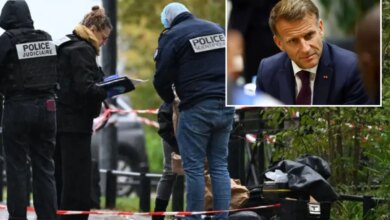
Mourners gathered at St. George’s Greek Orthodox Church in Jordan’s Karak governorate on Friday to bury a member of their community, only to find themselves the targets of a sudden and lethal assault. Gunmen stormed the church and opened fire, leaving nine people dead and nearly 40 others wounded in an attack that has horrified the nation and reignited international concerns regarding the safety of religious minorities in the region.
According to survivors of the massacre, the scene inside the small village church was one of pure chaos. One survivor described the harrowing moment of the breach, noting that people were forced to crawl for their lives as the attackers systematically moved through the building. The witness noted that the gunmen did not merely fire and flee; they reportedly returned to fire additional rounds into those already dying on the floor.
Following the shooting, the attackers recorded a victory message in which they shouted, “Allahu Akbar, and glory to Allah.” In the recording, they claimed the massacre was an act of “severe punishment” against the Christians of Karak in vengeance for Islam and the Islamic State. While the Jordanian government has formally declared the attack an act of terrorism and initiated three days of national mourning, official investigators have yet to formally name the specific group or individuals responsible for the planning of the operation.
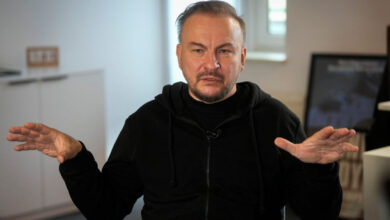
International organizations, including the United Nations and the European Union, issued swift condemnations of the violence. However, for many Christians living in the Middle East, the incident follows a pattern that feels all too familiar. Dr. A.S. Ibrahim, a scholar of Islamic studies with two PhDs in the field, noted that the standard official response—staging ceremonies of national unity where Christian clergy and Muslim imams stand side-by-side—often fails to address the underlying causes of such violence. Ibrahim argued that such displays, while meant to comfort, do little for families burying their children because they often ignore the specific religious motivations cited by the attackers themselves.
Ibrahim pointed to the literal application of certain Islamic texts by radicalized individuals as a primary driver of the violence. He specifically highlighted how the labels of “kafir” (infidel) and “mushrik” (polytheist) are used in some religious and educational settings to stigmatize non-Muslims. When this vocabulary is woven into the fabric of a society’s textbooks and street speech, Ibrahim noted, it creates a dangerous environment where zealots believe they are performing a religious duty by targeting “polytheists.”
This assault in Jordan is the latest in a decade-long series of high-casualty attacks on Christian targets across diverse geographic and cultural landscapes. In 2010, gunmen massacred worshippers at the Our Lady of Salvation church in Baghdad. This was followed by a 2011 New Year’s bombing at a Coptic church in Alexandria, Egypt. In 2013, more than 100 people were killed in a suicide bombing at All Saints Church in Peshawar, Pakistan, and 2016 saw a similar attack targeting Easter celebrants in a park in Lahore.
The violence has not been contained to the Middle East or South Asia. In Nigeria, the militant group Boko Haram has conducted a years-long campaign of burning churches. In 2017, Palm Sunday bombings struck two separate Coptic churches in Egypt. In 2018, church bombings occurred in Surabaya, Indonesia, followed by the devastating 2019 Easter bombings in Sri Lanka that claimed more than 250 lives.
Ibrahim argued that while these locations differ in language and political systems, the perpetrators consistently use a shared religious vocabulary—citing concepts of jihad and martyrdom—to justify their actions. He criticized Western media and public discourse for what he described as a “blind spot” regarding these motivations. According to Ibrahim, there is often a reflex in Western commentary to shield religion from any association with terrorism, even when the attackers themselves explicitly cite religious texts as their primary mandate.
The scholar warned that refusing to examine the stated ideological foundations of such persecution leaves policymakers unable to address the root of the problem. As Jordan begins its mourning period, the survivors are left with the reality of a community that remains exposed to a cycle of violence that officials have yet to effectively curb. Until the religious and ideological motivations are addressed with honesty, many fear the funerals will continue to be a regular occurrence for the region’s minority communities.