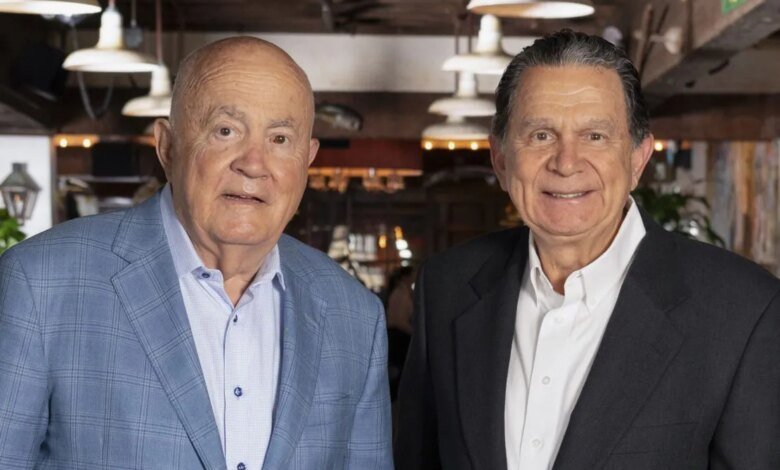
Brothers Chris and Harris Pappas operate an expansive hospitality portfolio spanning more than 80 restaurants across eight states, ranging from the round-the-clock Dot Coffee Shop to upscale destinations like Pappas Bros. Steakhouse. Recognized as 2026 Observer Nightlife & Dining Power List honorees, the siblings sat down to discuss their multi-decade journey, internal corporate culture, and the foundational lessons passed down through generations.
The family’s deep-rooted connection to the restaurant industry traces back to 1897 when their grandfather immigrated from Greece. Reflecting on their father’s guidance during the opening of their first seafood venture, Chris Pappas recalled being challenged to place their own name on the door. Putting the family surname on the storefront established a direct commitment to standing behind everything that happens inside, evolving into a guiding promise across concepts such as Pappas Seafood House, Pappadeaux, Pappasito’s, Pappas Bar-B-Q, Pappas Burger, and Pappas Bros. Steakhouse.
Operational structure remains a central pillar of the company’s philosophy. Unlike many major restaurant groups that rely heavily on third-party vendors, Pappas Restaurants maintains a workforce of more than 200 in-house service professionals, encompassing electricians, truck drivers, and equipment-repair specialists. Harris Pappas emphasized that maintaining an internal crew ensures rapid response times when critical equipment fails, allowing kitchens to resume operations quickly during peak service hours without waiting for external contractors.
Employee retention and upward mobility form another core component of the business model. Company figures indicate that 80 percent of leadership personnel began their careers in hourly positions, while average employee tenure stands at 5.4 years. The brothers highlighted longtime staff members, including Caroline Prebble, who recently celebrated her 55th year with the company after starting at Dot Coffee Shop, and Mike Rizzo, who joined as a college waiter in the 1990s and now serves as chief executive officer.

Cross-concept operational learning allows the organization to refine its culinary standards, particularly through the influence of Pappas Bros. Steakhouse. Skills developed at the high-end steakhouse, such as in-house butchering, have been integrated across multiple locations to ensure consistent meat quality. Employees frequently rotate and gain experience across various formats, from grilling at Pappadeaux to monitoring smoking pits at Pappas Bar-B-Q.
Beyond day-to-day operations, the company recently expanded its philanthropic and corporate footprint. This year, the brothers launched Pappas Restaurant Weeks across 10 concepts, successfully raising $1 million to support 16 local food banks. However, portfolio management also involves difficult contractions; in June, roughly a year after acquiring Tex-Mex chain On The Border out of bankruptcy, the company closed nearly 30 company-owned locations ahead of a Chapter 7 liquidation filing by the chain a week later, though five U.S. franchised units remained open.
The brothers also recounted lighter moments from decades in the industry, including an early incident in Dallas when a customer landed a helicopter on adjacent property to impress a fiancée, a practice that abruptly ended once federal aviation authorities took notice. Looking outward at the broader culinary landscape, Chris Pappas pointed to Bludorn Restaurant in the greater Houston area—operated by his daughter, her husband, and their partner Cherif—as a premier fine dining establishment that he would proudly show to any critic.