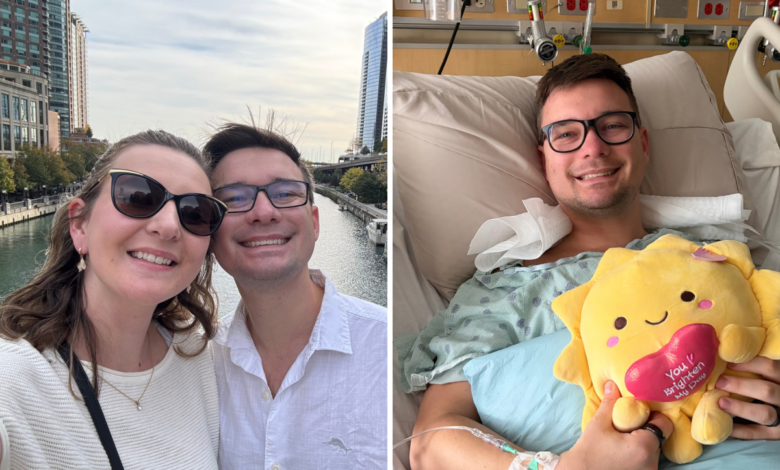
A 28-year-old Ohio man who lived with chronic inflammatory bowel disease since childhood initially dismissed worsening symptoms as a routine flare-up, only to be diagnosed with stage 3 colon cancer following a routine procedure in January.
Mitchell Ferguson had been diagnosed with ulcerative colitis at age 10. Because the condition affects the inner lining of the colon and rectum, patients with longstanding ulcerative colitis are routinely advised to undergo regular colonoscopies due to an increased risk of colorectal cancer. When Ferguson began experiencing blood in his stool and increased bowel movements in January, he assumed it was just another flare-up from his lifelong condition.

During the January colonoscopy, however, doctors discovered a 3-centimeter growth. Ferguson subsequently had his colon removed in March, along with 190 lymph nodes that were sent for biopsy. Pathologists found cancer in four of the nodes, resulting in a stage 3 diagnosis, which indicates the disease had spread to nearby lymph nodes but not to distant parts of the body.
His wife, 27-year-old Katelyn Ferguson, described the news as the hardest day of their lives, noting they had initially expected a much earlier stage if anything at all. Ferguson noted that his physician was surprised by the rapid development of the cancer, observing that it had not been present during his previous evaluations. According to the Cleveland Clinic, most colorectal cancers develop from polyps over a span of roughly 10 years, leaving the couple questioning how the malignancy progressed so swiftly.

The cancer diagnosis marked the beginning of a cascade of hardships for the couple over the course of the year. On the exact day of Ferguson’s initial oncology appointment, they were forced to euthanize one of their cats due to severe liver and gallbladder complications. Ferguson subsequently underwent a grueling summer chemotherapy regimen marked by adverse reactions that included heart-attack symptoms. During one of his hospitalizations, his wife sent him a photo revealing she had broken a toe.
Additional domestic and financial stress followed when their remaining cat developed bladder stones, requiring $3,000 in veterinary care. Just one week prior to completing his final round of treatment in September, Ferguson contracted a Cyclospora infection from contaminated lettuce. Katelyn, who works full-time in marketing while managing their home and pets, noted the heavy balancing act required to navigate the crisis.

Despite the overwhelming difficulties, the couple found silver linings in forced lifestyle changes, explaining that turning down social obligations allowed them to slow down, enjoy their home, and grow closer. Ferguson also credited their support network, including his parents and friends who rallied around them and provided $1,000 in grocery vouchers.
Now cancer-free and undergoing regular monitoring, Ferguson has adopted a renewed perspective on life. He now treats each day as a gift, appreciating quiet moments of rest rather than the physical exhaustion that once defined his daily routine.