French authorities are bracing for another weekend of nationwide unrest as thousands of protesters prepare to take to the streets across France. The upcoming demonstrations coincide with Halloween, prompting the government to warn of a high risk for new outbreaks of public disorder and violence.
Interior Minister Laurent Nuñez warned on Thursday that Saturday could present severe challenges to public safety. In response, the government has deployed 70,000 police officers, matching the security footprint from the previous Saturday. That heavy deployment helped curb widespread arson and looting, though officers still faced clashes while dispersing evening crowds.

Authorities have expressed particular concern over potential trouble after nightfall, citing social media calls from radical left-wing groups and certain factions of the yellow vest movement urging rallies beginning at 8 p.m. in cities across the country. Mr. Nuñez noted that some online messages advocated for revolution and insurrection. Officials have announced that these unauthorized gatherings will be banned, with arrests awaiting anyone attempting to assemble.
Adding to security concerns, social media calls have encouraged demonstrators to wear Halloween costumes. Mr. Nuñez cautioned that concealing one’s face during a demonstration where public order is disrupted constitutes a criminal offense. In Paris, officials relocated the official march route to the city’s eastern periphery, mirroring previous crowd-management tactics that drew legal challenges from organizers.

The widespread discontent stems from a two-month-old movement that originated in mid-September with high school students in suburban Paris protesting overcrowded classrooms, dilapidated infrastructure, and workloads. By late September, demonstrations had spread to hundreds of schools nationwide, eventually drawing in university students, labor unions, public workers, and veterans of the yellow vest movement.
While the Education Ministry responded by agreeing to cap certain class sizes, offer low-interest building loans, and phase out an unpopular college admissions platform, students remained unsatisfied and vowed to continue protesting. Government officials reported that the demonstrations have steadily broadened to encompass cost-of-living concerns, high fuel prices, and broader economic frustrations.

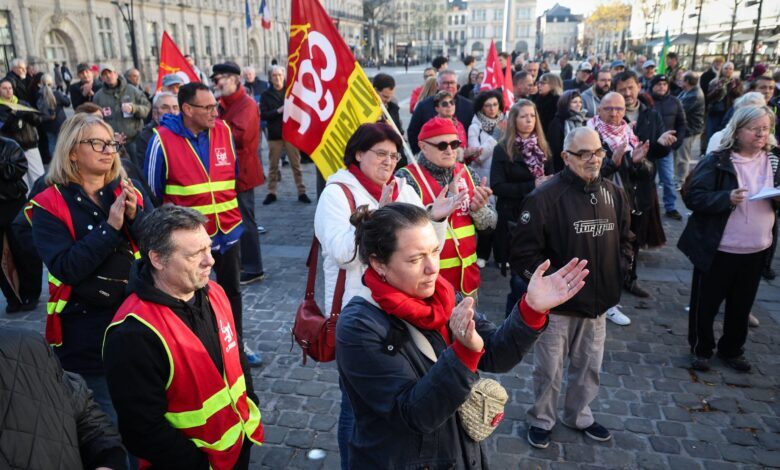
As the movement expanded, protests grew significantly in scale. Official estimates indicated that more than half a million people joined 110 antigovernment marches across France on October 17, while the C.G.T. labor union estimated turnout at 800,000. Those demonstrations saw rioters vandalize approximately 1,500 shops nationwide, burn cars, smash storefronts in Paris, and set fire to the 19th-century City Hall in Limoges.
Government officials have also raised alarms about the role of social media in inciting violence, though President Emmanuel Macron explicitly denied speculation that the government considered temporarily suspending several popular platforms. Meanwhile, security officials confirmed that bands of far-right activists have also infiltrated the demonstrations under the pretext of protecting shop owners, frequently engaging in street clashes with far-left groups.