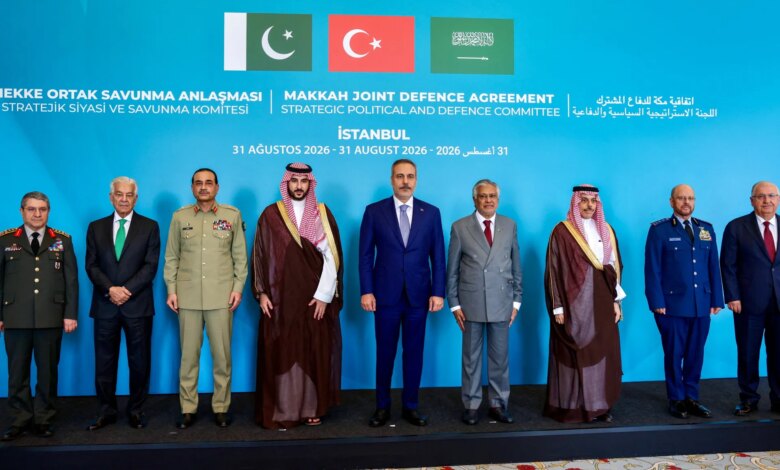
High-level delegations from the Mecca Defence Alliance—comprising Saudi Arabia, Turkey, and Pakistan—are scheduled to arrive in Tehran on Monday for a series of critical talks with Iranian officials. The meeting marks the first significant direct contact between the three-nation bloc and the Iranian government since Yemen-based Houthi rebels began a major escalation of strikes against Saudi Arabian targets last month.
According to official statements from both Riyadh and Tehran, the visiting delegation will include Saudi Defense Minister Khalid bin Salman Al Saud, Pakistani military chief General Asim Munir, and Turkish intelligence chief Ibrahim Kalin. They are expected to hold a joint meeting with an Iranian delegation led by Mohsen Rezaei, the secretary of Iran’s Supreme National Security Council. Ali Bagheri Kani, the council’s deputy secretary, indicated that the goal of the discussions is to move toward regional security solutions driven by actors within the Middle East.
The diplomatic push comes at a moment of heightened military activity. Saudi Arabian air defenses reportedly intercepted a fresh wave of missiles and drones on Sunday as the conflict with the Iran-aligned Houthi group continues to intensify. These attacks have turned Saudi Arabia into a primary pressure point within the context of the broader war involving the United States, Israel, and Iran, which has been ongoing since February 2026.
Rayed Krimly, the Saudi deputy minister for public diplomacy, confirmed that the mission to Tehran is part of a concerted effort by the Mecca Pact allies to de-escalate the regional crisis. He noted that the visit is intended to support existing mediation efforts previously spearheaded by Qatar and Pakistan. Krimly emphasized the alliance’s role in reinforcing regional stability and its commitment to working with all regional neighbors to achieve a diplomatic resolution.
The Mecca Joint Defence Agreement, which serves as the foundation for this alliance, was signed in August 2026. The pact is built on a mutual defense framework where an armed attack against one member state is viewed as an attack against all. Its primary article mandates that the signatories use all necessary means to eliminate threats to each other’s sovereignty and territorial integrity. While Pakistan and Turkey have moved forward with the ratification process over the last week, the alliance has already begun operational coordination. Earlier this month, ministers from the member states held an emergency meeting in Riyadh, where they reached an agreement to ensure the rapid deployment of military capabilities and forces into Saudi Arabia to counter persistent threats.
Pakistan has played a particularly complex role in the current landscape, serving as a primary intermediary between Washington and Tehran. While a previous mediation attempt led to an interim agreement in June, that deal collapsed within weeks as direct hostilities between the U.S. and Iran resumed. General Munir’s visit to Tehran on Monday follows a solo trip he made to the Iranian capital last week, during which he met with President Masoud Pezeshkian. During those earlier discussions, Iranian officials reportedly maintained a hardline stance, informing Munir that Tehran would not engage in negotiations with the United States regarding the cessation of the current war until specific Iranian demands are addressed.
As the delegations prepare for Monday’s sessions, the focus remains on whether this collective regional approach can succeed where previous bilateral efforts have faltered. The inclusion of Turkey’s top intelligence official and Saudi Arabia’s defense minister suggests that the talks will cover both high-level security guarantees and the practicalities of a ceasefire between Saudi forces and Houthi rebels.