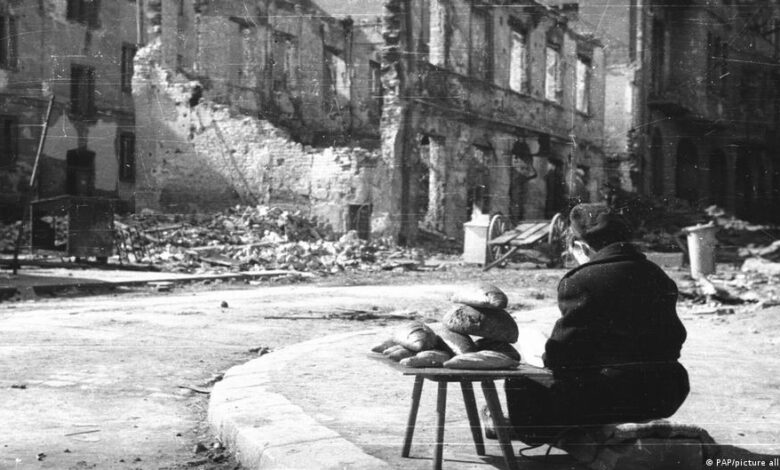
German press criticism of Berlin’s fiscal planning has intensified as major publications challenge the federal government’s decision to omit financial provisions for Polish World War II survivors from the draft 2027 budget. Following similar commentary in Die Welt and the Frankfurter Allgemeine Zeitung, the weekly newspaper Die Zeit recently published a sharp critique regarding the lack of funding for what has been described as a humanitarian gesture toward aging victims of Nazi occupation.
Writing in Die Zeit, author Alice Bota contrasted the postwar trajectories of the perpetrators and the victims. While West Germany experienced economic growth, prosperity, and democracy bolstered by allied support and the Marshall Plan, Poland fell under foreign domination behind the Iron Curtain, enduring a Soviet-style dictatorship, poverty, and hardship. Noting that Poland was the primary victim of the conflict before suffering through decades of postwar history, the commentary emphasized that accountability for historical crimes carries a financial obligation for successive generations.
The debate centers on Germany’s historical policy of restitution and compensation, which saw agreements concluded with more than a dozen countries following the war, including Poland in 1991. The issue of unresolved claims remains a persistent point of contention. Recent polling indicates that 68 percent of people in Poland believe Germany has not adequately accounted for wartime atrocities, a sentiment amplified by domestic political forces, particularly the Polish right wing, which continues to press the issue of war reparations.
Previous estimates from Poland’s former Law and Justice government placed total wartime damage at nearly 1.5 trillion euros. Current bilateral discussions between Berlin and Warsaw have focused instead on a voluntary humanitarian payment rather than formal state reparations. Under consideration by the Polish side is an amount of approximately 10,000 zlotys annually—equivalent to more than 2,000 euros, or under 170 euros per month per individual. Despite these discussions, no final decisions have been reached, and the draft 2027 budget contains zero appropriations for the initiative.
Chancellor Friedrich Merz holds ultimate authority over the decision but has yet to signal a definitive course of action. Political circles in Berlin have offered no clear explanation for the delay. Observers have raised various possibilities, including federal budget deficits, concerns that any financial settlement would fail to satisfy broader demands, fears of precedent-setting claims from other nations, or the assumption that the passage of time will naturally resolve historical liabilities.
With parliamentary elections scheduled in Poland next year, history remains an integral component of national identity and political discourse. Analysts point out that delaying the decision further would mean any financial relief arrives too late for a significant portion of the aging survivor population, a outcome the commentary characterized as deeply cynical given that time is running out to provide a meaningful symbolic gesture.