Leading Ebola Scientists Head to Nigeria to Investigate Origin of Country’s First Case in Over a Decade

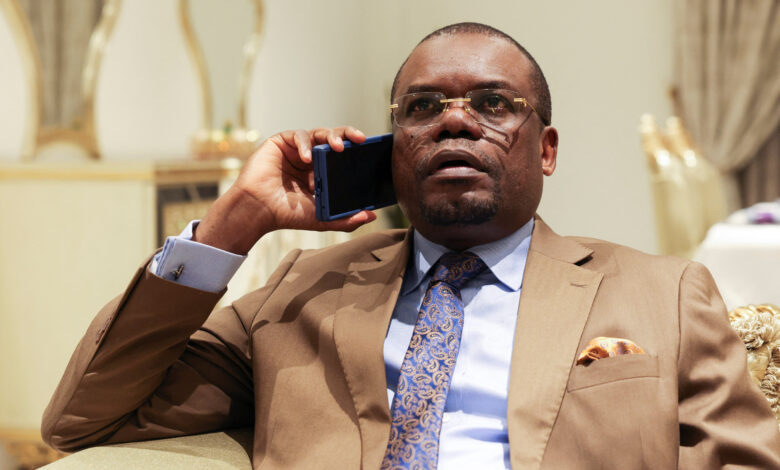
A team of leading Ebola scientists is scheduled to travel to Nigeria to assist public health authorities in investigating how the country recorded its first Ebola patient in more than a decade, according to Africa CDC Director-General Jean Kaseya.
The investigation centers on a female patient who is the Ugandan-born wife of a Swiss diplomat stationed in Abuja. Her travel documents indicate she had not visited the current outbreak epicenter in the Democratic Republic of Congo, Kaseya stated during an interview in London. Identifying the precise infection vector is considered critical to ensuring that the Bundibugyo outbreak—currently the second-largest Ebola epidemic on record—is not spreading silently in undetected areas, as well as to facilitate effective contact tracing and isolation.
“We have so many unknowns,” Kaseya said. “I’m bringing a group of scientists in Abuja because… we need to be led by science.”
Among the principal hypotheses researchers plan to examine is a potential epidemiological connection between the patient in Nigeria and a patient in Kenya who died earlier this month after traveling from Congo. Genomic sequencing performed on Friday revealed that the viral strains infecting both individuals are closely related.
Chronological details show the Nigerian patient vacationed in Uganda and passed through Entebbe Airport on October 3. The Kenyan patient, who has since succumbed to the disease, was likely present at the same airport around the same time, with their respective flights departing approximately 40 minutes apart. Kaseya noted that while they did not depart from the same gate and direct contact remains unconfirmed, investigators are examining all possibilities.
Genomic similarities do not necessarily indicate direct transmission between the two patients. The Abuja patient, whose medical condition is reportedly improving, has stated she has no recollection of encountering the Kenyan traveler. Nevertheless, researchers are keeping broader possibilities open, including potential indirect transmission mediated by a third individual. According to the World Health Organization, Ebola transmits through direct physical contact with the infectious bodily fluids of a symptomatic individual.
The deployment follows a period of diplomatic friction last week regarding the patient’s travel history, with Ugandan officials asserting she had visited Congo, while Nigerian authorities maintained she had not and likely contracted the virus in Uganda, a nation that has officially remained Ebola-free since August. Kaseya confirmed that all participating nations have since resolved these tensions and agreed to collaborate fully on the investigation.
The expert team will be led by Congolese specialist Jean-Jacques Muyembe, the co-discoverer of Ebola. Researchers will analyze additional genomic sequencing data to determine the specific exposure site for the Kenyan patient and clarify the transmission chain.
The ongoing Bundibugyo Ebola epidemic in Congo has generated nearly 10,000 recorded cases and claimed more than 4,600 lives, with the virus having spread across borders to three other African countries: Kenya, Nigeria, and Uganda. The viral infection is characterized by severe symptoms including fever, vomiting, diarrhea, and internal or external hemorrhaging in advanced cases. There are currently no approved vaccines or specific treatments authorized for the Bundibugyo species of Ebola.