Maryland Governor Wes Moore Tests Political Clout in High-Stakes Redistricting Ballot Battle

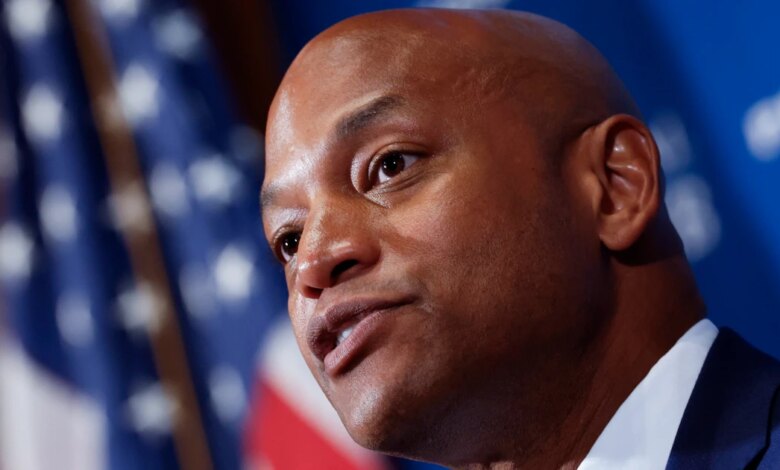
BALTIMORE — While Maryland Governor Wes Moore is widely expected to secure a second term on November 3, his political capital is being tested by a localized ballot battle that could have national implications. The Governor has shifted his campaign machinery toward securing the passage of Question 3, a measure that would grant state Democratic leaders the authority to redraw congressional districts to favor the party beyond the current 7-1 map.
The measure seeks to amend the state constitution by removing the requirement that congressional districts follow natural boundaries, such as the Chesapeake Bay. This change is specifically designed to address legal hurdles that previously thwarted Democratic efforts to eliminate the state’s lone Republican-held seat, currently occupied by U.S. Representative Andy Harris. If successful, the move could give Democrats a clean sweep of Maryland’s eight congressional seats.
Despite Maryland’s status as a Democratic stronghold, internal polling and public sentiment suggest the measure faces an uphill climb. A recent survey from the University of Maryland, Baltimore County (UMBC) found that 53% of likely voters intend to vote against the measure. The opposition is notably bipartisan, with 42% of Democrats, 74% of Republicans, and 59% of unaffiliated voters planning to reject the change. Mileah Kromer, director of the UMBC Institute of Politics, noted that while many Marylanders want to counter the influence of national figures like Donald Trump, they remain uncomfortable with the idea of explicitly partisan map-drawing.
The Governor and his allies, including former President Barack Obama, have attempted to frame the ballot question as a necessary defensive maneuver. In a significant late-stage push, Moore’s campaign diverted its focus from his personal re-election to promotional efforts for Question 3. This included a $700,000 ad buy featuring state Democratic leaders and a subsequent $500,000 investment in a digital and television campaign featuring an endorsement from Obama. Additionally, the pro-redistricting group Fight Back MD has spent approximately $550,000 on television advertisements this month.
This aggressive spending comes amid visible friction within the state’s Democratic leadership. State Senate President Bill Ferguson, who previously halted a legislative redistricting effort this year citing lack of majority support, has remained notably absent from the current campaign. Ferguson’s communications director, David Schuhlein, stated that the Senate President is primarily focused on maintaining and expanding Democratic control within the state Senate. This lack of public commitment from Ferguson has reportedly led some donors to hesitate, as the passage of Question 3 does not automatically guarantee that the legislature will follow through with new maps during next year’s session.
The redistricting fight is increasingly viewed through the lens of Moore’s potential 2028 presidential aspirations. During a recent gubernatorial debate against Republican Dan Cox, Moore declined to commit to serving a full second term, stating only that he would not be running if he were not committed to the state. State Republicans, including members of the conservative Freedom Caucus, have labeled the 8-0 map goal a “trophy” for Moore’s eventual national run.
While some national Democratic strategists argue that a failure to pass Question 3 would be a minor footnote in a presidential primary, others see it as a potential liability. Michael Hanmer, director of the Center for Democracy and Civic Engagement at the University of Maryland, suggested that if other Democratic governors succeed in flipping seats in their respective states while Moore fails, it could become a wedge issue. Hanmer noted that in a field where candidates may largely agree on core policy, the ability to wield and secure political power in one’s home state often serves as a key differentiator.
As Election Day approaches, the Moore administration is betting that voters’ frustration with national Republican leadership will override their reservations about gerrymandering. Whether this “fighting back” narrative can bridge the gap in the polls remains the central question of the closing weeks of the campaign.