The U.S. Department of Justice has filed a federal lawsuit against the state of Alaska, seeking to preemptively block the potential victory of Democratic candidate Mary Peltola in the 2026 U.S. Senate election. The legal challenge, titled United States v. Alaska, comes less than two weeks before voters head to the polls and centers on the presence of two candidates with nearly identical names on the ballot.
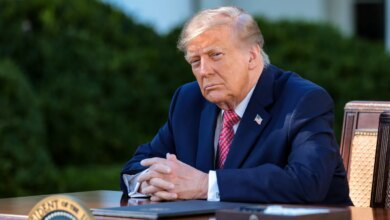
The lawsuit, which President Donald Trump confirmed he personally directed the Justice Department to file, focuses on a perceived threat to the reelection bid of incumbent Republican Senator Dan S. Sullivan. Along with the senator, a second candidate named Dan J. Sullivan has also secured a spot on the ballot. Republicans have expressed concern that the presence of the “not-senator” Sullivan could deceive or confuse voters who intended to cast their ballots for the incumbent, potentially siphoning away votes in a competitive race against Peltola, a former congresswoman.
Legal experts and Alaskas own election materials suggest the risk of voter confusion may be mitigated by the state’s existing procedures. According to sample ballots published by the Alaska Division of Elections, Senator Dan S. Sullivan is clearly identified by the labels “Registered Republican” and “Incumbent.” By contrast, the other Dan Sullivan lacks these specific identifiers, providing a visual cue for voters to distinguish between the two candidates. Furthermore, Alaska’s ranked-choice voting system allows voters to list multiple candidates in order of preference. Under this system, if a voter mistakenly ranks the non-incumbent Sullivan first, their vote could still count toward the senator if they rank him as their second choice.
The controversy surrounding Dan J. Sullivan’s candidacy has already been litigated at the state level. Earlier this year, the Alaska Division of Elections—headed by a Republican—tried to disqualify the non-incumbent, arguing he was not seeking the office in “good faith.” However, Dan J. Sullivan sued to remain on the ballot, and an Alaska court ordered his reinstatement. The court ruled that the state’s “good-faith” requirement was not supported by the U.S. Constitution, Alaska statutes, or existing regulations. The Alaska Supreme Court affirmed that decision in June.
Despite the state court’s finality months ago, the federal government waited until late October to intervene. The Justice Department’s complaint does not cite a specific law that has been violated but instead relies on broad allusions to the “integrity” of the electoral process. The DOJ points to the National Voter Registration Act of 1993, which lists the protection of electoral integrity as one of its four primary purposes. However, legal analysts note that the 1993 Act focuses on voter registration requirements, such as those linked to driver’s license applications, rather than the regulation of candidate names on a ballot.
The government also cites the 1972 Supreme Court case Bullock v. Carter, which acknowledged a state’s interest in protecting political processes from “frivolous or fraudulent candidacies.” In that case, however, the Court was actually striking down excessive candidate filing fees in Texas. While the opinion mentioned that states could regulate ballot access to discourage unserious candidates, it did not establish that sharing a name with another candidate constitutes fraud. Alaska currently requires a $100 filing fee for U.S. Senate candidates to discourage frivolous entries.
The lawsuit’s timing may prove to be its greatest legal hurdle. Under the “Purcell principle,” the U.S. Supreme Court has repeatedly cautioned federal courts against intervening in election disputes when an election is imminent, citing the risk of voter confusion. This principle was reaffirmed by the high court the same day the Alaska suit was filed, in a case involving student voting in New Hampshire. Justice Brett Kavanaugh has previously argued that federal courts should refrain from such interference as much as nine months before an election. By filing less than 14 days before the vote, the Justice Department’s request to block certification of a Peltola victory appears to contradict this established Republican legal doctrine.
The Justice Department is asking the federal court to halt any certification of a Peltola win pending a formal investigation to determine if votes for the non-incumbent Dan Sullivan were intended for the senator. As the 2026 midterms approach, the case is being watched as a signal of the administration’s willingness to use federal legal power to challenge election outcomes before they are even finalized.