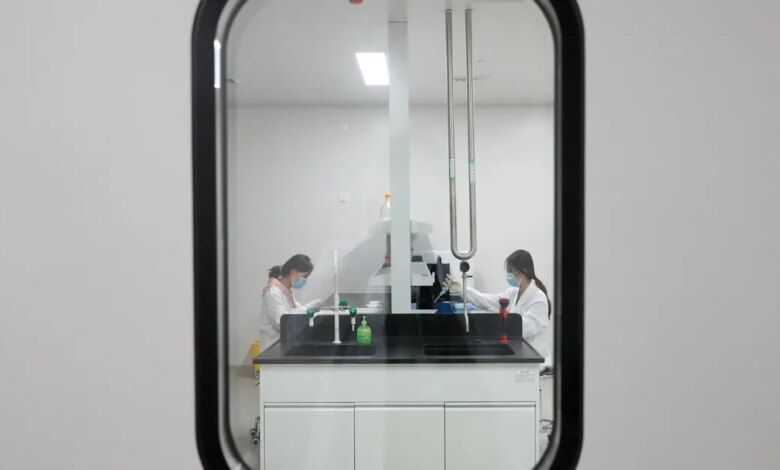
Two decades ago, medical treatment in China was often seen as lagging behind the West, with families looking toward Europe or North America for advanced therapies unavailable at home. Today, that dynamic is undergoing a fundamental reversal as China emerges as an ambitious engine for global health innovation, moving beyond its historical role as a simple manufacturing base into a primary source of original drugs, medical devices, and scientific capacity.
Dr. Ruby Wang, a UK-based clinician and healthcare strategy analyst who leads the LINTRIS Health consultancy, suggests that China has become a consequential actor in global health by aligning industrial policy with infrastructure and health reform. In her upcoming work, *China Cure*, set for release on October 31, Wang notes that the country is no longer merely an imitator but a site of origination that is reshaping the expectations of what advanced healthcare looks like.
The scale of this shift was punctuated in March 2026, when China approved the world’s first commercially available brain-computer interface (BCI) medical device. This milestone signaled a pivot toward high-complexity hardware that extends well beyond low-cost production. Further evidence of this industrial evolution was visible in mid-2026 during field observations in Shenzhen, where the proximity of suppliers, engineers, and prototyping teams has created a feedback loop that accelerates development cycles. In these hardware hubs, robots are being integrated into domestic healthcare strategies to address labor shortages and the needs of a rapidly aging population.
This rapid iteration is supported by a domestic care system under constant pressure to find scalable, affordable solutions. In the digital health sector, this has resulted in a comprehensive restructuring of the patient experience. New software systems are now handling everything from initial triage and appointment booking to remote consultations, payments, and digital prescriptions.
However, China’s growing global presence in the medical sector brings complex challenges. The expansion of its health capability raises significant questions regarding data governance, biosecurity, and international resilience. For Western governments and healthcare providers, the challenge lies in engaging with Chinese capabilities without drifting into a state of invisible dependence.
As Chinese clinical tools and enabling technologies become more central to global care, they are expected to sharpen pressure on pricing and regulatory standards worldwide. While political discomfort remains a factor in international relations, the practical reality of global health may override these tensions. Patients seeking life-saving treatments generally prioritize safety and efficacy over national origin, putting pressure on regulators to maintain access to innovations regardless of where they were developed.
Ultimately, the rest of the world may need to adapt to a landscape where China serves as a site of competition and partnership simultaneously. Its faster trial infrastructure and integrated translational pathways currently serve as a proving ground for chronic disease management and demographic shifts that are affecting healthcare systems globally.