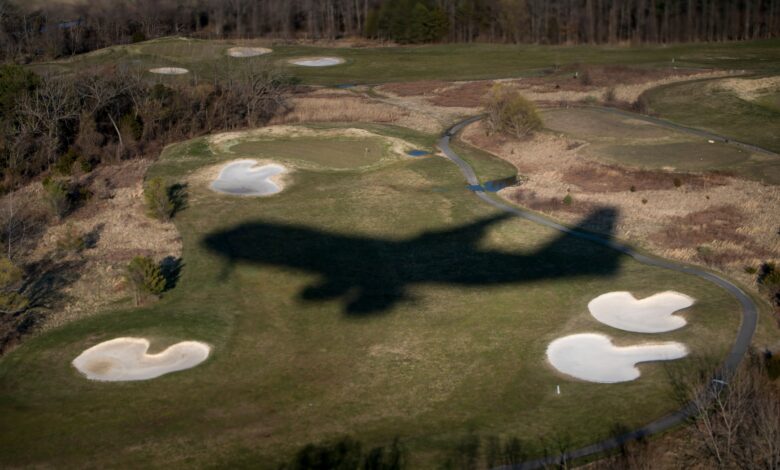
Maryland environmental officials are raising serious concerns over President Donald Trump’s planned overhaul of the golf course at Joint Base Andrews, which sits atop a federal Superfund site contaminated with hazardous materials. The project has sparked friction between state regulators and federal authorities after the administration waived state and federal water pollution rules for the construction.
Serena McIlwain, secretary of the Maryland Department of Environment, sent a letter last Thursday to the commander of Joint Base Andrews warning of potential contaminated runoff that could impact surrounding neighborhoods. In the letter, McIlwain stated that state inspectors were denied access to the site after the president waived water pollution rules for the renovation in June using an authority typically reserved for national security imperatives. Dave Abrams, a spokesperson for the department, noted that the Air Force indicated it does not plan to apply for necessary wetlands permits and has not completed erosion and stormwater control permit applications, intending to proceed with construction without those approvals.
Joint Base Andrews disputed the claim that state inspectors were barred, with a spokesperson stating that a state inspector was successfully escorted onto the installation. A White House spokesperson, Davis Ingle, defended the initiative, stating that President Trump’s vision to renovate the greens will bring much-needed improvements for servicemembers and their families. An Air Force spokesperson similarly asserted that the renovation is not taking place near the base’s major creek and that polluted soil from the Superfund site will remain undisturbed, adding that any future work would comply with applicable environmental laws.
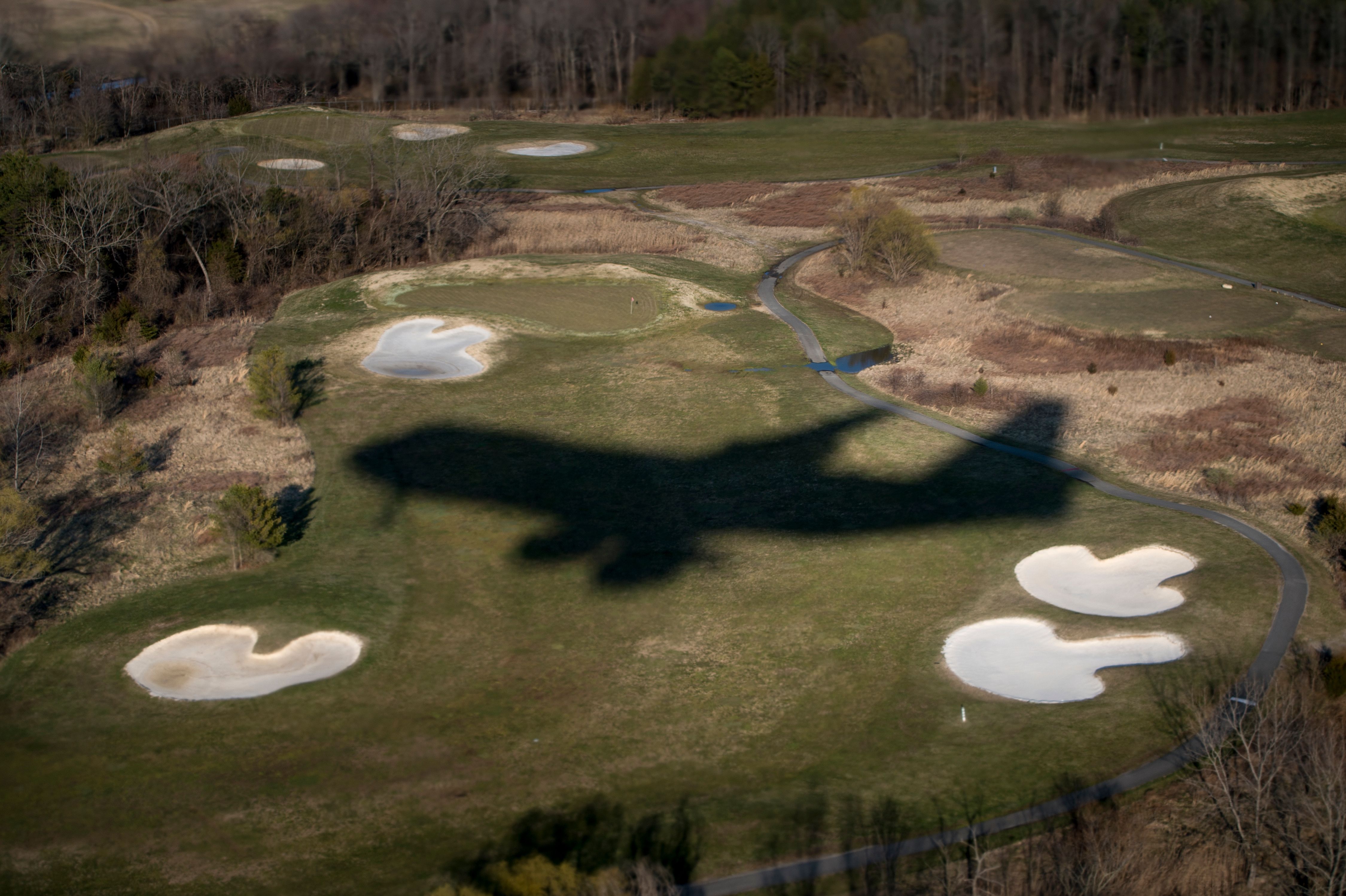
Trump told reporters last year that the Andrews facilities were in poor condition and subsequently gave golf course designer Jack Nicklaus an aerial tour of the grounds. Trump tapped Nicklaus’ firm, 1-JN, to redesign the course, while New Jersey-based Labar Golf is overseeing construction. The golf course is situated over one of several landfills on the base, which is listed as a priority cleanup site under the nation’s Superfund law due to decades of industrial and airfield activities leaving heavy metals, polychlorinated PCBs, and PFAS forever chemicals.
Clifford Villa, a law professor at the University of New Mexico and former senior EPA official under the Biden administration, noted that while golf courses can sometimes effectively cap landfill pollution, renovating them without proper care can create pathways for contaminant releases. He highlighted that the site contains lead, asbestos, and other serious contaminants.
The dispute adds to existing tensions between Maryland and the Air Force following a March jet fuel spill that discharged more than 22,000 gallons of hazardous liquid into soil and Piscataway Creek, a Potomac River tributary. All nine Democratic members of Maryland’s congressional delegation recently sent a letter to Air Force Secretary Troy Meink expressing frustration over the cleanup. Meanwhile, environmental groups remain skeptical of assurances that the golf course overhaul will not impact nearby waterways, which are already subject to advisories for forever chemicals stemming from firefighting foam used on the base.