Pennsylvania Governor Josh Shapiro Looks Like a 2028 Powerhouse, But Strategists Question His Battle-Testing

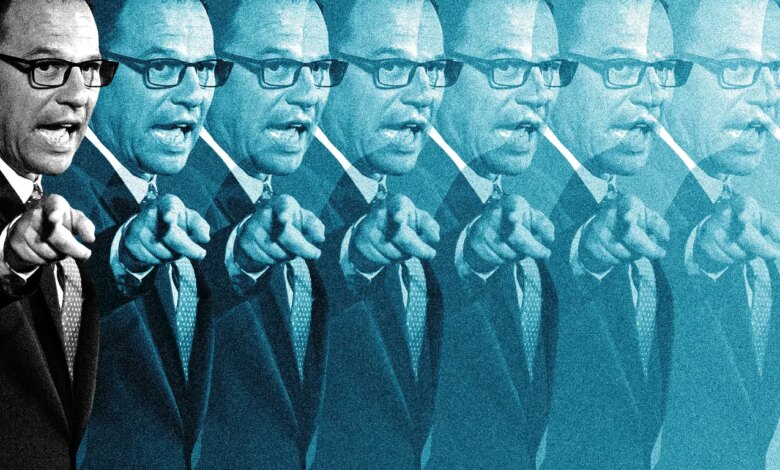
Pennsylvania Governor Josh Shapiro is frequently viewed as a formidable electoral force within the nation’s most prominent swing state, positioning him as a likely contender for the presidency in 2028. However, strategists across the political spectrum are raising questions about how thoroughly tested the Pennsylvania executive actually is.
Shapiro has cruised to comfortable victories in multiple statewide races, but those successes have consistently come with a significant caveat: he has not faced a well-financed opponent in his recent electoral contests. This dynamic has led some political insiders to view him as more of a wildcard than his impressive resume might initially suggest.
Political analysts note that Shapiro’s relative unfamiliarity with intense, bruising campaigns could become a notable liability if he runs in a 2028 Democratic primary. In such a high-stakes national race, a top-tier candidate would inevitably face a heavy barrage of attack ads, comprehensive opposition research, and deep-pocketed rivals.
One plugged-in Democratic operative in Pennsylvania suggested that Shapiro’s lack of rigorous testing leaves open the possibility that he possesses an “incredible glass jaw,” comparing his national potential to that of Scott Walker. Walker entered the 2016 Republican presidential primary looking strong on paper as a successful swing-state governor from Wisconsin, but ultimately faltered early in the contest.
In his current reelection bid for a second four-year term as governor of the Keystone State, polling indicates Shapiro is on track to defeat his Republican challenger, State Treasurer Stacy Garrity, by a double-digit margin. The financial disparity in the race has been stark, with AdImpact records showing Shapiro has dropped $42 million on campaign ads, while Garrity has spent just $3 million.
Campaign finance reports illustrate the stark funding gap, showing Shapiro has raised approximately $64 million during the cycle compared to Garrity’s $11 million. Compounding the challenger’s difficulties, the Republican Governors Association has refrained from stepping in on her behalf on the airwaves.
Christopher Nicholas, a veteran GOP strategist in Pennsylvania, observed that this financial imbalance has allowed Shapiro to run an essentially uncontested campaign dynamic. Nicholas noted that many observers believe the governor has a “glass chin” because he has never faced a million dollars of negative television advertising directed against him within a single week.
Shapiro’s initial gubernatorial run in 2022 featured a similar financial and political asymmetry. He faced far-right state senator Doug Mastriano, who was widely regarded as a weak candidate unpalatable even to the established Republican apparatus. Mastriano spent a mere $2 million on ads that year, whereas Shapiro and his allies deployed $55 million. Furthermore, a conservative outside group that invested $8 million in advertising abandoned the race in September after Shapiro embraced school vouchers, while the Republican Governors Association stayed out entirely.
In both of his gubernatorial campaigns, Shapiro ran unopposed in the Democratic primaries, yielding minimal experience in high-stakes intra-party battles. A similar pattern marked his two successful elections as Pennsylvania attorney general, where he also vastly outspent his Republican opponents.
Defenders of the governor argue that his lack of severe opposition is a testament to his strength as a candidate rather than a vulnerability. Allies suggest that more talented Republicans simply decline to waste time and resources challenging an opponent with formidable fundraising abilities and broad appeal, noting that Shapiro has occasionally neutralized opponents by effectively cutting off their donor networks.
Doc Sweitzer, a Pennsylvania Democratic ad maker, remarked that Shapiro exemplifies Sun Tzu’s principle of choosing preferred battles, praising the governor’s skill in selecting opponents.
Responding to inquiries, Shapiro spokesperson Manuel Bonder emphasized the governor’s immediate priorities. Winning elections in Pennsylvania and providing a check on Donald Trump remain the sole focus, Bonder stated, adding that such work is harder than offering anonymous commentary to journalists.
Conversely, Garrity spokesperson Matt Beynon pushed back against the incumbent’s record, asserting that no amount of campaign spending can erase the wounds inflicted over the previous four years and that new leadership is necessary.
Political observers point out that Shapiro is not alone among potential Democratic presidential hopefuls who lack experience facing top-tier statewide Republican opponents. Other prospective national candidates hail from deep-blue territory, such as New York Representative Alexandria Ocasio-Cortez, or possess limited experience winning competitive general elections, like former Transportation Secretary Pete Buttigieg.
Critics recall that one of the few times Shapiro encountered sustained, high-level scrutiny occurred when he was vetted as a potential running mate for former Vice President Kamala Harris in 2024. During that period, the governor faced intense press coverage regarding past statements, including a college op-ed where he described Palestinians as “too battle-minded” to achieve peaceful coexistence with Israel. At the time, even some of his strongest supporters felt his team struggled to respond effectively to the wave of negative reporting.