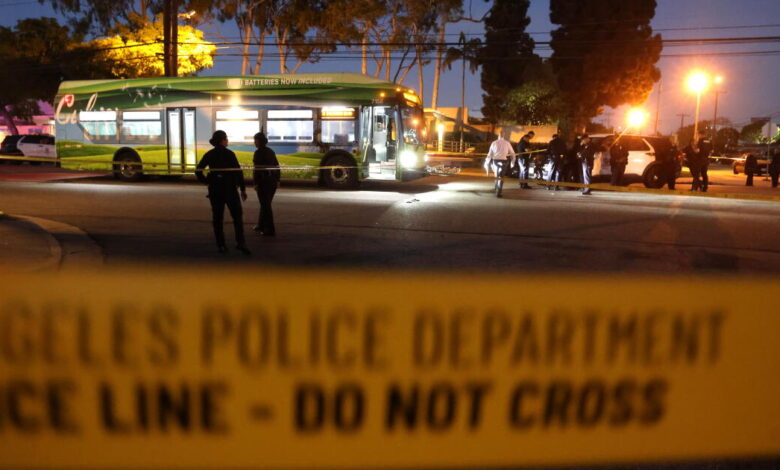
Homicides in Los Angeles have plunged to levels not seen since the 1960s, continuing a significant retreat from the violent crime surge experienced during the pandemic. However, while city officials celebrate the overall decline, a stubborn and troubling pattern persists: Black Angelenos continue to be killed at a rate far higher than any other demographic in the city.
Data through mid-September shows that while the city recorded 162 homicides—a notable drop from the 192 reported by the same point last year—the racial distribution of these deaths remains starkly uneven. Black victims accounted for 35% of the city’s homicides this year, despite making up only 8% of the total population. This statistical disparity has remained largely unchanged for two decades. Through the current reporting period, 57 Black residents have been killed, down from 75 at the same time in the previous year.
The decline in violence is reflected across other demographics as well, though to varying degrees. Latino victims, whose numbers stayed slightly below their total population count, fell from 82 last year to 72 this year. White victims decreased from 28 to 22, while victims identified as Asian, Middle Eastern, or “other” saw a marginal decrease from seven to six. Experts suggest the broader decline in homicides, which is being mirrored in major cities across the United States, likely stems from a complex mix of factors including improved access to healthcare, employment, and housing, though a definitive single cause may not be identified for years.
The geography of violence in Los Angeles also remains concentrated. Police divisions that have historically struggled with high crime rates—specifically the Southeast, 77th Street, and Newton divisions—continue to lead the city in homicides. In the 77th patrol area, which encompasses neighborhoods in South Los Angeles around Florence Boulevard, 12 of the 20 people killed through mid-September were Black. This occurs in an area where approximately one-third of the residents are Black, illustrating the local intensity of the disparity.
These statistics have become a central point of contention in the Los Angeles mayoral race. Mayor Karen Bass has frequently highlighted the dropping crime numbers as evidence that her administration’s approach is working. Bass has focused on a strategy that blends traditional policing with public health initiatives, tripling the funding for alternative response programs. She has also emphasized the importance of the Gang Reduction and Youth Development (GRYD) initiative and the newly created office of community safety, which supports gang interventionists tasked with de-escalating conflicts before they turn deadly.
Councilmember Nithya Raman, who is challenging Bass for the mayor’s office, has proposed a different management structure for public safety. Raman’s platform includes expanding the community safety office to oversee unarmed crisis response for issues involving mental health, homelessness, and addiction. She has also advocated for weekly performance reviews of the Los Angeles Police Department and the Fire Department to identify systemic failures. Additionally, Raman has discussed replacing LAPD Chief Jim McDonnell, though she has not specified a timeline or a successor.
The human cost of the remaining violence is perhaps best exemplified by the death of Reginald Foreman, known to friends and family as “Big Ant” or “BA.” A 51-year-old father of five and a former member of the Rollin’ 100 Crips, Foreman had transformed his life after his first child was born. After attending truck driving school, he eventually followed a path into gang intervention work, joining the organization 2nd Call to help steer young people away from the street life he once knew.
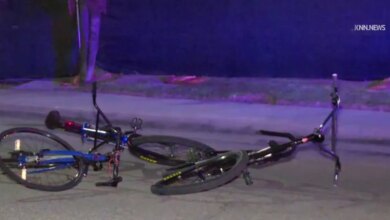
On August 6, 2024, the tragedy that Foreman worked to prevent claimed his own life. While working with a 2nd Call team to remove weeds from a vacant lot near Crenshaw Avenue and 60th Street—part of the Destination Crenshaw revitalization project—Foreman was approached by a young man wearing a medical face mask. Witnesses reported that the youth opened fire on Foreman and a colleague. Both men fled around the corner onto Crenshaw, but the gunman pursued them, eventually catching Foreman midway through the block. Witnesses alleged the shooter stood over Foreman and fired into his chest at point-blank range.
Skipp Townsend, the founder of 2nd Call, had known Foreman for nearly 30 years. Though they were once members of rival gangs, they had become close colleagues in the effort to stabilize their communities. Townsend noted that while the neighborhood is safer than it was in previous decades, the violence that remains is often fueled by long-standing grievances or minor disputes over money or social media posts. He observed that while Foreman had successfully changed his life, the perceptions of those on the street had not always caught up to his transformation.
Foreman’s death was not an isolated incident in the area; just a month earlier, on July 3, another shooting occurred only a block away, leaving two people dead and one injured. While police told Foreman’s family they expected a break in his case soon, no arrests have been announced to date. For the workers at 2nd Call, who recently held a grief meeting to process the loss of their colleague, the work continues despite the risks. As Townsend described it, the effort to reduce violence in Los Angeles is a journey with no final destination, requiring constant intervention in the face of persistent racial and social disparities.