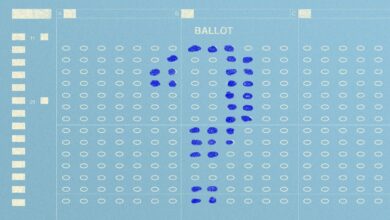
Israel faces a severe political stalemate following an inconclusive general election that left neither Prime Minister Benjamin Netanyahu’s bloc nor the opposition grouping led by Gadi Eisenkot with the 61 Knesset seats required to govern alone. Final results published early Friday by the Central Elections Committee confirmed a high voter turnout of 77.9 percent in the October 27 vote. The final tally followed the counting of at least 500,000 double-envelope ballots cast by soldiers and diplomats.
Netanyahu’s bloc secured 53 seats in the 120-member parliament, while the opposition bloc led by Eisenkot won 48 seats. Meanwhile, the two electoral lists representing Palestinian citizens of Israel—the United Arab List, or Ra’am, and the Joint List—captured a combined 19 seats. Because no single party has ever won an outright majority in Israel, governance depends entirely on coalition alliances. Both Netanyahu and Eisenkot have previously ruled out partnering with the Arab-led lists, leaving the parliamentary math deadlocked.
Political consultations regarding coalition formation are currently underway. Under Israeli law, if the initial process fails, President Isaac Herzog may designate the candidate with the best chance of forming a government, giving them roughly 28 days to succeed. If that candidate fails, the president can turn to another contender. Should that effort also collapse, a 21-day window opens during which any 61 Knesset members can petition Herzog to assign the task to a specific lawmaker. If all these steps fail, Israel will be forced back to the polls for a fresh election.

Both Netanyahu and hard-right Yisrael Beytenu leader Avigdor Lieberman have dismissed alliances with Arab-led factions. Netanyahu posted on X on Friday declaring that it is forbidden to form a government with them, while his Likud party accused the Arab-led lists of stealing the election after the right-wing coalition lost its majority. Lieberman similarly ruled out coalition options, invoking the phrase “Neither Bibi nor Tibi” in reference to Netanyahu and Ta’al party leader Ahmad Tibi. Eisenkot has stated he would only partner with parties recognizing Israel as a Jewish and democratic state, endorsing the Declaration of Independence and committing to national service, without clarifying whether Arab parties meet those criteria.
Conversely, Arab-led factions have expressed openness to maneuvering against Netanyahu. Yousef Jabareen of the Joint List called for ousting a government of bloodshed and advocated for a true, equal Jewish-Arab partnership. Political analyst Ahmed Najar noted that parties representing Palestinian citizens have shown considerable pragmatism, with Ra’am indicating openness to supporting an Eisenkot-led administration and the Joint List leaving open the possibility of backing a minority government from the outside in exchange for commitments on equality, violent crime, home demolitions, and the Palestinian question.
Despite potential openings, analysts remain skeptical about a breakthrough. Roi Zur, a lecturer at Essex University, observed that the numbers do not add up for any side, noting that while rumors persist of Eisenkot seeking outside Arab support in exchange for community investments, Lieberman would likely object. Berlin-based political analyst Nimrod Flaschenberg outlined three theoretical models for cooperation if Eisenkot pursues it: full cabinet inclusion as desired by Ra’am, coalition membership without ministerial seats similar to Ra’am’s status in the 2021-2022 Bennett government, or external support as a preventive bloc.

Najar argued that the primary obstacle is not Arab intransigence but the refusal of Eisenkot and his allies to recognize Palestinian citizens and their 19 representatives as legitimate political partners. He stated that while the election produced 67 seats outside Netanyahu’s block, the political system treats 19 of those seats as if they do not fully count, exposing a profound democratic contradiction where Palestinian votes are solicited to unseat Netanyahu while their political legitimacy is questioned.
Meanwhile, Netanyahu retains alternative pathways to retain power. Yossi Mekelberg, a senior consulting fellow with Chatham House, suggested Netanyahu could attempt to persuade Eisenkot’s camp to join a coalition while simultaneously delegitimizing Arab parties to obstruct an alternative government. Flaschenberg added that Netanyahu might push for a new election cycle in the belief that lower Arab turnout and a discouraged opposition could push his bloc to the 61-seat threshold, or alternatively attempt to peel off individual parties from the Change bloc, though current prospects for defections appear dim.
For Palestinian citizens of Israel, analysts describe the outcome as both an achievement reflecting strong voter mobilization and a test of political exclusion. For Palestinians in Gaza, the occupied West Bank, and East Jerusalem, however, commentators view the contest as a domestic struggle over Israeli governance rather than a fundamental choice regarding military occupation, settlement expansion, and systemic inequality. Najar emphasized that Palestinians will judge any successor government by concrete policies rather than personalities, looking specifically for an end to the conflict in Gaza, a halt to settlement expansion, and recognition of self-determination.