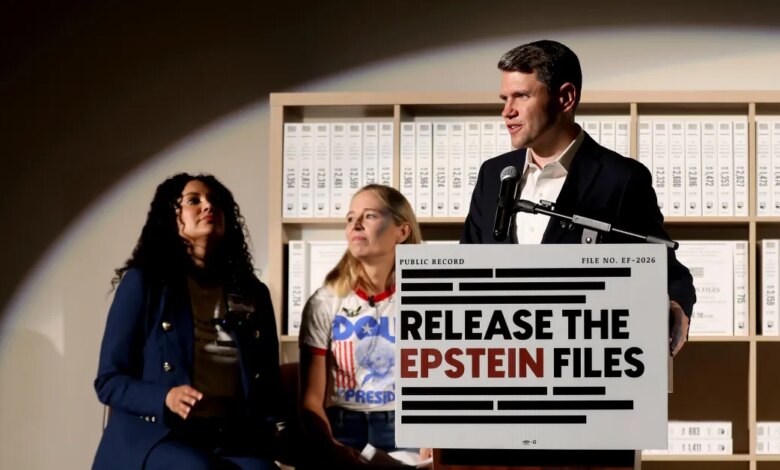
Nearly two decades after his initial conviction and seven years following his death, the legacy of convicted sex offender Jeffrey Epstein has re-emerged as a prominent flashpoint in the final stretch of the midterm elections. Candidates, lawmakers, and political strategists are increasingly leveraging the renewed focus on Epstein, deploying it across digital and broadcast advertisements, legislative maneuvers, and congressional investigations.
On Monday, House Democrats released a 50-page report alleging that the Justice Department helped cover up details concerning Epstein’s relationship with President Donald Trump. The document calls for an independent criminal investigation, an outcome that no observer expects the Trump administration’s attorney general to pursue. A White House spokesperson dismissed the report as a desperate attempt by Democrats to distract voters just one week before the midterms.
The congressional document draws on public records and staff interviews with an unspecified number of survivors. Among them is a former pageant queen who alleges that Trump raped her in 1993, an allegation she previously raised regarding a 2005 groping incident that a Trump spokesperson at the time dismissed as false. Beyond specific allegations, the broader controversy touches on political vulnerabilities, particularly among key voter segments.
Political analysts note that the Epstein controversy continues to resonate with certain voting blocs, including young voters whose disillusionment could influence upcoming electoral outcomes. Some younger voters reportedly resent Trump’s integration into the political establishment and view government hesitation over releasing investigative files as confirmation of those concerns. Disappointment over unfulfilled campaign expectations regarding the release of federal files has further fueled the discourse.
Democrats have seized on the momentum, deploying heavy ad spending nationwide. According to data from the tracking firm AdImpact, more than 500 television and digital campaign ads currently airing across the country incorporate terms such as “pedophile” or “predator,” with roughly three-quarters of those spots backed by Democratic organizations.
These advertisements frequently target vulnerable incumbent lawmakers. One recent spot featuring an Epstein survivor targets Kansas Republican Senator Roger Marshall over a September 2025 vote to block a procedural measure aimed at releasing government files on Epstein, though the Senate subsequently voted unanimously to release the files. Another ad aired in Maine links Senator Susan Collins’s super PAC to a donor described as an Epstein business partner, a connection critics note is exceptionally tenuous.
While the current barrage of political advertising is expected to subside following Tuesday’s elections, the underlying political and legislative battles will likely persist. Democratic leaders have signaled that capturing control of either congressional chamber would grant them subpoena power to compel testimony and documents for further investigations into the Epstein matter.