Prominent conservative commentators, provocateurs, and activists who built lucrative platforms around false claims of widespread election fraud are increasingly facing legal, regulatory, and financial repercussions. While federal and state political landscapes continue to grapple with ongoing battles over voting rules and election administration, the individuals who manufactured the most visible evidence of the so-called Big Lie are finding themselves subject to the very legal frameworks they sought to bypass or discredit.
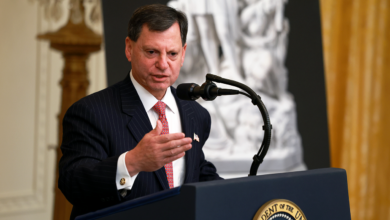
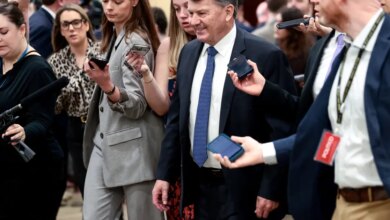
Conservative filmmaker and commentator Dinesh D’Souza settled a defamation case in Atlanta on the eve of trial, bringing a formal end to a lawsuit stemming from his 2022 film “2000 Mules.” The movie claimed that thousands of individuals were paid to illegally harvest and deposit ballots in key battleground states, generating more than $9 million at the box office and receiving prominent endorsement from Donald Trump. Among those targeted in the film was Mark Andrews, an auditor in Gwinnett County, Georgia, who appeared in deceptively edited surveillance footage returning absentee ballots for himself and four family members before the 2020 election.
Although the film’s voice-over accused Andrews of committing an election crime, state investigators cleared him of any wrongdoing. Andrews subsequently filed a defamation lawsuit against D’Souza and other individuals involved in the production. While the financial terms of the settlement remain confidential, the resolution follows D’Souza’s December 2024 apology to Andrews. Salem Media Group, which distributed the movie, also apologized and withdrew the film and its companion book from circulation.
Meanwhile, conservative provocateurs James O’Keefe and Cam Higby drew scrutiny in Minnesota after entering Minneapolis polling places during the state’s primary. Dressed in traditional Muslim clothing—with O’Keefe wearing a thobe and Higby a burqa—the pair attempted to test a long-standing state law that permits registered voters to vouch for a newly arrived or recently moved neighbor. O’Keefe used an affected accent and utilized the identity of a real registered voter, William Pomeranz, who later discovered his name had been used in a viral video without his consent. A third participant, Anthony Rubin, reportedly told poll workers he wanted to vouch for individuals he characterized as recently arrived Hamas members from Gaza.
None of the individuals completed a voter registration or cast a ballot, but their actions have triggered potential criminal exposure. Under Minnesota law, falsely signing a vouching oath constitutes perjury, which carries a penalty of up to five years in prison, while misrepresenting identity to obtain a ballot is a separate felony. Steve Simon, Minnesota’s Democratic secretary of state, condemned the stunt, noting that vouching accounted for fewer than 0.6% of votes cast in the state in 2024, with roughly 71% of those involving registered voters updating their addresses. Law enforcement officials in Hennepin County are reviewing the footage, which has accumulated more than seven million views online.
In Pennsylvania, political activist Scott Presler and his political action committee, Early Vote Action, are facing regulatory complaints regarding campaign finance transparency. The watchdog group Public Citizen filed a complaint alleging that Presler’s organization failed to register or disclose expenditures related to a campaign opposing three Pennsylvania Supreme Court justices during the state’s 2025 retention election. Under state law, any committee spending more than $250 to influence an election must register and disclose its donors and spending.
According to the complaint, Presler’s operation deployed a paid field staff of roughly two dozen people in Pennsylvania, distributed tens of thousands of postcards to Amish voters, and sent text messages to more than 100,000 residents in Bucks County alone without appearing in the state’s campaign finance database. The targeted justices, all Democrats, were ultimately retained by voters. Presler has since become an outside advocate for the SAVE America Act, lobbying Senate Republicans to support federal proof-of-citizenship and voter-identification mandates. A separate Public Citizen complaint alleges that neither Presler nor his affiliated super PAC registered required lobbying disclosures for their advocacy on Capitol Hill.