Israeli Opposition Parties Outperform Netanyahu’s Block in Parliamentary Elections, Exit Polls Show


Israeli Prime Minister Benjamin Netanyahu’s ruling coalition faced a diminished standing following parliamentary elections, with television exit polls indicating that an opposition bloc led by former army chief of staff Gadi Eisenkot edged ahead. Tuesday’s vote, which marked Israel’s first national elections since the October 7, 2023, Hamas attack and the subsequent conflicts, saw high voter engagement with turnout reaching 77.7% by the time polls closed at 10 p.m. local time, according to election officials. The figure represents the highest voter participation since the 1999 parliamentary election.
Israel’s three main television stations projected that the anti-Netanyahu bloc, spearheaded by Mr. Eisenkot’s Yashar party, would capture 52 or 53 seats in the 120-seat Knesset. Meanwhile, projections showed Mr. Netanyahu and his religious nationalist and ultra-Orthodox allies securing 50 seats. Neither side appeared to have secured a clear majority of 61 seats, pointing toward a potential political stalemate. Despite the broader coalition’s challenges, Mr. Netanyahu’s Likud party outperformed expectations throughout the campaign and was projected to emerge as the strongest single party with 24 or 25 seats.
A notable development in the election was a significant surge of enthusiasm among Arab citizens of Israel, who make up approximately 22% of the population. Driven by voter mobilization efforts from Arab civil society organizations and political activists responding to a rise in violent crime under Minister of Public Security Itamar Ben Gvir, turnout in Arab communities such as Rahat and Sakhnin reached about 80%. The Joint List of Arab parties and the smaller Islamist party Ra’am were projected to win an unprecedented 17 or 18 seats.
Mr. Eisenkot described the exit poll results in a press statement as pointing “to an absolute lack of confidence in Netanyahu and the government responsible for October 7 among the majority of Israeli citizens.” Conversely, Foreign Minister Gideon Sa’ar, a senior member of Likud, pushed back against the early indicators on social media, writing that “the celebrations on the left are premature.”
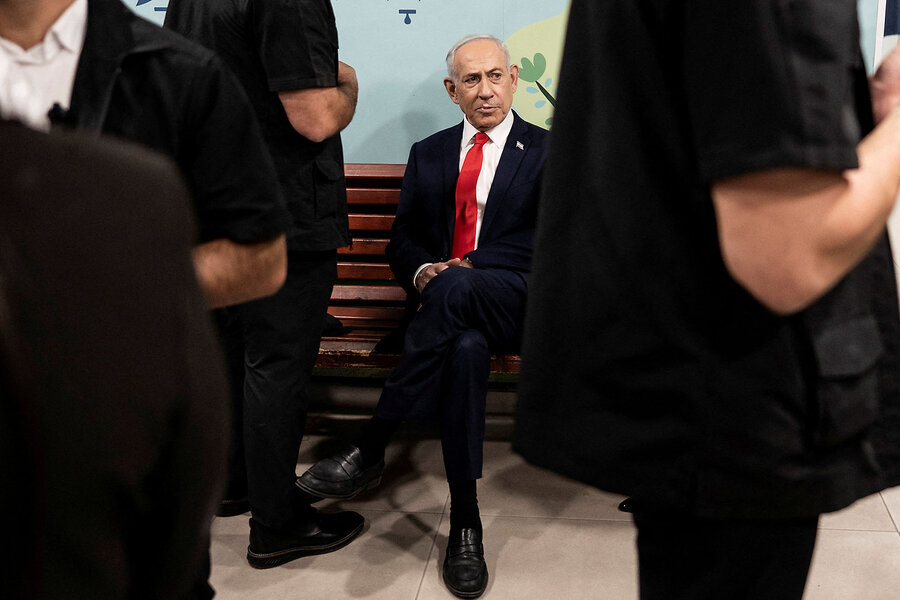
Yousef Jabareen, head of the Joint List, asserted that the exit polls demonstrate “this radical government cannot continue.” The elections were widely viewed as a referendum on Mr. Netanyahu’s leadership, particularly in light of his refusal over more than three years to establish a state commission of inquiry into the intelligence failures surrounding the October 2023 attack, which resulted in an estimated 1,200 deaths. During the campaign, Mr. Netanyahu featured the image of U.S. President Donald Trump on election posters following an endorsement issued approximately a week prior.
Official results are set to trickle in overnight as election workers count ballots at polling stations across the country, a process that officials note could continue into Friday. Clarity on whether the anti-Netanyahu coalition successfully unseated Israel’s longest-serving prime minister or whether the nation faces legislative deadlock and repeat elections is expected by Wednesday morning.