
A massive infrastructure expansion by Google in Finland has run into significant regulatory and legal hurdles after the clearing of approximately 1,300 acres of forest sparked local outrage and concerns over ecological damage. The project, intended to bolster the tech giant’s artificial intelligence capabilities in Europe, has been partially suspended by Finnish authorities as police conduct a preliminary investigation into potential legal violations.
The controversy centers on two primary locations: Muhos and Otanmäki. In Muhos, roughly 330 hectares (815 acres) of woodland were cleared, resulting in the removal of an estimated 250,000 trees. At the Otanmäki site, an additional 200 hectares (495 acres) were cleared, involving roughly 150,000 more trees. Together, these operations represent one of the most aggressive land-clearing efforts associated with Europe’s burgeoning data center industry.
Finland’s Permit and Supervision Agency has ordered Tuike Finland Oy, the project subsidiary managed by Google, to halt all preparatory work that could significantly alter the environment in Muhos and Kajaani. This suspension remains in effect until the necessary Environmental Impact Assessment (EIA) procedures are completed. Regulators noted that the work went beyond simple tree removal, including the clearing of topsoil, the construction of access roads and storage areas, and the modification of local drainage ditches. These actions, officials say, may have fundamentally changed the local ecosystem before their impact could be properly scrutinized.
In addition to the regulatory halt, Finnish police have opened a preliminary probe into the Muhos project. The investigation aims to determine if the scale and manner of the clearing warrant formal criminal proceedings. While the investigation does not equate to a finding of guilt, it underscores the severity of the friction between the company’s construction timeline and local legal requirements.
Google has acknowledged that it failed to meet its own internal benchmarks. Antti Järvinen, the head of Google Finland, issued an apology regarding the forest clearing, stating that the company had been operating based on its understanding of existing laws. Järvinen noted that while some environmental surveys had been conducted, the company would now comply fully with the demands of regulatory bodies. As part of a proposed remediation plan, Google has offered to replant trees on approximately 130 hectares in the Muhos area.
However, environmental experts and local residents argue that saplings cannot immediately replace the complex functions of a mature northern coniferous forest. Ecologists point out that these forests are vital for carbon sequestration, water cycle management, and providing habitats for diverse wildlife. They warn it could take decades for newly planted areas to reach the ecological maturity of the land that was cleared.
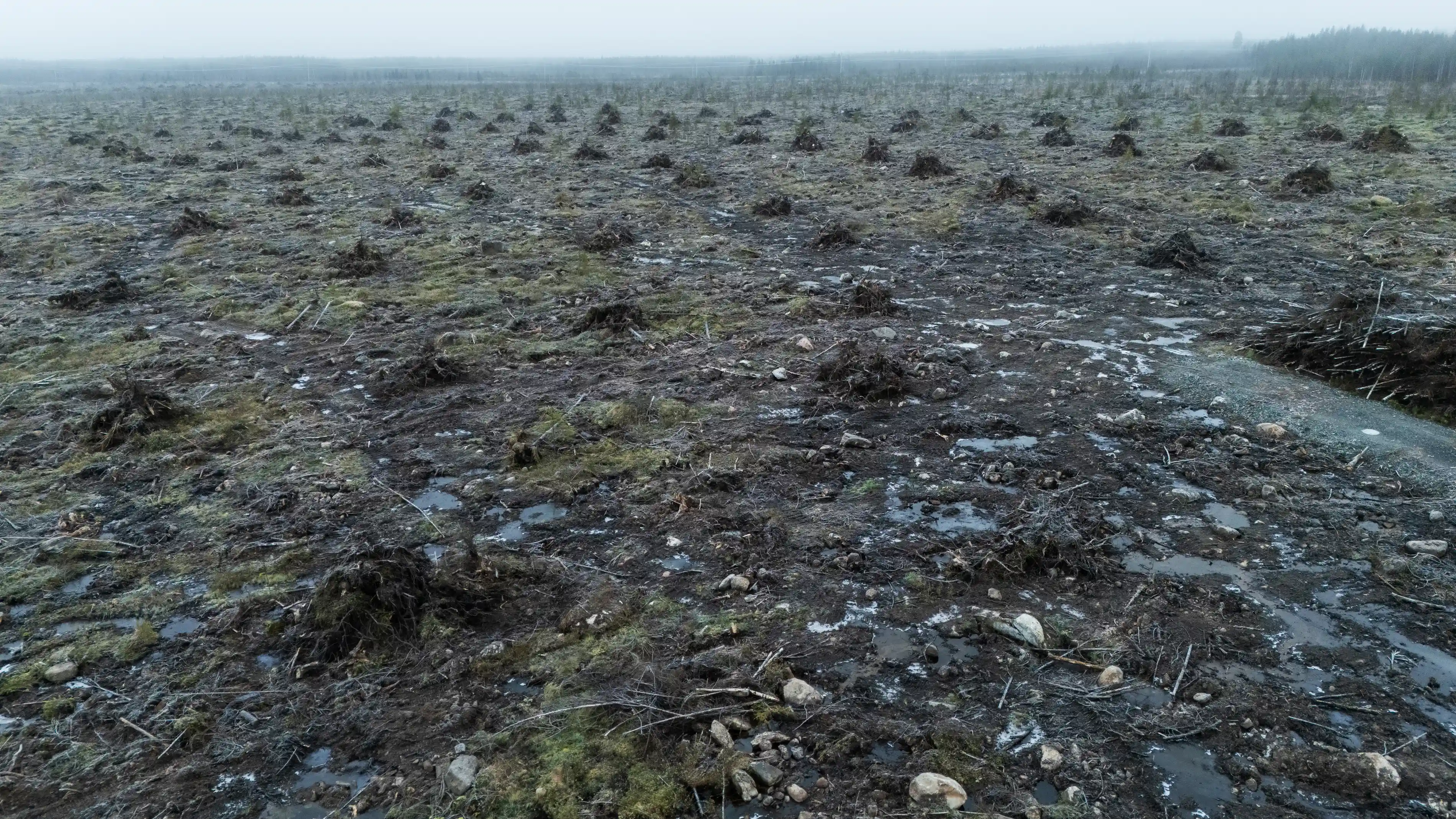
The human and wildlife impact has become a focal point of local resistance. Anne Ranta, a resident of Otanmäki whose family has lived in the area for generations, reported that the destruction of natural habitats has driven predators closer to human settlements. Ranta noted that wolves have begun entering nearby villages to forage, a development she attributes directly to the loss of their traditional hunting grounds. The situation has become so distressing for some residents that they are considering leaving the region entirely.
Beyond wildlife concerns, residents have reported visible changes to the local water systems. Runoff from the construction sites has reportedly turned nearby streams brown, with sediment-heavy water flowing into the Oulu River system. Environmentalists warn that the massive removal of vegetation and topsoil significantly increases the risk of soil erosion and water contamination, though official monitoring is still required to confirm the long-term impact on water quality.
This dispute has triggered a broader debate over the presence of AI infrastructure in Finland. While the Finnish government has historically welcomed Google’s planned €13 billion ($13.7 billion) investment for its potential to create jobs and stimulate the digital economy, the current backlash suggests a shift in public sentiment. More than 93,000 people have signed a citizen initiative demanding stricter oversight of data center projects. The initiative calls for compensatory fees for environmental damage and safeguards to ensure that massive data centers do not compromise the stability of the national power grid or inflate electricity costs for residents.
Google’s interest in Finland is driven by the country’s cool climate, which reduces cooling costs for servers, as well as its stable infrastructure and land availability. However, the conflict in Muhos and Otanmäki mirrors similar disputes in the United States and elsewhere, where the rapid physical expansion of the “cloud” is increasingly colliding with conservation efforts. As the demand for AI processing power grows, the ability of tech companies to balance infrastructure speed with environmental accountability remains under intense scrutiny.