Israel Faces Political Stalemate as Exit Polls Show Deadlock Between Netanyahu and Eisenkot Blocs

Israel’s national elections have ended in a political deadlock, with early exit polls showing neither Prime Minister Benjamin Netanyahu nor his primary challenger, Gadi Eisenkot, on track to secure a governing majority in the Knesset. The high-stakes vote marked the country’s first national ballot since the October 7 attack that ignited three years of warfare across Gaza, Lebanon, and Iran, reshaping the political landscape and leaving the Middle East in deep turmoil.
Exit surveys broadcast following the close of polls revealed a tightly contested race. Broadcasters Kan 11 and Channel 13 placed the competing blocs tied at 51 seats each, while Channel 12 reported a narrow 52 to 49 edge favoring the Likud-led bloc headed by Netanyahu. None of the projections brought either side close to the 61 seats required to form a majority government in the 120-seat parliament.
Speaking to supporters in Tel Aviv after the initial results emerged, Eisenkot declared that his bloc had “made history” and publicly urged Netanyahu to retire from politics. “This morning, the entire Israeli nation went out for a referendum. Tonight, we got an answer — the public has decided it wants change,” Eisenkot told party workers, adding that Netanyahu’s coalition had lost the public confidence. Earlier in the day, Eisenkot warned the caretaker administration against prioritizing political interests over national security.
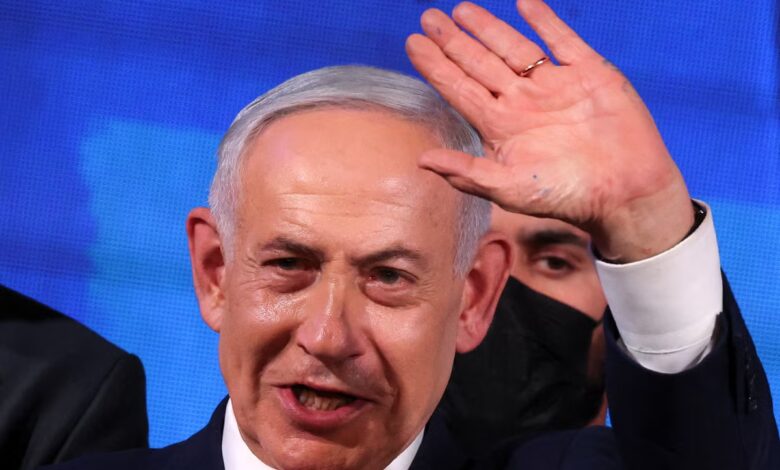
Netanyahu, seeking to extend his combined 19 years in power through what many voters treated as a direct referendum on his leadership, struck a defiant tone during an early morning rally in Jerusalem. Pointing to the shifting regional dynamics, Netanyahu argued that Israel possessed a historic opportunity to eliminate external threats alongside international allies. “Iran is weaker than ever, Israel is stronger than ever,” Netanyahu told supporters, calling for the immediate formation of a strong, right-wing national government.

Far-right National Security Minister Itamar Ben-Gvir urged patience as votes continued to trickle in, telling a gathering of supporters that the night was still young and expressing hope that a right-wing coalition could eventually be assembled. Meanwhile, former Israeli justice minister Yossi Beilin voiced confidence to international media that Eisenkot would ultimately prevail over the incumbent prime minister.
The election drew intense emotional responses across the country against the backdrop of ongoing regional conflict. In Kiryat Shmona, a Netanyahu stronghold situated near the Lebanese border, a voter was observed tearing down an Eisenkot campaign poster. Conversely, in Tel Aviv, grieving families gathered to observe a moment of silence for victims of the October 7 attacks. Yona Adam, whose daughter Mapal Adam was among those killed, addressed the gathering to remember those whose voices had been silenced.

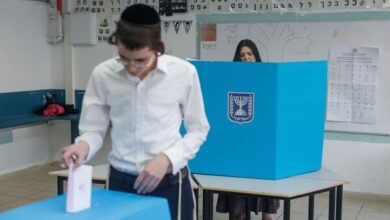
The ballot also brought approximately 330,000 young citizens to the polls for their first national vote, many of them facing compulsory military service under wartime conditions. Eisenkot opened voting day by touring southern communities near the Gaza Strip that bore the brunt of the October 7 violence, criticizing the government’s preparedness. Despite high public tensions, Dean Livne, acting director-general of the elections commission, reported that scattered complaints of polling irregularities remained significantly lower than in previous electoral cycles.