Inside the Pressure Cooker: Why Homeowners Association Board Members Say the Job Is Brutal

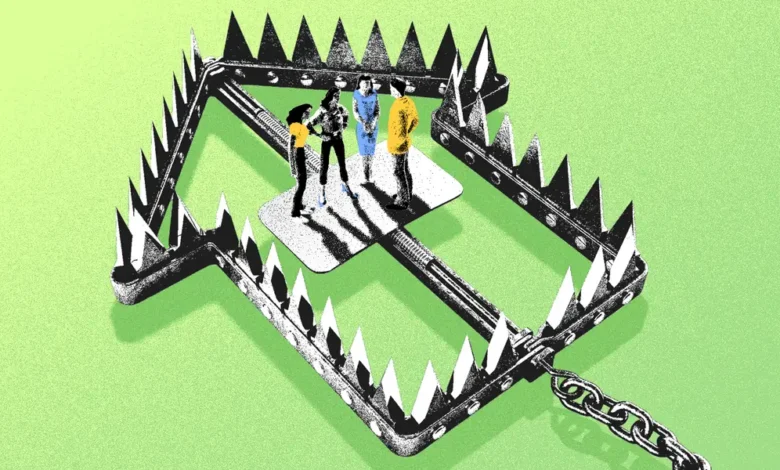
For millions of Americans living in condominiums, cooperatives, and planned subdivisions, homeowners associations function as private mini-governments tethered directly to their largest financial assets. While resident complaints about arbitrary fines or overgrown lawns are common, the perspective from inside the board reveals an unpaid, time-consuming bureaucracy where administrators face constant friction, community apathy, and mounting financial pressures.
National figures highlight the sheer scale of these private entities. In 2025, the United States was home to 373,000 community associations governing 29.6 million housing units and 78.1 million residents, a sharp increase from 222,500 associations in 2000. Last year alone, these organizations collected $124.2 billion in assessments, a figure roughly 1.5 times the total tax revenue of New York City for the same period.
According to Evan McKenzie, a political science professor at the University of Illinois Chicago and author of ‘Privatopia,’ associations typically draw two distinct archetypes: reluctant pragmatists who step up out of civic duty or self-defense, and strict traditionalists who view a board seat as a badge of domestic authority. When these personalities clash, or when they run against widespread resident apathy, routine governance often breaks down.
Lana Martin, a California state government worker who bought a townhouse in a 13-unit Los Angeles complex in 2022, joined her three-person board after discovering leaders were ignoring critical issues, including a decades-old roof flooding neighbors’ living rooms. With the other board members largely uninvolved, Martin found herself handling vendor calls, resident complaints, and property management oversight. When the board proposed a $160,000 roof replacement requiring a $13,000 assessment per unit, residents accused leaders of acting illegally and threatened legal action, forcing Martin to block neighbors’ phone numbers.
Similar administrative friction prompted Olivia Horbowy, an attorney who bought an older top-floor condo in Los Angeles in 2024, to run for her building’s five-person board. After moving in during the spring of 2025, Horbowy received notice of $15,200 in surprise accumulated fines related to her remodeling plans. After resolving the dispute legally, she won a board seat, only to face aggressive hostility from a veteran board member who hurled insults in emails before eventually resigning.
Nadav Shoked, a law professor at Northwestern University, notes that unlike corporate boards, community association directors and the people affected by their decisions are one and the same—and often neighbors. This creates fundamental conflicts of interest. Older residents on fixed incomes frequently prioritize keeping monthly dues low to ensure funds last their lifetimes, while younger families lean toward increasing fees to fund amenities and construction. Furthermore, properties with a mix of owners and renters introduce competing priorities between landlords seeking low costs, full-time residents focusing on daily quality of life, and renters navigating the rules without a vote.
In South Florida, Andrew Simkovsky orchestrated what he described as a hostile takeover of his condo board in 2024 to clean up finances, only to encounter fierce resistance over pet regulations. After legal counsel advised that strictly enforcing a decades-old pet ban for tenants could prove problematic, Simkovsky updated the bylaws to officially permit cats and dogs up to 50 pounds for owners while instituting modern leash and cleanup rules. Purist residents revolted against the change, prompting Simkovsky to point out the practical reality that animals were already living in the building.
Beyond interpersonal conflicts, the underlying crisis facing many associations is financial. Decades of artificially depressed dues meant to appease residents have collided with aging housing stock, surging insurance premiums, stricter reserve laws, and tighter safety regulations. Florida illustrates this strain acutely, boasting 50,600 community associations covering 4.5 million housing units and 10.9 million residents who contribute over $20 billion annually. A 2023 Florida Senate analysis revealed that 912,000 of the state’s 1.5 million condo units were at least 30 years old. Following the deadly 2021 Surfside condominium collapse, the state mandated milestone structural inspections for aging buildings and barred owners from voting to underfund necessary structural reserves.
These mandates carry heavy fiduciary costs. Paul Vesely, who joined the board of his Florida second-home condo in 2009, recalled that on-site managers initially warned him against ordering an engineering inspection because it might uncover costly problems. The association has since secured over $2 million in loans for renovations, translating to thousands of dollars in annual costs per unit. Enforcement can be unyielding; Vesely noted that the board must send a delinquent owner battling cancer to collections to maintain consistency.
Despite the friction, burnout, and administrative fatigue, many board members continue serving simply because no one else is willing to step forward. Back in Los Angeles, James, a product designer serving on his complex’s board, handles persistent requests ranging from intercom numbers to reports of gas leaks. Despite wishing to quit, he remains on the job because finding a replacement is nearly impossible.