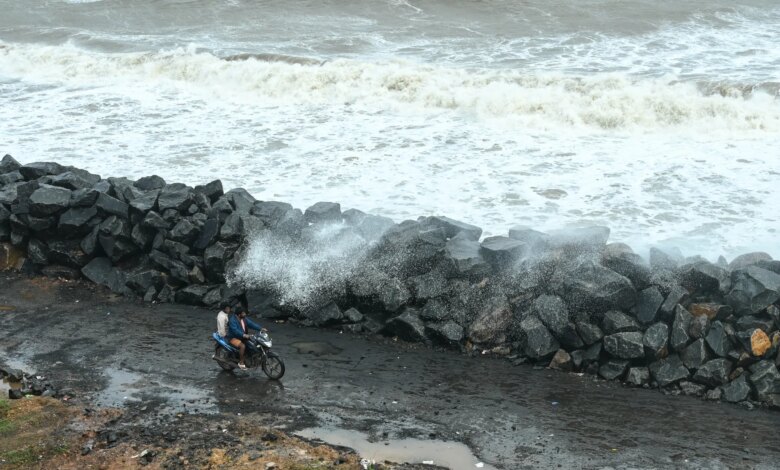
Indian disaster management authorities are rushing to evacuate tens of thousands of residents from low-lying coastal areas as a strengthening tropical storm bears down on the country’s eastern seaboard. Cyclone Arnab, classified as a “very severe” cyclonic storm by meteorological officials, is projected to make landfall on Wednesday morning, placing more than 12 million people along its potential inland and northward path.
The India Meteorological Department issued severe weather warnings for the vulnerable coastal states of Andhra Pradesh and Odisha. According to forecasters, the storm was centered approximately 260 kilometers, or 160 miles, southeast of Visakhapatnam, the most populous port city in Andhra Pradesh. Officials expect the system to track northwestward and cross the coastline around 11:30 a.m. local time on Wednesday, bringing sustained winds of 115 to 125 kilometers per hour, equivalent to 71 to 78 miles per hour, alongside powerful gusts reaching up to 140 kilometers per hour, or 87 miles per hour.
The storm developed over the Bay of Bengal, a body of water recognized globally as a primary breeding ground for tropical cyclones that frequently impact India’s eastern regions. Andhra Pradesh’s disaster management authority reported that more than 12 million people reside within the projected trajectory of the storm.
By Monday night, local authorities had successfully relocated nearly 50,000 residents from vulnerable zones to established emergency shelters. However, this effort represents only a fraction of a much larger population in need of safety. Prakhar Jain, managing director of the Andhra Pradesh disaster management authority, noted that approximately 400,000 individuals require evacuation as the storm closes in, confirming that operations remain ongoing.

The approaching severe weather has also severely disrupted regional transportation networks. Railway officials announced the cancellation of at least 12 trains across eastern India, while services along 53 routes on the southern coast have been suspended for both Tuesday and Wednesday.
Neighboring states are also preparing for the storm’s wider meteorological footprint. In Odisha, authorities initiated plans to move an additional 48,000 people out of harm’s way. Meanwhile, officials in Nepal issued travel advisories warning tourists to avoid high-altitude regions. Authorities expressed concern that the outer bands of Cyclone Arnab could generate heavy rainfall, severe snowstorms, and dangerous avalanches across the Himalayas between Thursday night and Saturday. That advisory follows a deadly Himalayan flash flood in August that claimed the lives of approximately 1,500 people in the country.