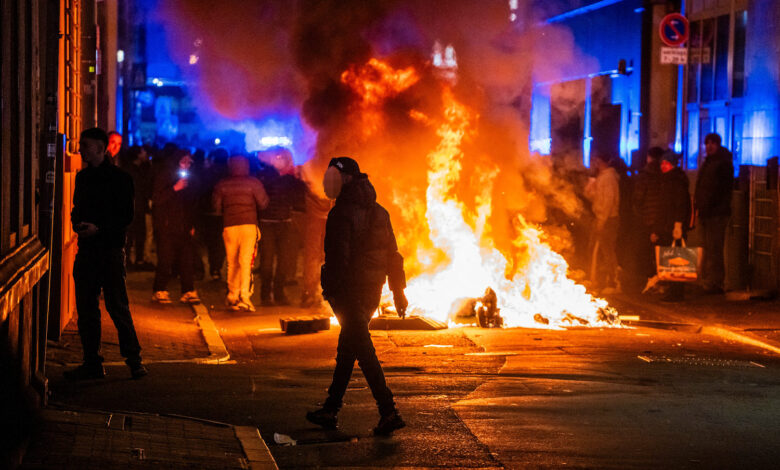
Tens of thousands of people took to the streets across more than 30 German cities on Saturday in demonstrations organized by the campaign group Gen Z regelt, or Gen Z takes charge. The protests, which coincided with Halloween and demanded lower living costs, increased spending on schools, housing, and climate protection, turned violent in several areas.
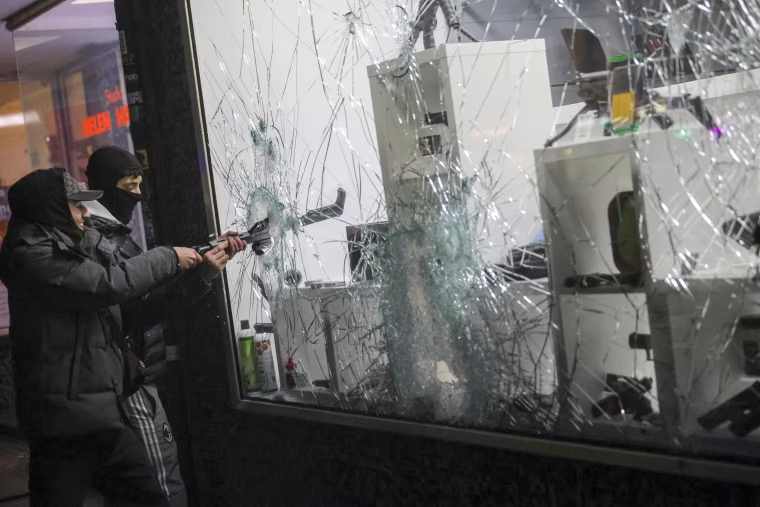
In Frankfurt, rioters looted stores, smashed shop windows, and hurled Molotov cocktails at emergency services. Frankfurt police issued urgent warnings via social media urging bystanders to avoid the city center. In Hamburg, demonstrators set fire to barricades, while some local businesses boarded up their storefronts ahead of the demonstrations.
Speaking in Berlin on Saturday, Gen Z regelt spokesperson Lina Friedrich outlined the movement’s motivations. “We are here today to fight for peace and freedom, rather than for war and coercion,” Friedrich said. “What matters most to us is better support for the health and education systems. We are against compulsory military service and we are in favor of a fairer distribution of the burden.”
Official numbers released Saturday afternoon indicated that turnout fell short of the 182,000 participants organizers had initially anticipated. The German demonstrations occurred amid a wider wave of civil unrest spanning multiple European nations, including France, Italy, Serbia, and Spain, where citizens have protested against the cost of living, housing expenses, and educational conditions.

Ahead of the weekend, Roman Poseck, interior minister for the Hessian state, cautioned against following escalating unrest seen recently in neighboring France. “We all have those images from France in our minds — looting, burning houses, burning police vehicles, and attacks on police officers,” Poseck said. “France must not be held up as a model in this regard.”
In Italy, Prime Minister Giorgia Meloni’s government announced plans to deploy 500 army troops alongside police in Milan through the end of the year following recent clashes and store looting by masked groups. Demonstrations continued in Rome and other Italian cities, where law enforcement deployed water cannons and conducted baton charges to disperse crowds. Meanwhile, in Portugal, police in Lisbon forcibly cleared an activist tent camp protesting high housing costs early Sunday, using shields and baton charges against hundreds of demonstrators.

While the continental protests share similar timing and themes, Andrew Barclay, a politics lecturer at the University of Sheffield, emphasized key distinctions between national movements. The French demonstrations involved hundreds of thousands over multiple weeks centered primarily on education funding, whereas other European protests have expanded to encompass a wider array of grievances while remaining smaller in scale.
Barclay also urged caution in drawing parallels to Serbia, where student-led activism recently unseated the country’s long-time leader at the ballot box over state corruption. Protests in countries like Germany and France, he noted, are unlikely to produce comparable direct shifts in governance.

“Often protests, even quite large ones, don’t capture that level of support elsewhere in the country,” Barclay said, adding skepticism regarding whether demonstrations elsewhere would achieve similar political outcomes.