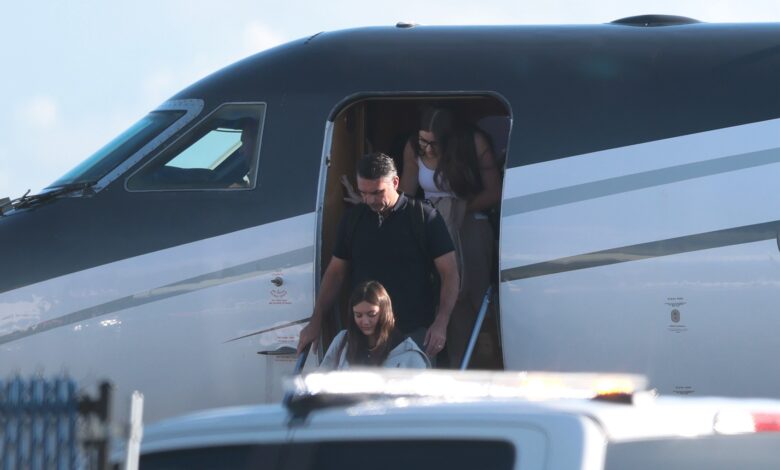
When Flávio Bolsonaro arrived in South Florida following political defeat in Brazil, he stepped into a well-established geopolitical tradition. For nearly a century, deposed leaders, authoritarian figures, and disgraced politicians from Central and South America have packed their bags for the Sunshine State, utilizing Miami’s geographic proximity and vibrant immigrant communities as an immediate escape hatch when domestic political fortunes soured.
Thanks to Miami International Airport’s role as a major transit hub for the region, a quick flight north has long offered an appealing alternative to facing criminal investigations, labor unrest, or civil unrest at home. This path to subtropical exile echoes a well-worn route taken by numerous historical figures before the Bolsonaro family.
Among the earliest modern examples was Cuban President Gerardo Machado, who fled to Florida in 1933 amid widespread labor strikes and the collapse of his government. Machado spent his final years in Miami, passing away there six years after his arrival. Decades later, Cuban military dictator Fulgencio Batista maintained a residence in Daytona Beach during the 1940s before returning to power via a 1952 coup. When Batista was permanently toppled by Fidel Castro’s revolution at the end of the decade, he flew to Jacksonville, though his subsequent request for U.S. asylum was denied. He ultimately spent his remaining years in Franco’s Spain.
In 1979, another prominent dynasty crumbled as Nicaraguan leader Anastasio Somoza fled his country in a cargo plane bound for Miami. President Jimmy Carter declined to grant him entry, forcing Somoza to travel onward to the Bahamas and eventually to Paraguay, where a Sandinista strike team assassinated him a year later.
As the decades progressed, the influx of exiled political figures into South Florida continued. A 2010 review published by the Miami New Times famously mapped the addresses of various regional strongmen and disgraced officials residing in the area, noting the region’s long-standing appeal for ousted leaders. Former Bolivian President Gonzalo Sánchez de Lozada sought refuge in South Florida following violent protests over natural gas export policies. Similarly, former Panamanian President Ricardo Martinelli relocated to the region before U.S. authorities arrested him in 2017 and extradited him to face corruption charges.
More recently, members of Brazil’s prominent political family have gravitated toward the same red-state enclave. Following his 2022 election defeat, former Brazilian President Jair Bolsonaro relocated to Florida, though he has since returned to Brazil facing legal proceedings. His son Eduardo also landed in Florida around the same period before later moving to Texas. Flávio Bolsonaro touched down at Opa Locka Executive Airport, though his exact movements since arrival remain opaque.
Florida’s robust Brazilian community—home to more than a fifth of the Brazilian population in the United States—coupled with its large conservative Latin American demographic, provides an environment that feels familiar to arriving politicians. While Flávio Bolsonaro initially made bold claims about his political standing upon arrival, historical precedent suggests that using Florida as an operational base for a political comeback is rarely successful. Aside from the complex trajectories of figures like Batista, history shows that an enforced Florida exile rarely serves as a successful stepping stone back to power.