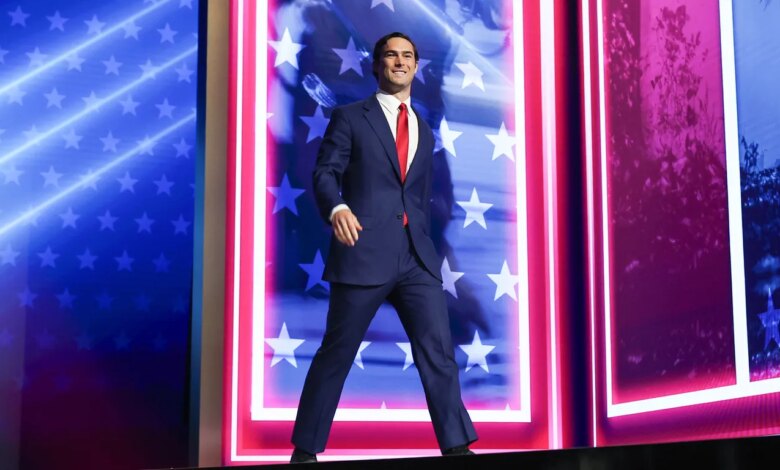
A small group of House Freedom Caucus members are privately questioning whether Texas freshman Rep. Brandon Gill still belongs in the hardline legislative group, as his rapid ascent through Republican ranks draws both high-level praise and sharp internal resentment.
At 32 years old, Gill has emerged as one of the party’s most prominent young stars, building a national profile with frequent appearances on , including coveted primetime slots, and developing a close alignment with President Trump’s political orbit. He currently serves as president of his freshman class.
However, several Freedom Caucus members told reporters that Gill’s engagement with the hardline bloc has waned as his national profile has expanded. Multiple anonymous lawmakers accused Gill of leveraging the group merely for conservative credentials without maintaining active participation or providing adequate financial support to fellow members in difficult electoral contests.
“He’s not really in the Freedom Caucus. He’s just using it for conservative bonafides,” one member said, adding that some colleagues feel he has been missing from tough legislative votes over the last two years while pursuing higher-profile ambitions.
Four sources familiar with internal discussions revealed that members have privately talked about potentially expelling Gill from the caucus. These conversations have remained informal, and the matter has not been raised at an official Freedom Caucus meeting. It remains unclear whether sufficient votes would exist to formally oust him.
The friction extends to financial matters. While critics contend Gill has not sufficiently backed colleagues despite benefiting from introductions to Freedom Caucus donors, Gill’s office pushed back against the claims. A spokesperson noted that he has contributed financial support to more than a dozen Freedom Caucus campaigns, alongside a $1.1 million donation to the National Republican Congressional Committee in September.
Operating out of an R+11 district, Gill posted a formidable fundraising haul of $4.7 million in the third quarter. His broader ambitions have also included a bid to head the House Oversight Committee as the top Republican, an aspiration that has generated additional resistance across the wider conference. Detractors have questioned whether his talent for generating viral hearing moments qualifies him to lead a powerful committee, while others pointed to past public attacks on fellow Republicans, such as his criticism of Rep. Maria Salazar over an immigration bill.
House colleagues have also accused Gill of burning bridges and altering how he treats peers as his fame grew. One lawmaker asserted that Gill stopped returning text messages and treated colleagues like stepping stones, leading to a sentiment that his national success had gone to his head.
Despite the internal complaints, Gill maintains prominent defenders within the party. Majority Whip Tom Emmer praised Gill’s communication skills and described him as the future of the party, stating that he needs to remain visible on the national stage. Rep. Mark Harris of North Carolina, a fellow freshman caucus member, dismissed the friction, saying Gill regularly attends meetings and that he feels no frustration toward him.
Freedom Caucus Chair Andy Harris dismissed the reports of internal turmoil, accusing the media of manufacturing stories based on anonymous sources and insisting the caucus remains united behind Donald Trump’s legislative agenda. Another caucus member defended Gill’s rapid rise, expressing gladness that young, talented figures are entering politics and advancing quickly.
The Freedom Caucus has previously removed members, having ousted former Rep. Marjorie Taylor Greene in 2023 following a dispute with Rep. Lauren Boebert, and former Rep. Ken Buck in 2024 over attendance issues. With at least 10 of the caucus’s more than two dozen members departing next term, the group faces an impending identity crisis, leaving some members viewing Gill as a potential voice for the next generation.
“He’s already kind of left the Freedom Caucus,” an anonymous member said. “The only question is whether you formalize it or you don’t.”