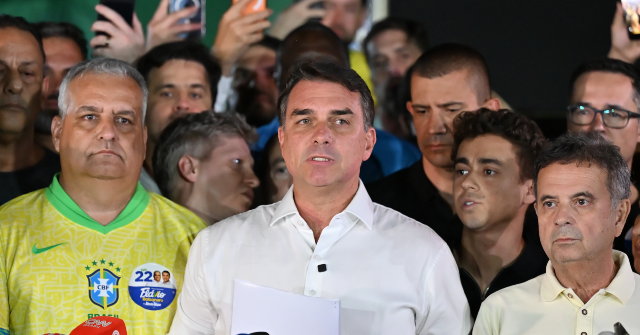
Brazilian conservative Senator Flávio Bolsonaro declared Sunday night that it is impossible for him to recognize the results of the presidential runoff election that resulted in a narrow victory for incumbent socialist President Luiz Inácio Lula da Silva. Bolsonaro announced that his campaign team will formally request the annulment of the results on the grounds that the rules of the game were altered during the electoral process.
The high-stakes 2026 presidential runoff concluded with Lula, the 80-year-old leader of the far-left Workers’ Party, securing reelection to a fourth four-year term. Finalized results published by the Superior Electoral Tribunal showed Lula winning with 51.79 percent of the vote, while Bolsonaro captured 48.21 percent. The outcome marked a reversal from the October 4 first round, where Bolsonaro had led.
Controversy erupted immediately after Supreme Federal Tribunal Justice Cristiano Zanin issued an unprecedented ruling extending voting times by two hours. The adjustment caused some polling stations to close at 7:00 p.m. local time rather than the standard 5:00 p.m. closing time established by national electoral regulations. Justice Zanin ordered the extension in response to a petition from the Lula campaign, which contended that a bus shortage created transportation bottlenecks that prevented voters from reaching polling stations in northeastern Brazil, a stronghold for the Workers’ Party.
Speaking to supporters on Sunday night, Senator Bolsonaro denounced the results as unacceptable. He criticized Justice Zanin’s intervention, noting that Zanin previously served as Lula’s personal lawyer, and argued that it was abnormal to alter electoral rules mid-vote at the request of a former associate. Bolsonaro claimed there was a complete breakdown of equality among voters across different cities and states, adding that it is impossible to know how many additional votes he might have received in regions where polls were not reopened.
As of Monday morning, a formal annulment petition had not yet been filed by the Liberal Party. Judicial sources within the electoral tribunal indicated to local media that while some magistrates viewed the late voting extension as a potential justification for an earlier annulment, executing such a measure after vote counting had resumed presented insurmountable complications, particularly regarding the risk of an institutional crisis and the narrow vote margin between the candidates. Observers also noted that the Supreme Court intervention strained institutional boundaries by bypassing the electoral tribunal’s traditional authority.
The contested election results triggered immediate turbulence in financial markets. The Brazilian stock exchange temporarily halted trading via a circuit breaker following significant selloffs, resulting in a 16 percent drop. Simultaneously, the Brazilian real experienced sharp declines, falling 12 percent against the U.S. dollar and 10.12 percent against the euro as trading opened. Economists attributed the market volatility to pre-election polling that had favored a Bolsonaro victory, leaving investors uncertain about the fiscal policies of the returning administration.