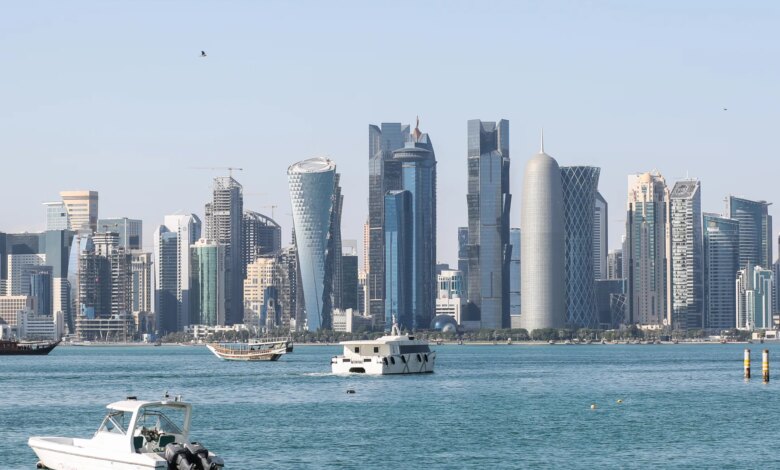
Ahmad bin Mohammed al-Sayed, Qatar’s Minister of State for Foreign Trade Affairs, delivered a stark warning on Sunday regarding the fragile state of global commerce, asserting that international trade and investment cannot reach their full potential without a foundation of peace and security. Speaking at the United Nations-led World Investment Forum in Doha, the minister addressed a gathering of heads of state, policymakers, and global CEOs, emphasizing that the current geopolitical climate is fundamentally redefining the investment landscape.
The minister’s remarks arrived against the backdrop of significant regional instability, specifically the nearly eight-month-old war involving the United States, Israel, and Iran. Since the conflict began on February 28, 2026, global markets have faced persistent volatility, with trade routes and critical energy infrastructure becoming direct targets. Al-Sayed noted that the global economy is currently undergoing profound shifts driven by these geopolitical changes, leading to what he described as a period of heightened uncertainty and economic fragmentation.
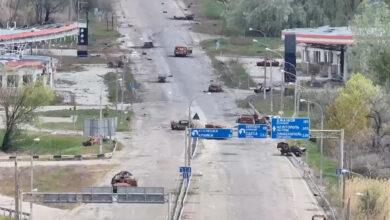
A central point of concern for the forum was the ongoing disruption of the Strait of Hormuz. Iran effectively blocked the waterway, a vital passage for roughly one-fifth of the world’s traded oil and liquefied natural gas (LNG), in response to the outbreak of hostilities. This blockade, combined with active combat operations in the region, has severely impacted shipping reliability. In just the past week, escalating attacks on vessels within the strait and the stagnation of diplomatic efforts have sent oil prices climbing. Brent futures recently surged approximately 4 percent to reach $113.17 a barrel, marking a five-month high and placing renewed strain on the global economy.
Qatar itself has not been immune to the physical consequences of the conflict. Al-Sayed referenced the damage sustained by the Ras Laffan industrial complex during Iranian strikes in March. The facility, which is central to Qatar’s industrial and energy output, suffered significant structural impacts, and the minister indicated that repairs are expected to continue for several years. This localized disruption serves as a primary example of how conflict directly interferes with industrial capacity and long-term economic planning.
Despite the regional challenges, al-Sayed outlined Qatar’s internal efforts to maintain economic momentum through diversification and the strengthening of supply chains. He reported that Qatar successfully attracted 373 foreign direct investment projects in 2025, representing a 50 percent increase over the previous year. These projects have been credited with generating more than 15,000 jobs. To sustain this growth, the Qatari government has unveiled a massive infrastructure pipeline worth $38.5 billion over the next five years. Additionally, the state anticipates $22.5 billion in private sector investments specifically targeting the hospitality and real estate sectors.
Concluding his address, al-Sayed called for a shift away from isolationist policies and a return to predictable international rules. He argued that the only way to counteract the current trend of economic division is through stronger international partnerships and a commitment to safe, stable environments. The message from Doha remains clear: while regional powers struggle with the immediate realities of war, the long-term health of the global investment market depends entirely on the restoration of regional security.