Federal judge rejects U.S. government request to segregate 20,000 California mail-in ballots

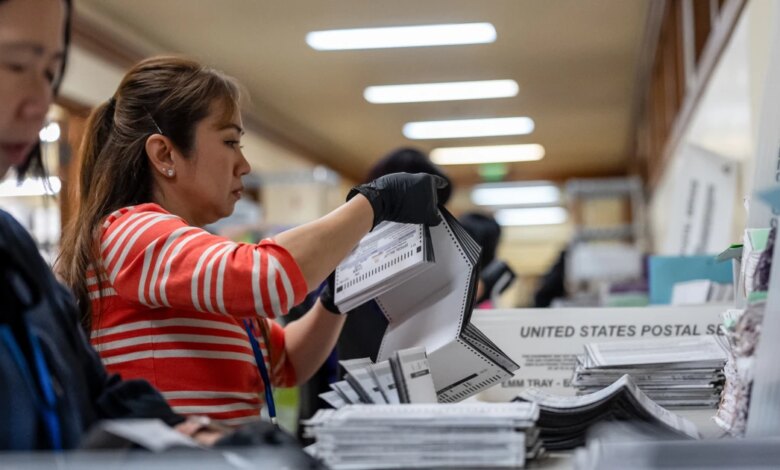
A federal judge in California has refused a request from the administration to segregate 20,000 mail-in ballots from individuals the federal government alleges are noncitizens, ruling that granting the emergency relief would cause widespread disruption to an ongoing election.
U.S. District Judge David Carter issued the ruling Wednesday, writing that the government’s demand violated long-standing constitutional principles granting states control over their elections. Carter warned that the last-minute intervention would create chaos, chill election workers and voters, and potentially discount the votes of eligible U.S. citizens.
The Justice Department filed the lawsuit on Oct. 15, asking the court for an order requiring California to set aside vote-by-mail ballots identified by federal authorities as likely belonging to noncitizens and to withhold counting them until citizenship could be verified. Federal prosecutors compiled a list of over 20,000 names they claimed were likely noncitizens.
During court proceedings, Judge Carter questioned the credibility of the government’s data. Pointing to similar allegations brought in Nevada, the judge noted that the Department of Homeland Security initially identified up to 15,903 registered voters as noncitizens based on high-confidence matches, but that number plummeted to 6,218 and ultimately to 185 after manual review. Nevada officials subsequently confirmed that all 185 individuals were U.S. citizens.
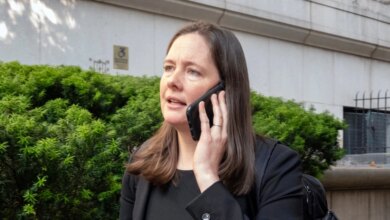
State attorneys for California forcefully challenged the federal figures during the Tuesday hearing. Christina McCall, an attorney representing California, questioned the evidence, calling the allegations vague and unreliable. Another state attorney, Anne Bellows, told the judge that the stakes were enormous, arguing that the administration was attempting to force the state into conducting an ill-defined investigation without clear standards shortly before an election, creating a recipe for voter disenfranchisement. State records indicated that in a July letter, the government had put the number of suspect voters at 190,000.
First Assistant U.S. Attorney Bill Essayli defended the administration’s position before the court, arguing that federal authorities were not dictating state procedures but rather pointing out legal obligations. Once the state is made aware of potential noncitizens on voter rolls, Essayli argued, officials must act rather than proceeding to count contested votes.
Judge Carter countered that if the government suspects illegal voting—which constitutes a crime—prosecutors possess the power of indictment. Carter noted that prosecutors had already brought 28 indictments against individuals found to have voted illegally in California in recent years.
Following the ruling, Essayli criticized the decision and announced an immediate appeal. The Solicitor General authorized the action, and a notice of appeal was filed alongside a request for an emergency order from the 9th U.S. Circuit Court of Appeals.
The litigation has already seen movement through the federal appeals court system. Last week, the Justice Department filed a motion to expedite the case to the 9th Circuit after Judge Carter did not immediately rule on the request. An emergency hearing held Sunday resulted in a 2-1 ruling against the administration on Monday.
The majority in that appellate decision found it lacked jurisdiction because Carter had not yet ruled, while also concluding that the government’s claimed emergency was partly self-constructed. Circuit Judge Mark Bennett noted in the ruling that the United States had raised issues with California’s voter rolls since at least July 16 and that neither the state laws permitting early ballot processing nor mail-in ballot issuance were new. Circuit Judge Gabriel Sanchez wrote in a concurring opinion that the government was improperly asking the court to dictate state legislative matters.
Dissenting Circuit Judge Patrick Bumatay wrote that the court should have granted relief, arguing that federal law precludes California from commingling ballots likely cast by noncitizens with legitimate ones.