The intersection of supernatural religion and American politics has long startled casual observers, particularly when alternative spirituality aligns with conservative movements. While the media frequently characterizes modern right-wing figures through a lens of dark political intrigue, historians point to a deep-rooted, centuries-old tradition connecting American conservatism with esoteric and New Age mysticism.
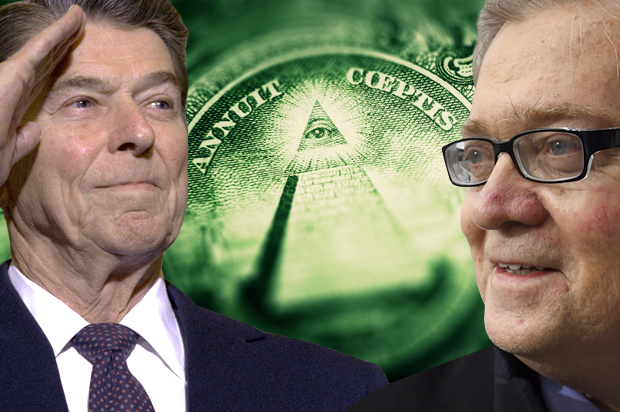
This connection is hardly new. Ronald Reagan, a hero to generations of conservatives, drew phrasing and ideas from Los Angeles-based occult scholar Manly P. Hall, whose 1928 encyclopedia of esoteric philosophy, “The Secret Teachings of All Ages,” remains an influential underground text. From the 1950s through his presidency, Reagan frequently echoed Hall’s themes of America possessing a “secret destiny,” describing the continent in 1974 as having been placed by a divine plan between two oceans for those who loved freedom. President Trump similarly recalled lessons in “positive thinking” from the Rev. Norman Vincent Peale, whose 1952 mega-seller popularized metaphysical mind-power concepts.
This marriage between politics and mysticism extends back to the late 19th century, when Russian noblewoman and globetrotting occultist Madame H.P. Blavatsky depicted the United States as a catalyst for a revolution in human potential in her 1888 opus, “The Secret Doctrine.” Generations of esoteric writers echoed the idea of America as a Holy Grail among nations, marrying alternative spirituality with patriotic ideals out of the view of mainstream observers.
This esoteric streak even influenced the nation’s currency. In 1935, Secretary of Agriculture Henry A. Wallace approached President Franklin D. Roosevelt with the idea of minting a coin featuring the reverse side of the Great Seal of the United States—the eye-and-pyramid surrounded by the Latin maxim signifying a new order of the ages. Both men were Freemasons with an affinity for portentous imagery. Roosevelt personally supervised the installation of the design on the back of the dollar bill, transforming an arcane insignia into an indelible symbol of the republic. Decades later, President George H.W. Bush brought unintended notoriety to similar phrasing by invoking a “new world order” during a 1990 address to Congress, inadvertently sparking a generation of conspiracy theories.
Conservative metaphysics have consistently extended into domestic policy and alliances. Richard Nixon maintained close ties with insurance magnate W. Clement Stone, a right-wing activist, benefactor of the parapsychology lab at Duke University, and collaborator with mind-metaphysics author Napoleon Hill. Even contemporary conservative evangelicals draw from these traditions, with figures like Pat Robertson promoting a “Law of Reciprocity” rooted in the 19th-century mind-power movements popularized by spirit medium Andrew Jackson Davis.
At the same time, conservative presidencies have not held a monopoly on the otherworldly. During the Clinton administration, first lady Hillary Clinton faced public scrutiny over visioning sessions with New Age teacher Jean Houston, which critics sensationalized as White House séances. President Bill Clinton maintained a more pragmatic view, famously terminating the CIA’s psychic-spying program in 1995 during a period of post-Cold War budget cuts, whereas former President Jimmy Carter had previously expressed admiration for the agency’s remote-viewing operations.
Despite the suspicions of critics who worry that spiritual preordainment might encourage reckless governance, historians note that America’s embrace of esotericism is typically characterized by earnest idealism rather than clandestine subversion. The persistence of unusual religious and mystical ideas across the political spectrum reflects a broader national commitment to protecting the individual search for meaning, uniting citizens through a diverse landscape of belief.