While economic concerns like gas and grocery prices have dominated the national discourse this cycle, the midterm elections in Iowa are being fundamentally reshaped by a brewing crisis in health care. From struggling rural hospitals to the impending impact of social safety net reductions, the intersection of policy and personal survival has moved to the center of several of the state’s most competitive races.
In Cedar Rapids, the Eastern Iowa Health Center serves as a front-line indicator of the stakes. Seven out of every ten patients who enter the facility are Medicaid recipients. By its charter, the federally qualified health center cannot turn away anyone for an inability to pay, even as many of its patients live in extreme economic precarity. According to leadership at the center, the number of patients living on month-to-month leases has more than doubled in just three years. Now, the facility is bracing for the implementation of the One Big Beautiful Bill Act, a sweeping Republican law that includes 80-hour monthly work requirements for Medicaid eligibility.
Joe Lock, the president and CEO of the center, warns that these requirements will be devastating for both patients and the institution’s ability to provide care. This sentiment is echoed by local families like that of 27-year-old Drew Carfrae of Waverly. Carfrae, who uses a wheelchair and requires 24/7 care for a rare condition called arthrogryposis, has already seen his benefits reduced. His mother, Jessica, was forced to quit her job to provide the care he requires. Their story highlights a growing fear among Iowans regarding the full implementation of the new law’s provisions.
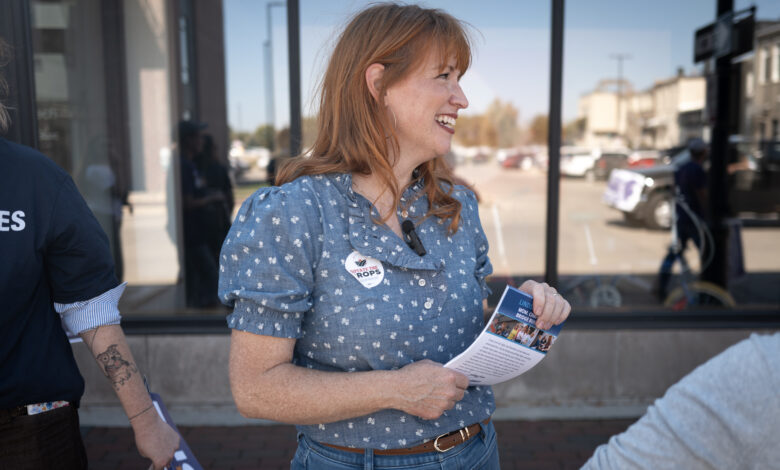
The political fallout from these changes is central to the race in Iowa’s 2nd Congressional District, where Democratic state Representative Lindsay James is challenging Republican Joe Mitchell for an open seat. James, a pastor who has centered her campaign on health and child care, argues that the next few years will see some of the most consequential votes in U.S. history regarding the healthcare safety net. She has aligned herself with House Minority Leader Hakeem Jeffries’ priorities, which include reversing the Medicaid changes and restoring enhanced Affordable Care Act (ACA) subsidies that are currently set to expire.
On the other side of the aisle, Mitchell, a real estate developer and Gen Z Republican, dismisses the characterization of the law as a cut to services. He maintains that the requirements simply ask recipients to work and argues that the ACA is the primary driver of unaffordability in the current system. Mitchell has leaned heavily into a populist, anti-corruption platform, vowing to refuse corporate PAC money and calling for a constitutional amendment to overturn Citizens United. Despite his breaks from traditional GOP orthodoxy on campaign finance, he remains a staunch ally of Donald Trump, recently presenting the former president with a gold-framed “Man of the Century” award at a campaign event.
The race is also being influenced by the “Make America Healthy Again” (MAHA) movement, championed by Republican gubernatorial nominee Zach Lahn. Lahn has focused on Iowa’s high rate of new cancer diagnoses, linking the issue to the agriculture industry and water quality. His platform, which includes controversial calls to pull the COVID-19 vaccine from the market, represents a new strain of medical populism within the GOP that seeks to blend economic populism with health-focused messaging. While some Republican moderates have expressed unease over Medicaid cuts, Lahn’s primary victory suggests this new messaging holds significant sway with the party’s base.
Initially considered a safe Republican seat—Trump carried the district by 10 points in the last cycle—IA-02 has shifted toward a toss-up as the national environment has trended more toward Democrats. The district is a microcosm of the state, stretching from the urban Democratic hubs of Waterloo and Cedar Rapids to the rural Driftless Area and the historic site of the plane crash immortalized as “The Day the Music Died.”
While James has shown a narrow lead in some recent polling, Democratic organizers remain cautious, citing past polling inaccuracies in the state. Republicans, meanwhile, are banking on high turnout from the Trump base, particularly with a planned rally by the former president in Dubuque just days before the election. The outcome may ultimately hinge on whether James can successfully frame the election as a referendum on the survival of the rural health care system or if Mitchell’s message of economic reform and cultural preservation resonates more deeply with a changing electorate.