Mexican Freight Transport Associations Announce Indefinite National Strike Over Security and Toll Costs

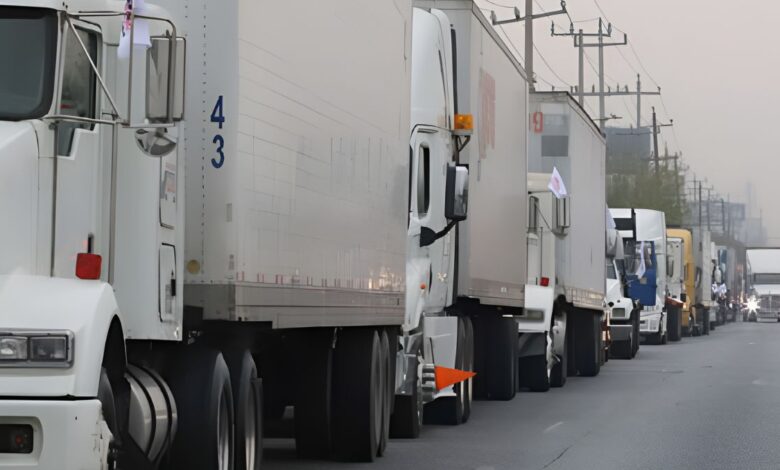
Freight transport organizations in Mexico have announced an indefinite national strike beginning Monday, October 26, to demand enhanced highway security and lower toll rates. The labor action involves a complete suspension of operations alongside widespread demonstrations, according to the National Chamber of Freight Transport, known as Canacar.
Representatives from participating transport organizations stated during a press conference that at least one million sector workers are expected to join the mobilization. Organizers indicated that the demonstrations will involve operating vehicles in active highway circulation rather than staging complete road blockades.
While exact protest checkpoints have not been finalized, disruptions are anticipated along major federal highways, logistical corridors, and toll roads across multiple states. Regions expected to experience significant movement include the State of Mexico, impacting the Circuito Exterior Mexiquense, the Texcoco highway, and the Chalco highway. In Hidalgo, traffic could be affected along the Mexico-Pachuca autopista, while Puebla anticipates impacts on the Mexico-Puebla expressway. Guanajuato routes, including the Salamanca-Celaya highway and Federal Highway 45, are also slated for demonstrations.
Additional disruptions are projected for key northern and western corridors. Nuevo León expects traffic slowdowns on the Monterrey-Laredo, Monterrey-Reynosa, and Monterrey-Saltillo highways, while Tamaulipas faces potential delays on the Matamoros-Reynosa autopista. In central and western regions, demonstrations will affect the Mexico-Cuernavaca autopista in Morelos, the Mexico-Querétaro autopista, the Morelia-Pátzcuaro highway in Michoacán, and several arteries in Jalisco, including the Mexico-Guadalajara autopista, the Guadalajara Macrolibramiento, and the Guadalajara-Colima highway. Sinaloa is also expected to see transport actions along the Culiacán-Mazatán highway.
Industry leaders have warned of substantial economic consequences and potential bottlenecks in supply chains. According to Canacar figures, approximately 1.6 million tons of goods are transported daily by road across the country, spanning food, agricultural products, auto parts, fuels, chemicals, and raw materials. Furthermore, the sector handles roughly 21,000 daily border crossings between Mexico and the United States, representing a merchandise exchange valued at $1.8 billion.
Canacar estimates that disruptions to motor carrier operations could result in economic impacts of around 7 billion pesos daily. Augusto Ramos Melo, national president of Canacar, cautioned that the transport interruption threatens to disrupt the distribution of basic supplies, including fuel.
Transport representatives emphasized that the strike will continue indefinitely until authorities provide concrete solutions regarding highway security, infrastructure, and fiscal conditions. However, organizers noted that they remain open to negotiating agreements with the federal government to resolve the dispute.