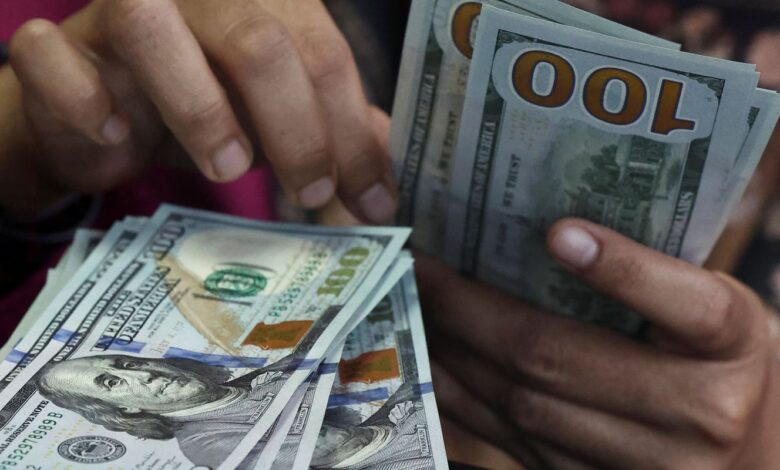
The Brazilian real closed below the R$ 5 threshold on Friday, finishing its final trading session ahead of the presidential election runoff with a notable gain against the United States dollar. The domestic currency appreciated even as the greenback strengthened internationally, supported by local position adjustments as investors prepared for Sunday’s national vote between President Luiz Inácio Lula da Silva and Senator Flávio Bolsonaro.
The commercial dollar ended the session down 0.92%, quoted at R$ 4.993, after touching an intraday low of R$ 4.989 toward the end of trading. This put the exchange rate at its lowest level since October 9, when it closed at R$ 4.985. Over the course of the week, the currency accumulated a decline of 1.58% against the real, reversing a 1.77% advance from the previous week. The Brazilian currency delivered the strongest performance among major global currencies on Friday, outperforming international peers while the DXY index, which tracks the dollar against a basket of strong currencies, rose 0.19% to 101,799 points around 17:00.
On the B3 exchange, the benchmark Ibovespa index rose 0.47% to close at 205,082.56 points, with financial volume reaching R$ 30.7 billion. Despite Friday’s positive movement, the index recorded a weekly loss of 0.17% amid pervasive investor caution surrounding the ballot. For the broader month of October, the stock market holds a gain of 10.06%, bringing its total advance for 2026 to 27.28%. The session’s gains were bolstered by shares in oil and mining companies, which tracked sharp increases in the prices of crude and iron ore.
Global energy markets experienced a substantial rally as escalating geopolitical tensions in the Middle East drove crude futures upward to their highest levels since April. Traders reacted to fears of potential supply disruptions and renewed confrontations involving the United States, Israel, and Iran. Brent crude for December delivery climbed 3.13% to settle at $116.72 per barrel, while West Texas Intermediate crude rose 3.82% to close at $103.27 per barrel. On a weekly basis, Brent and WTI contracts advanced 6.24% and 4.29%, respectively.

The upward pressure on energy prices was reinforced by regional security warnings. Iran cautioned that it could respond to any prospective attacks from the United States and Israel by targeting military bases, warships, and other assets in neighboring Persian Gulf nations. At the same time, ongoing clashes involving the Houthis and Saudi Arabia heightened anxieties regarding regional stability and trade routes. In the United States, the Department of Energy authorized measures utilizing the Strategic Petroleum Reserve to help stabilize fuel supplies following inventory declines and market disruptions.