Lula’s Last Campaign: Brazil’s Iconic Leader Faces Tightest Election as the Left Confronts a Post-Lula Future

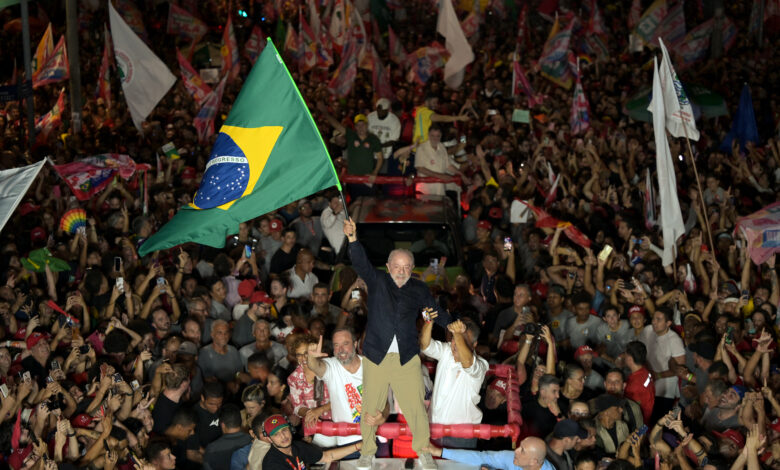
On the main thoroughfare of São Paulo, a sea of red recently filled Avenida Paulista, as supporters of President Luiz Inácio Lula da Silva chanted his name and formed the iconic “L” gesture with their fingers. It was a massive show of force, drawing from social movements, LGBTQ+ activists, and even youth fan clubs. Yet, beneath the festive atmosphere of the “March for Democracy,” a stark political reality was setting in: the coalition that returned Lula to power four years ago is fracturing, and the man once called “the most popular politician on Earth” is facing his most difficult electoral test yet.
Today, Brazilians return to the polls for a second-round runoff that marks the end of an era. At nearly 81 years old, Lula is appearing on a presidential ballot for the final time, facing off against Flávio Bolsonaro, the son of the far-right former president Jair Bolsonaro. This election is proving to be the tightest in Brazil’s modern history, forcing the global left to confront a sobering possibility: that its most successful survivor may finally be running out of road.
Lula’s biography is the stuff of political legend. Born into poverty in the country’s northeast, he went hungry as a child and later lost a finger in an industrial accident as a metalworker—a physical mark of the working-class struggles he would eventually represent. He rose through the trade union movement during the final years of the military dictatorship, co-founding the Workers’ Party (PT) in 1980. Over three non-consecutive terms, he leveraged a commodity boom to lift millions out of poverty, becoming an icon for progressives worldwide.
However, the political landscape of 2026 bears little resemblance to the one Lula dominated in the early 2000s. The results of the first round of voting three weeks ago sent shockwaves through the PT headquarters. Lula tallied 3.4 million fewer votes than he did in the first round of the 2022 election. Even in his traditional stronghold of the Northeast, his share of the vote shrank. Meanwhile, abstention rates reached heights not seen since 1998, suggesting a deep-seated exhaustion with the political establishment.
Observers note that Brazil has moved on from the socio-economic models of the past. Thanks in part to Lula’s own policies, the country now possesses a larger middle class and an expansive army of gig workers who do not feel protected by the traditional welfare state. To these voters, the PT’s emphasis on trade unions and collective bargaining feels disconnected from their daily reality of precarious self-employment. Simultaneously, the rise of a booming agro-tourism sector and the expanding influence of the Evangelical Church have solidified a conservative identity that favors the populist-nationalist rhetoric of the Bolsonaro family.
“I’ve seen this film before,” noted Fernando Brigidi, a political operative with experience in U.S. presidential campaigns who observed the mood at a recent Lula watch party. He compared the current moment to other global examples where aging incumbents have leaned on the politics of nostalgia rather than adapting to new realities. “An 80-year-old incumbent who looks to the past and hasn’t adapted to a new political reality.”
Lula’s strength has historically been his ability to bridge ideological divides. In 2022, he performed a masterful maneuver by choosing Geraldo Alckmin, a former center-right rival, as his running mate to reassure corporate interests. He has successfully brought radicals and centrists into his cabinet, effectively neutralizing potential rivals by making them stakeholders in his government. But this strategy of being “bigger than the party” has left a vacuum where a successor should be.
Inside the PT, there is a quiet panic about what comes after Lula. While he has cultivated many protégés, such as Finance Minister Fernando Haddad and former squatter movement leader Guilherme Boulos, he has not groomed a clear heir. Some potential rising stars, like former Recife Mayor João Campos, saw their national profiles stalled by local losses earlier this month. If Lula wins today, he enters a lame-duck term where internal factions—from pro-business moderates to hardline party ideologues—will likely engage in a zero-sum struggle for control. If he loses, the party faces a reckoning over why it failed to modernize its message.
The stakes extend far beyond Brazil’s borders. Left-of-center leaders in Spain, France, and Canada are watching the results with self-interested anxiety. Spanish Prime Minister Pedro Sánchez recently endorsed Lula, emphasizing the need for progressive stability in Latin America. For these leaders, Lula has long been the gold standard for how to govern across the ideological spectrum while maintaining a progressive core. If his unique brand of charisma and history is no longer enough to hold back the right-wing wave sweeping the hemisphere, other progressive governments may find themselves similarly vulnerable.
Even some who intend to vote for Lula are doing so with a sense of resignation. Paulo Oliveira, a 60-year-old sales manager in São Paulo who cast a blank vote in the first round, said he would support Lula in the runoff only to block the return of the Bolsonaro family. He described the current political climate as overly personalized. “If Lula dies, nobody knows who to vote for,” Oliveira said, echoing a sentiment felt across a country that has spent a quarter-century in the shadow of one man’s shadow.
As the polls close and the counting begins, the question is no longer just whether Lula can eke out one last victory, but whether the movement he built can survive his eventual departure. For the left’s last great survivor, the road ahead has never looked narrower.