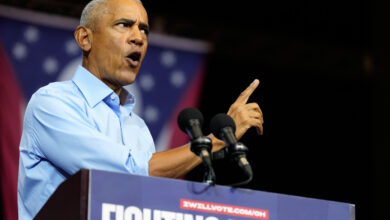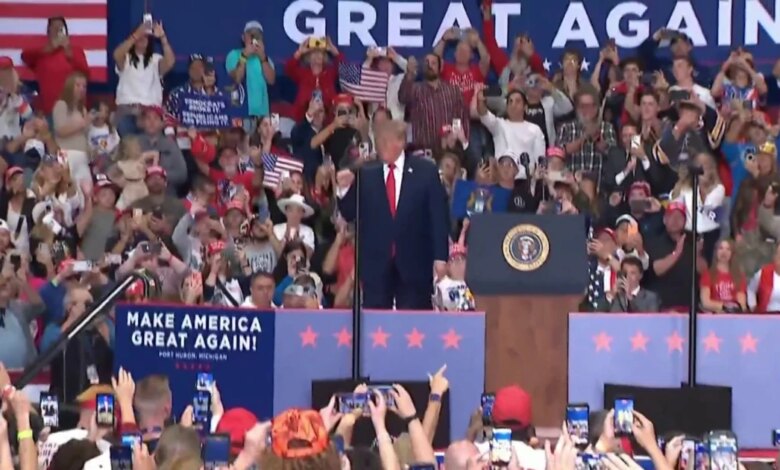
The race for control of the U.S. government reached a fever pitch this weekend as two of the nation’s most prominent political figures, former Presidents Donald Trump and Barack Obama, held competing rallies in Michigan. The appearances on October 25, 2026, demonstrate the critical nature of the state, which remains a primary battleground ahead of the fast-approaching midterm elections.
With both parties viewing Michigan as a bellwether for national sentiment, the rallies were designed to mobilize voters who are increasingly focused on the state of the economy. Current reporting indicates that financial instability and the cost of living are dominating the concerns of the electorate, forcing candidates to sharpen their messaging on fiscal policy. While Trump focused on a return to his previous economic agenda to reclaim momentum, Obama worked to galvanize the Democratic base, stressing the importance of turnout in a state where margins are historically thin.
The political activity in Michigan is part of a broader, all-out fight for battleground states across the country. This weekend saw the White House taking new administrative actions aimed at addressing voter concerns before the polls open. Simultaneously, the Department of Justice has launched fresh legal challenges related to the midterm process, adding a layer of judicial scrutiny to the final stretch of the campaign.
Beyond the domestic political arena, a series of international and domestic developments are shaping the national mood. In the Middle East, a recent intelligence memo has warned that Iranian plots to kill Americans have reached “advanced stages,” presenting a significant security challenge for the administration. Tensions are also high in the West Bank, where a security crackdown is underway just days before Israeli elections. In South America, a notable shift occurred as a prominent Venezuelan opposition leader returned to the country after spending months in exile.
The global sense of unrest was further mirrored in Europe, where thousands have taken to the streets in widespread protests. In France, an NFL game kicked off this weekend against a backdrop of mass demonstrations that have expanded across the region. These international events coincide with domestic emergencies at home, including catastrophic flooding that has prompted emergency rescues and forced evacuations across the Western United States. In Oregon, a major fire at a seafood processing plant also led to local evacuations, while border authorities reported an intensified struggle against smuggling operations.
In the sports world, the NFL and the NFL Players Association have announced a review of the medical handling of Philadelphia Eagles quarterback Jalen Hurts’ recent blood clot diagnosis. This health-related inquiry follows a week where public safety concerns were also raised by an incident involving a school bus that erupted in flames; several children were able to escape the vehicle just moments before it was consumed by fire.
Amidst the political and social friction, some local communities celebrated positive developments. In one instance, a retired school custodian was surprised with the news that a new school would be named in her honor, a rare moment of local tribute in a dense news cycle. As the midterms approach, these varied issues—from economic anxiety and national security threats to local emergencies and sports health protocols—are coalescing to create a complex environment for voters heading to the polls.