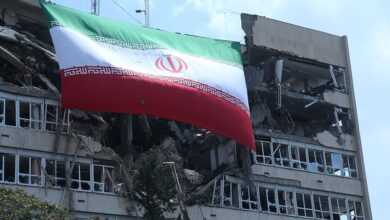
Intelligence Memo Warns of Advanced Iranian Plots Against U.S. Officials as Middle East Presence Shrinks

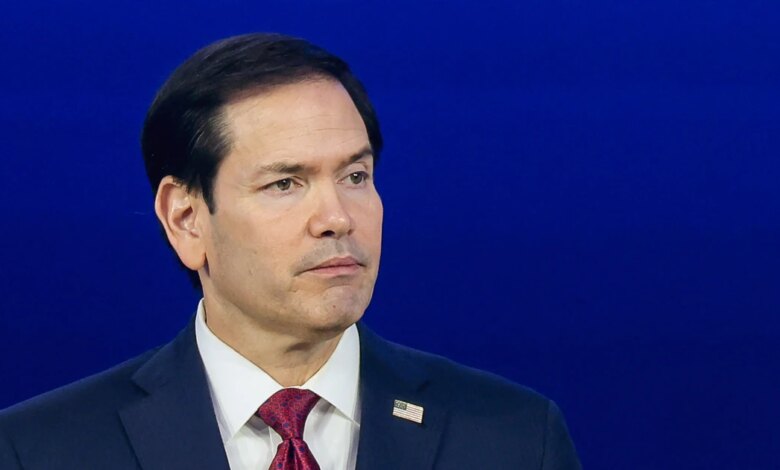
A confidential intelligence memo sent by Director of National Intelligence Jay Clayton to Secretary of State Marco Rubio warns that lethal plotting efforts by Iran against U.S. citizens and personnel have reached advanced stages. A U.S. official confirmed the authenticity of the warning, which arrives as Washington scales back its footprint at military bases and diplomatic posts throughout the Middle East.
The intelligence assessment indicates that the escalating threat extends beyond current security clearances. Clayton informed Rubio that the risks apply to a broader set of individuals than those currently authorized to view the data, adding that intelligence agencies are working to downgrade classification levels so the State Department can share details with personnel at its discretion.
The warning coincides with broader force posture adjustments across the region. U.S. military authorities have quietly reduced troop presences at various bases, while the State Department ordered further staff reductions at diplomatic facilities in Lebanon, the United Arab Emirates, Qatar, and Jordan. These missions have operated with limited staffing under Restricted Operations status since the outbreak of conflict with Iran in February.
U.S. officials tied the staffing adjustments directly to heightened security concerns. Decisions regarding embassies under Restricted Status are being informed by ongoing threats of Houthi attacks and specific Iranian terror plots targeting American officials. On Wednesday, chiefs of mission across multiple regional posts received formal notifications regarding the staffing cuts, and the State Department announced that the U.S. Embassy in Saudi Arabia was placed under ordered departure status, restricting operations to emergency personnel only.
State Department spokesperson Tommy Pigott emphasized the priority placed on personnel security, noting on social media that the administration continues to take all necessary steps to protect staff and their families.
Concurrently, military and political deliberations regarding potential retaliatory actions have intensified. President Donald Trump stated during a Florida rally that he is considering additional operations against Iran following months of shipping disruptions in the Strait of Hormuz and stalled ceasefire negotiations. Referring to the initial wave of military actions as Epic Fury, Trump remarked that the administration might execute another limited operation if negotiations fail.
Senior military officials recently presented the White House with a range of prospective strike options. According to current and former U.S. officials familiar with the discussions, proposals include major strikes targeting the tunnels and access points of Iranian nuclear facilities, such as the installation at Pickaxe Mountain, as well as strategic island locations.
The military options also encompass strikes against Kharg Island, which houses the vast majority of Iran’s oil production infrastructure and serves as a critical economic lifeline, and Qeshm in the Strait of Hormuz.
The strategic deliberations follow a rejected diplomatic overture from Tehran. Last month, Iran proposed a new agreement aimed at reopening the Strait of Hormuz within days. Trump publicly dismissed the proposal without providing detailed reasoning, asserting that Iran was seeking an agreement out of weakness and accusing the government of attempting to manipulate oil prices ahead of U.S. midterm elections.
Iranian Foreign Minister Abbas Araghchi pushed back against the assertion, stating that Tehran’s primary focus rests on national interests rather than American electoral politics.