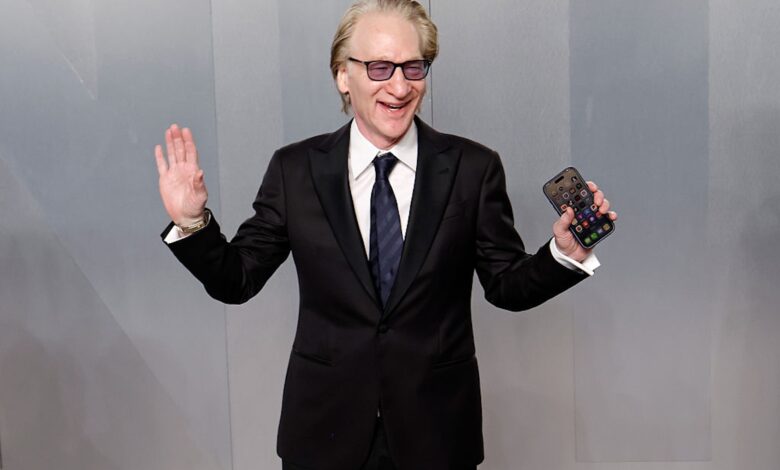
Comedian and television host Bill Maher has found himself politically isolated following a public rebuke by Donald Trump and years of strained relations with the progressive wing of the Democratic Party.
The friction between Trump and Maher spilled into public view after Maher attended a White House dinner alongside notable figures such as Kid Rock and ESPN’s Stephen A. Smith. During a subsequent Friday monologue, Maher mocked Trump’s commentary on men’s physiques and noted his own exclusion from specific conversations during the four-hour gathering.
Trump responded Sunday night with an extended post on Truth Social, lambooning the “Real Time” host as a “complete and total loser.” In his post, the president accused Maher of looking bedraggled and intoxicated at the White House, lying about approval ratings, and relying heavily on canned applause and a laugh track. Trump asserted that Maher had attempted to court the MAGA movement during the dinner before returning to his television set to deliver tamer critiques, ultimately turning back on the administration for the cameras to satisfy his base.
The exchange highlighted a central dilemma for Maher, a self-described libertarian whose career has long straddled the nation’s political divide. Rising to prominence with an anti-establishment stance and a history of provoking orthodoxies from both sides of the aisle, Maher has increasingly found himself without a secure political home.
Despite past alignments with liberal causes, including opposition to the War on Terror and frequent clashes with religious conservatives, Maher’s recent commentary has alienated traditional Democratic allies. He has drawn sharp rebukes from progressive figures, including Michigan Democratic Senate nominee Dr. Abdul El-Sayed, who publicly criticized Maher’s history of religious intolerance. Left-wing commentators have likewise accused the comedian of opportunism as he has drifted toward reactionary stances on cultural issues and expressed openness to conservative overtures, provided Republicans moderate their rhetoric.
At the same time, Maher’s efforts to court the right have yielded little political security. Trump made it clear that the administration sees little value in wooing the host, characterizing him as untransformative and criticizing his attempts to cater to an audience that spans both political sides.
With the center of the Democratic Party moving left and a potential blue wave looming in the November 3 midterms, Maher’s persistent criticism of rising progressive stars has left him with few reliable allies. As both major political camps distance themselves from his brand of commentary, the veteran comedian faces an uncertain trajectory in a political landscape increasingly dominated by polarized factionalism.