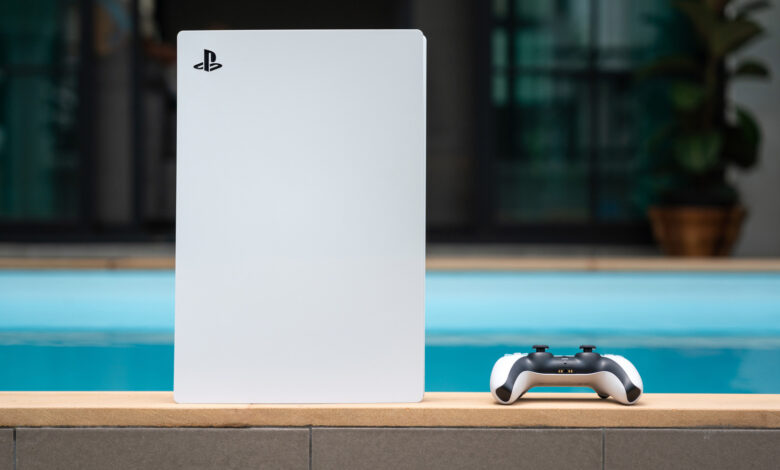
For PC enthusiasts attempting to replicate or exceed the performance of a PlayStation 5, identifying the correct hardware equivalent is a complex task. While Sony’s flagship console is marketed as a cutting-edge gaming machine, the silicon at its heart is a highly specialized piece of engineering based on AMD’s Zen 2 architecture. When compared directly to off-the-shelf desktop components, the results reveal a surprising gap between technical specifications and real-world execution.
On paper, the PlayStation 5 features a custom AMD Zen 2 CPU equipped with eight cores and 16 threads, capable of reaching a variable clock speed of 3.5 GHz. In terms of raw technical specifications, the closest relative in the desktop market is the AMD Ryzen 7 3700X. However, hardware experts suggest that looking at core counts alone is a deceptive way to measure the console’s actual prowess. In real-world performance and clock-speed behavior, the PlayStation 5 is often more comparable to a Ryzen 5 3600, a processor that is now several years old.
This discrepancy exists because the PlayStation 5 is not a general-purpose computer but a rigorously tailored gaming environment. The Ryzen 5 3600 uses six cores and 12 threads with a 3.6 GHz base clock speed and a boost capacity of 4.2 GHz. Despite having fewer cores than the PS5’s processor, it aligns more closely with the console’s actual gaming throughput. A significant factor in this is that modern game engines rarely utilize every available core; they are frequently bottlenecked by a primary thread. Furthermore, Sony does not grant game developers full access to the processor’s resources. Approximately 1.5 cores are reserved for system management and the console’s underlying software, leaving only 6.5 cores available for game code execution.
The customization of the PlayStation 5’s CPU goes deeper than just core management. Unlike a standard desktop PC where the CPU and GPU are separate components connected via a PCIe bus with independent RAM pools, the PS5 uses a system-on-a-chip (SoC) design. This integrates the CPU and GPU onto a single semiconductor die, allowing for more streamlined communication and space efficiency.
To optimize this SoC for a console’s thermal and physical constraints, AMD made specific architectural changes. The floating-point unit (FPU), a critical component for processing complex mathematical calculations, was significantly modified. In the standard desktop Zen 2 chips, the FPU is 256-bit. For the PlayStation 5, this was reduced to 128-bit, resulting in a 35% reduction in the physical size of the component. This design choice allowed Sony to manage the power budget more effectively without a disproportionate sacrifice in gaming performance.
Power management also sets the console apart from traditional PC hardware. Most desktop CPUs operate at fixed clock speeds or utilize thermal throttling, where the processor slows down if it becomes too hot. The PlayStation 5 instead utilizes a fixed power budget powered by AMD’s SmartShift technology. This allows the system to shift power dynamically between the CPU and GPU based on the workload’s demands, rather than relying on temperature-based fluctuations. These optimizations illustrate that while the PS5 might rely on older architectural foundations, its specialized design ensures it remains highly efficient for its specific purpose: gaming.