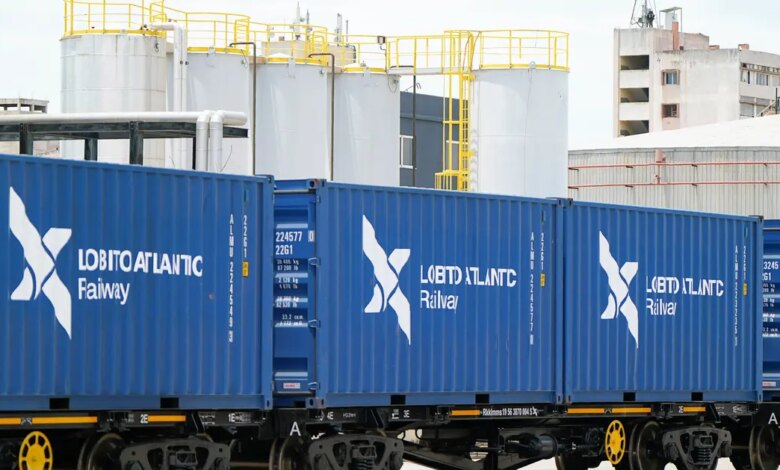
The Africa Finance Corporation has selected a European-Turkish consortium to construct a major new railway line through Zambia, advancing the United States-backed Lobito Corridor project designed to transport critical minerals to Angola’s Atlantic coast. The multi-billion-dollar infrastructure initiative represents a concerted Western effort to counter China’s dominant position in Africa’s mining export markets.
Italy-based Webuild, Portugal’s Mota-Engil, and Turkey’s İçtaş have been chosen as the preferred bidders to build Zambia’s 515-kilometer stretch of brand-new railway. Meanwhile, Mota-Engil—which counts the China Communications Construction Company as a shareholder—alongside Brazil’s Odebrecht Engineering and Construction, was selected for the upgrade of the existing Angolan section of the railway. Contract negotiations are scheduled to begin next month and are anticipated to last between eight and 12 weeks, according to the Lagos-based development financier AFC.
While an environmental study estimated that the route’s total construction could cost up to $5 billion, AFC Chief Executive Officer Samaila Zubairu declined to specify a figure while contract talks remain active.
The Lobito Corridor stands as one of the continent’s most closely watched infrastructure developments. Western powers view it as a primary alternative export route for essential metals such as copper and cobalt, which are vital for both economic stability and national security. The project is widely regarded as a strategic response to China’s Belt and Road Initiative, through which Beijing has spent more than a decade establishing influence via port, railway, and mining investments across the continent.
Addressing criticism that the project is merely an extraction route designed to drain African resources for foreign use, Zubairu pushed back against such claims. He emphasized that the corridor is intended to serve as a catalyst for broader industrialization across Angola, Zambia, and the neighboring Democratic Republic of Congo.
Exporting raw materials means exporting job opportunities while importing inflation, Zubairu noted. To support the vision of domestic processing, he pointed to a 2021 study commissioned by the AFC and partner organizations. The research concluded that a crucial stage of battery production could be executed more cost-effectively and with lower carbon emissions within the Democratic Republic of Congo than in China or Poland.
Beyond transportation logistics, the AFC is also promoting a parallel energy corridor. Zubairu revealed that the lender is currently in discussions regarding power line infrastructure designed to transmit electricity from Angola. The nation is estimated to possess roughly 2 gigawatts of stranded hydroelectric power—an output equivalent to that of the Lauca hydropower plant, one of the largest in Africa—which could be harnessed to support local industrial activity along the corridor.