The U.S. military launched a strike on Tuesday against a vessel accused of drug smuggling in the eastern Pacific Ocean, killing five people. The operation extends an ongoing military campaign directed by the administration against alleged traffickers in Latin America.
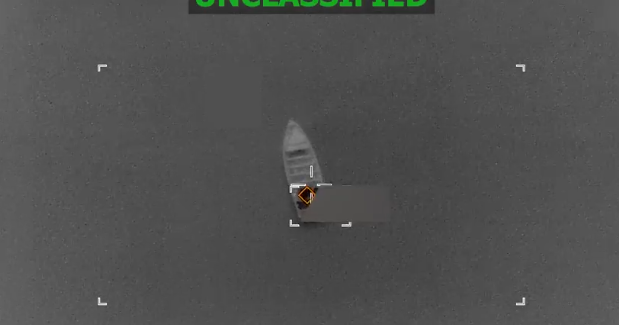
According to U.S. Southern Command, the target vessel was operating along known smuggling routes and intelligence indicated its active involvement in narcotics trafficking. However, the military did not publicly provide evidence confirming that the boat was carrying illicit drugs. Video footage shared on social media showed a small, stationary boat in the water enveloped by an explosion.
Tuesday’s incident brings the total number of fatalities resulting from the military’s boat strikes to at least 240 across more than 70 operations. The administration initiated its targeting of individuals it classifies as narcoterrorists in September 2025, with President Trump arguing that the U.S. is engaged in an armed conflict with Latin American cartels. Supporters of the strategy maintain that the escalations are necessary to curb the flow of drugs and fatal overdoses into the United States.
Critics, including several Democratic lawmakers and military legal scholars, have repeatedly questioned the legality and effectiveness of the maritime strikes. Analysts note that fentanyl, which accounts for many fatal overdoses in the U.S., is typically transported across the land border from Mexico after being produced with chemical precursors imported from China and India. In response to these concerns, the Pentagon’s inspector general announced in May that it will evaluate whether the military followed established targeting frameworks—covering commander intent, target development, and execution—though the review will not assess the overall legality of the operations.
The strike follows recent diplomatic efforts by Secretary of State Marco Rubio, who stated in September that the U.S. would seek approval from regional allies for future attacks. While emphasizing that cooperation is the most effective approach, Rubio asserted that the military retains the capacity to act unilaterally and would continue to destroy vessels on an operation-by-operation basis if necessary.
Prior operations in the campaign have faced intense scrutiny regarding tactical execution and rules of engagement. Lawmakers previously demanded unedited video of the campaign’s first strike after reports surfaced that the military conducted a secondary attack on two survivors attempting to climb back onto a targeted vessel in September 2025. While defense officials and congressional Republicans argued that the survivors might have remained combatants, critics questioned whether the follow-on strike constituted a war crime. Additionally, multiple officials confirmed that the military utilized an aircraft disguised as a civilian plane during a September 2025 strike against a Venezuelan drug-smuggling boat that resulted in 11 deaths.