The security pressures generated by military conflicts with the United States and Israel have laid bare severe vulnerabilities within Iran’s intelligence infrastructure. High-profile security breaches, including the targeted killings of senior figures such as former Supreme Leader Ayatollah Ali Khamenei on the opening day of the latest joint assault on February 28, have demonstrated that genuine foreign espionage threats exist inside the country.
Yet analysts and human rights organizations observe that the Iranian establishment has historically seized upon real or perceived security crises to widen its coercive apparatus and suppress political dissent. Saeid Golkar, an associate professor in political science at the University of Tennessee at Chattanooga, noted that the current wave of enforcement reflects both legitimate counterintelligence concerns and a broader institutional effort to intimidate society and quiet political opposition.
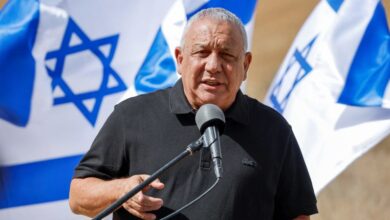
The domestic crackdown accelerated dramatically following a 12-day war launched by Israel in June 2025. Former Israeli spy chief David Barnea revealed in an October conference that, prior to that offensive, he approved the entry of dozens of agents into Iran tasked with intelligence and sabotage missions. Barnea acknowledged that Israeli intelligence deliberately released footage featuring Mossad logos shortly after the war began, a strategy designed to provoke mass arrests among ordinary Iranian citizens and shield undercover operatives. While thousands of individuals with no ties to foreign intelligence were detained, Barnea claimed the operational maneuver successfully kept almost all active agents unidentified.
In the wake of these escalations, Iranian authorities intensified judicial punishments for offenses tied to national security. The resulting enforcement measures encompass mass arrests, expedited trials, lengthy prison terms, asset confiscations, and a rising frequency of executions. International human rights organizations, including Amnesty International and Human Rights Watch, have documented widespread systemic abuses in these proceedings, such as coerced confessions, denial of effective legal defense, and the application of heavy national security charges to domestic dissenters.
Negar Mortazavi, a senior fellow with the Center for International Policy, emphasized that a fundamental boundary separates espionage from political dissent. While espionage involves covertly gathering sensitive intelligence or aiding foreign intelligence operations, criticizing government failures, engaging with foreign media, or challenging official narratives does not constitute spying. Observers argue that the Iranian judiciary and security apparatus have systematically eroded this distinction, treating peaceful opposition and independent journalism as extensions of foreign intelligence activities.
Iranian officials maintain that the country faces an integrated hybrid war combining espionage, sabotage, hostile media operations, economic instability, and the incitement of ethnic and sectarian tensions. In May, the Ministry of Intelligence publicly characterized these combined pressures as an existential threat orchestrated by hostile states. Judiciary chief Gholam-Hossein Mohseni-Ejei has repeatedly invoked wartime legal provisions to justify urgent security interventions and expedited punishments for alleged collaborators.
According to official statements, legal proceedings remain active against at least 1,895 individuals accused of cooperating with Israel or other hostile governments, a figure that includes 94 media workers, as reported by judiciary spokesman Ali Kazemi in October. Law enforcement agencies previously announced at least 21,000 arrests in connection with the June 2025 conflict, while subsequent nationwide protests in January 2026 led to the detention of at least 50,000 people. The US-based rights organization HRANA reported that thousands of civilians died during the crackdown on anti-government demonstrations.
State authorities have characterized the nationwide demonstrations as a coup engineered entirely by foreign intelligence agencies, asserting that Mossad and allied operatives were responsible for killing protesters. Conversely, an independent United Nations fact-finding mission concluded that state authorities committed crimes against humanity during the suppression of the protests, marking the most violent domestic crackdown since the Islamic revolution.
Capital punishment linked to national security charges has also surged. The United Nations documented at least 19 hangings in espionage-related cases between June and December 2025. Concurrently, the Oslo-based nonprofit Iran Human Rights recorded 16 espionage defendants executed between January and September 2026, alongside 33 protesters and 13 prisoners affiliated with banned political groups, contributing to a total tracking of at least 604 executions by early October. Amnesty International separately reported at least 34 executions linked to the January protests by October 13, including five carried out between September 30 and October 5.
Beyond judicial actions, the government has moved to secure digital and informational infrastructure against perceived foreign infiltration. Authorities have issued public warnings regarding alleged Mossad cyber-operations recruiting citizens through social media and online offers. Transmitting images or information to networks deemed hostile, such as BBC Persian, can now incur prison sentences ranging from 10 to 15 years, substantial fines, and potential charges of corruption on earth, which carry the death penalty.
Furthermore, the Starlink satellite internet service has been officially designated as a wartime tool utilized for espionage, intelligence gathering, and drone operations by foreign agents. Despite severe distribution penalties, government confiscation efforts, and active signal jamming, tens of thousands of Starlink terminals have been smuggled into the country. To counter these perceived digital threats, the government enforced near-total internet shutdowns affecting its population of 90 million for 8 days during the 2025 war, 20 days during the January protests, and 88 days at the outset of the subsequent military escalation. The global internet remains heavily filtered, with officials warning of future connectivity disruptions if military tensions escalate further.
Scholars argue that by steadily fusing the concepts of regime security and national security, the Iranian leadership has transformed into a security-dominated state. This institutional evolution has resulted in the securitization of nearly all facets of daily civic life, leaving peaceful activism and nonviolent dissent increasingly vulnerable to criminalization under emergency counterintelligence frameworks.