A concerted diplomatic push by Washington successfully altered the voting landscape at the United Nations on Wednesday, as several nations moved to oppose or abstain from an annual resolution condemning the long-standing U.S. economic embargo against Cuba. While the 193-member UN General Assembly overwhelmingly urged an end to the sanctions, the final tally revealed a notable shift compared to previous years.
The final vote recorded 130 nations in favor of the resolution, 25 abstentions, and 17 countries—including the United States and Israel—voting against it. That outcome contrasted sharply with the previous year’s tally of 165 in favor, seven against, and 12 abstentions. Notably, several Western countries, such as Germany and Italy, broke with past precedent to abstain for the first time in many years.
While General Assembly resolutions carry significant political weight, legislative authority to lift the Cold War-era embargo rests solely with the U.S. Congress. The global body has adopted the anti-embargo resolution annually for more than three decades, with the sole exception of 2020 during the COVID-19 pandemic.
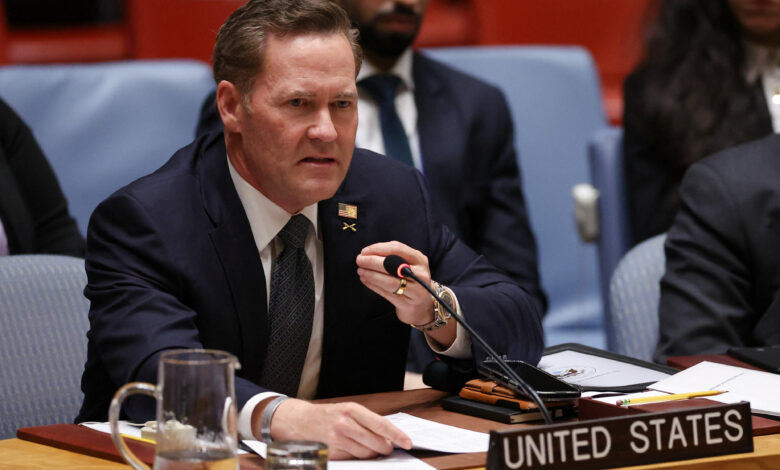
U.S. Ambassador to the UN Mike Waltz expressed satisfaction with the outcome following the vote, highlighting the impact of American diplomatic efforts. Pointing to major economies like South Korea and Germany that altered their voting stance, Waltz told reporters that diplomacy takes time and that Washington expects the shift in position to continue growing.
Tensions between Washington and Havana ran high ahead of the vote, erupting into shouting matches between Cuban and American representatives both in the corridors of UN headquarters and on the General Assembly floor on Tuesday.
Following the vote, Cuban Foreign Minister Bruno Rodriguez took to social media to criticize Washington’s approach, accusing the U.S. government of attempting to strangle the Cuban people through collective punishment. He stated on X that neither Washington’s pretexts, pressures, nor media circus would prevail over facts and truth.
The United States has maintained its trade embargo on Cuba for more than 60 years. President Donald Trump’s administration has intensified economic and political pressure on Havana following military actions in January that removed Venezuelan President Nicolas Maduro. The U.S. has consistently voted against the annual UN resolutions since 1992, with a single exception in 2016 when the Obama administration abstained amid a diplomatic thaw.
Havana has repeatedly blamed the American sanctions for a severe domestic crisis, marking the island’s worst economic downturn in decades. The situation is compounded by shortages of basic goods, deteriorating infrastructure, runaway inflation, and a total collapse of Cuba’s electrical grid last month that left millions without power. Last month at the UN, President Trump described Cuba as a failed state and asserted that freedom would eventually come to the island nation.