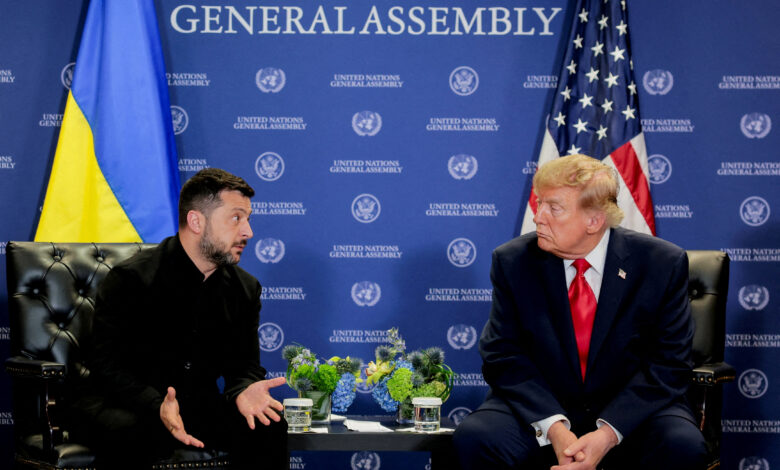
Relations between U.S. President Donald Trump and Ukrainian President Volodymyr Zelenskiy have entered a period of acute strain, marked by open criticism and a fundamental disagreement over military strategy. The friction centers on Ukraine’s persistent long-range drone strikes against Russian energy infrastructure, specifically diesel refineries, which Trump views as a direct threat to global energy stability and American economic interests ahead of the November 3 midterm elections.
While the relationship between the two leaders has been characterized by intermittent tension since 2017, the current crisis is fueled by a volatile mix of high inflation and shifting geopolitical priorities. The global energy market has been under extreme pressure since February, when a war involving the United States, Israel, and Iran triggered a spike in fuel costs. In the U.S., diesel prices have reached record highs, leaving Republican lawmakers vulnerable to voter frustration over the cost of living as they head into the final weeks of a campaign season.
On September 13, Trump began a public campaign urging Kyiv to halt its operations against Russian fuel sites. This pressure intensified on September 20 when Secretary of State Marco Rubio expressed concern that Ukrainian strikes were impacting oil shipments linked to U.S. interests. Ukraine, however, has remained defiant. Kyiv maintains that its drone campaign against Russian refineries is the only viable method of response after nearly five years of relentless Russian bombardment. The strategic impact of these strikes was evident in July when Moscow was forced to implement a ban on diesel exports to mitigate domestic shortages.
Trump’s response to Zelenskiy’s refusal to stop the strikes has involved a series of unilateral policy shifts. On October 9, the president announced a deal to purchase diesel from Moscow, issuing a temporary general license to allow Russian fuel to enter the global market. Furthermore, Trump waived sanctions on Russia that had been authorized by a bill he himself signed into law only a month earlier in September.
By October 11, Trump unilaterally announced what he termed an “energy ceasefire.” However, independent reports suggest this has not translated to a reduction in hostilities. Observers in Kyiv note that Russian strikes on Ukraine’s own power grid have actually increased since the announcement. There is a growing perception among Ukrainian officials and international analysts that the U.S. administration’s efforts are geared more toward stabilizing fuel prices by hobbling Ukrainian military capabilities than achieving a genuine cessation of attacks.
The dispute has also spilled over into critical military and intelligence cooperation. Zelenskiy recently stated that Ukrainian military officials have been warned by U.S. counterparts that continued strikes on refineries could result in the termination of intelligence sharing. While a U.S. official has disputed these claims, asserting that no such pressure has been applied, the public nature of the disagreement indicates a severe breakdown in trust.
Leverage over Kyiv’s operations has also been exerted through technological channels. On Thursday, Trump announced he had requested SpaceX CEO Elon Musk to restore Ukraine’s access to the Starlink satellite system. The recent disruption of Starlink had significantly hindered Ukrainian drone operations, sparking fears in Kyiv that the country would be left defenseless against Russian attacks as winter approaches.
Diplomatic efforts to resolve the impasse have shifted to international venues. During talks in Oslo on October 20, Ukraine presented new proposals, but Jared Kushner, acting as Trump’s envoy, reiterated the White House demand that Ukraine stop targeting Russian diesel refineries. Parallel to these efforts, Steven Witkoff, a close associate of Trump, met with Russian President Vladimir Putin in St. Petersburg on October 21. Following that meeting, Moscow released detained American Stephen Hubbard in what was described as a goodwill gesture between the two nations.
The path forward remains uncertain as both sides prepare for further negotiations. Zelenskiy confirmed on Friday that negotiators from Ukraine, Russia, and the U.S. are scheduled to meet in Abu Dhabi during the first half of November. This meeting is expected to serve as a precursor to a potential summit involving the heads of state, marking the first major U.S.-mediated peace talks since February. However, with the U.S. midterm elections just days away, the immediate focus in Washington remains fixed on the domestic economic consequences of the ongoing conflict.