Brazil is entering a period of renewed political volatility as Senator Flavio Bolsonaro officially challenged the results of Sunday’s presidential election, refusing to concede to Luiz Inácio Lula da Silva. The move mirrors the defiant stance of his father, the former president Jair Bolsonaro, who is currently serving a 27-year prison sentence for his role in a 2022 coup attempt. Lula’s victory, which secures him an unprecedented fourth term as Brazil’s head of state, was met with immediate calls for annulment from the Bolsonaro camp, setting the stage for a high-stakes legal and social confrontation.
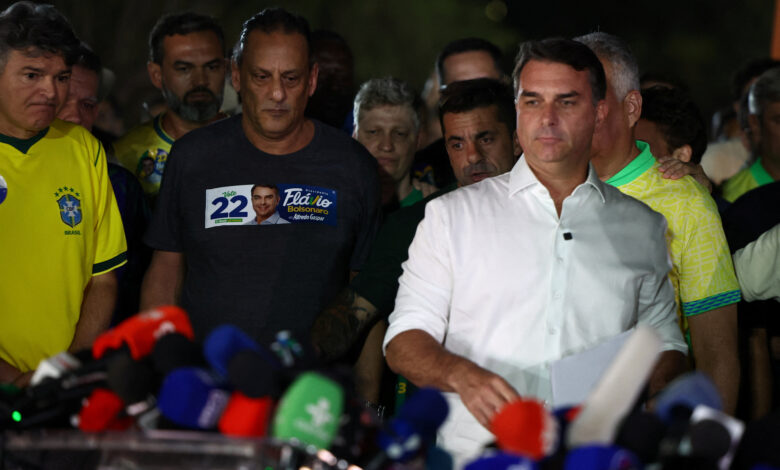
The crux of Flavio Bolsonaro’s objection lies in a late-Sunday decision by a Supreme Court justice, appointed by Lula, which extended voting hours by two hours in response to alleged irregularities in voter transportation. Addressing journalists in Brasília, the younger Bolsonaro, representing the Liberal Party (PL), characterized the election as illegitimate. “It is impossible to recognize the election results, given the circumstances under which things unfolded,” he said. He confirmed his intent to file a formal petition to have the entire result annulled, though many legal experts see the move as a long shot.
Despite the rhetoric, the arithmetic of the election presents a steep hurdle for the Bolsonaro challenge. Lula’s margin of victory exceeded 4 million votes, a gap that analysts suggest is far too wide to be overturned by the specific irregularities cited by the Liberal Party. Furthermore, the petition for annulment faces accusations of hypocrisy; Bolsonaro’s own campaign had previously requested voting extensions in the conservative-leaning southern regions of Brazil, citing heavy rains as a barrier to turnout.
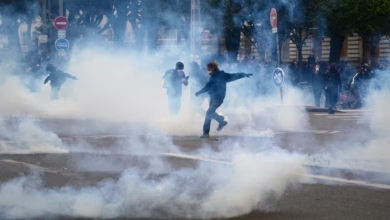
The refusal to concede has reignited fears of civil unrest in a nation still scarred by the events following the 2022 election. During that cycle, supporters of Jair Bolsonaro stormed government buildings in a scene that drew international condemnation and eventually led to the elder Bolsonaro’s conviction and nearly three-decade prison sentence. With faith in the judiciary and the electronic voting system already fragile among the Brazilian right, observers worry that Flavio’s refusal to acknowledge the outcome could trigger a fresh wave of protests.
International markets reacted sharply to the news of Lula’s return to power and the subsequent political friction. In Asia, a Tokyo-listed exchange-traded fund tracking Brazil’s Bovespa index plunged nearly 15% during Monday trade. Currency analysts are also bracing for a significant depreciation of the Brazilian real against the U.S. dollar as the prospect of institutional deadlock looms.
The election outcome is also a major blow to the diplomatic efforts of U.S. President Donald Trump’s administration. The State Department under Trump had actively campaigned for the return of the Bolsonaro family to power, viewing them as key ideological allies in Latin America. Lula’s victory instead signals a halt to the right-wing wave that has recently swept across several neighboring countries, defying recent global anti-incumbent sentiments.
Speaking to supporters at a hotel in São Paulo late Sunday night, Lula adopted a tone that was both conciliatory and grounded in the reality of a divided electorate. “I won’t speak of national unity, because that doesn’t always fit the reality of this country,” Lula told the crowd. “No one is obliged to like the elected president, but he was put in place to govern for everyone.”
Lula’s path forward will be fraught with obstacles. While he campaigned on his previous successes in reducing poverty, lowering illiteracy, and curbing deforestation, his fourth term begins in a vastly different legislative environment. A surge in right-wing voting has left the Brazilian Congress dominated by allies of the Bolsonaro family, ensuring that any major policy shifts will face significant resistance. Carlos Melo, a political science professor at Insper in São Paulo, noted that the challenges facing the incoming administration are “countless.” Lula will need to balance his progressive agenda with the reality of a legislature that is essentially an extension of his political enemies, all while navigating the legal challenges and potential street protests orchestrated by his defeated opponent.