Trump Political Appointees Pressed Cyber Agency to Secretly Acquire and Hack Voting Machine

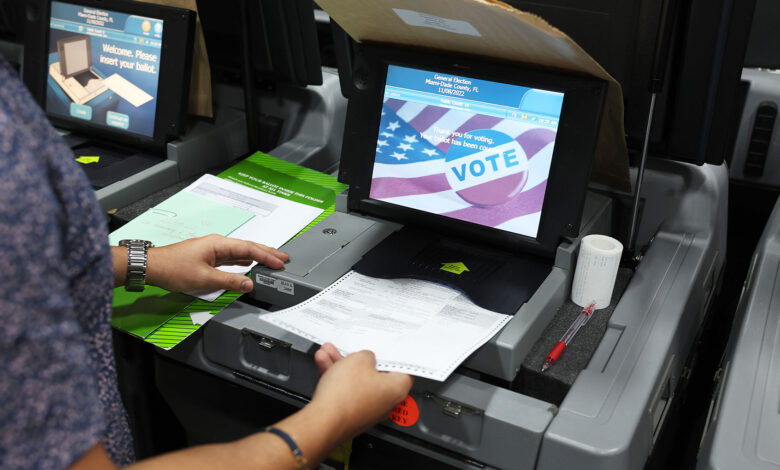
Political appointees within the Department of Homeland Security directed an unusual request to the Cybersecurity and Infrastructure Security Agency during the opening months of President Donald Trump’s second term, asking the agency to secretly procure a voting machine, hack it, and report the findings back to the White House. Two former administration officials with knowledge of the matter indicated that the proposal shocked career staffers at CISA, an organization historically dedicated to defending networks against cyber intrusions. Under the directive, personnel would have examined the device without alerting the voting machine vendor, a departure from standard operating procedure that left employees worried they were being drawn into partisan election interference. One former official noted that staff feared such a device could be kept in reserve to challenge inconvenient election outcomes, directly contradicting the agency’s core mission.
CISA personnel repeatedly informed the political appointees that the operation was unfeasible, pointing out that many of the agents capable of executing such a task had recently been laid off under the Department of Government Efficiency initiative led by Elon Musk. The appointees ultimately ceased pressing the matter, but the episode illustrates broader tensions over the federal government’s approach to election infrastructure. Since Trump returned to office, the administration has laid off or pushed out more than 1,000 CISA employees, shrinking the agency by approximately one-third. A proposed 2027 budget would slash an additional $700 million in funding, potentially forcing another 900 layoffs.
The friction between federal leadership and state election authorities has intensified as a result. Several state officials reported receiving no assistance or explanation from CISA during critical planning phases for the midterm elections. Ryan Macias, an election technology and cybersecurity expert who has consulted for CISA, characterized the agency’s presence throughout 2025 and mid-September 2026 as virtually nonexistent during periods when election preparations are normally completed. While Trump has repeatedly raised concerns about electoral vulnerabilities, security experts argue that his administration’s cuts have severely impaired the federal government’s capacity to assist states in safeguarding their systems.
Trust between the federal agency and local jurisdictions has also been strained by the declassification and release of sensitive records, including logs of communications from Election Day 2020 that state authorities had shared with CISA under strict confidentiality agreements. Geoff Hale, a former member of CISA’s elections team now with the Center for Democracy & Technology, stated that the release compromised the foundational trust required for effective information sharing. A White House spokesperson defended the administration’s actions, stating that President Trump has prioritized free and fair elections and that the released transparency measures were appropriate. Meanwhile, state leaders have increasingly relied on local resources, such as privately funded network sensor technology, to bridge gaps left by the federal withdrawal, though specialized foreign intelligence support remains difficult to replicate independently.
The erosion of CISA’s traditional role follows years of careful institutional development. Established under the CISA Act of 2018 from a predecessor office within DHS, the agency expanded its responsibilities after the 2016 election, when federal authorities classified election systems as critical infrastructure following foreign interference campaigns. Under former Director Chris Krebs, CISA built strong collaborative ties with state officials and voting machine vendors through penetration testing, tabletop exercises, and secure intelligence briefings. However, those relationships frayed after the 2020 presidential election when Krebs publicly defended the vote’s security, leading to his dismissal by Trump. When the Trump administration returned to power in January 2025, officials quickly dismantled key units, including those focused on countering disinformation, and instituted sweeping personnel reductions.
Concerns regarding federal intervention extended beyond CISA. In fall 2025, state officials in Missouri produced a memorandum stating that Department of Justice official Andrew McCoy Warner had contacted local clerks seeking access to voting machines, while then-Director of National Intelligence Tulsi Gabbard oversaw an operation in Puerto Rico to secure machines. A private contractor hired to examine those devices, Mojave Research Inc., ceased its work when its contract ended, according to intelligence officials, though the developments added to local anxiety regarding federal intentions. In response to potential federal actions, officials in at least one large voting jurisdiction have held private consultations with machine vendors to formulate contingency plans in case voting equipment is seized or declared unusable by federal authorities.
By late summer, CISA attempted to re-engage state officials under new leadership. In an August video conference with secretaries of state, acting CISA Director Nick Andersen outlined plans for a joint security framework. Many participants expressed frustration over the agency’s prolonged absence and what they viewed as a belated attempt to coordinate strategy as early voting commenced. Arizona Secretary of State Adrian Fontes recounted challenging Andersen during the call over the administration’s dismantling of experienced personnel and prior coordination efforts. CISA ultimately published a 13-page security plan for the 2026 election on September 24, emphasizing a renewed commitment to its statutory mission. While state election officials maintain that local preparations will guarantee secure midterms regardless of federal assistance, regional leaders remain skeptical about relying on an agency that spent much of the cycle absent from the process.