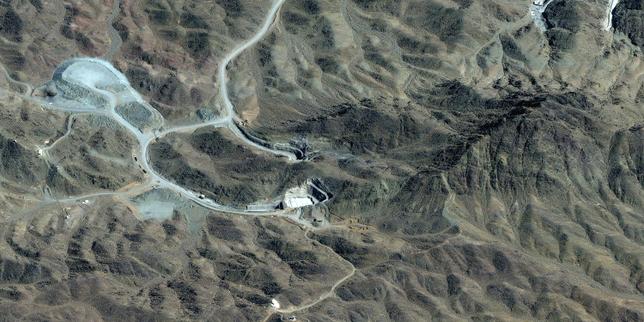
U.S. President Donald Trump warned on Saturday that Washington could target one or two remaining sites in Iran, specifically pointing to the Kolang Mountain near the Natanz nuclear complex, while Tehran vowed to launch an immediate and powerful counter-offensive if new military strikes occur.
Speaking to reporters at his Mar-a-Lago residence in Florida, Trump asserted that the United States had already dismantled a significant portion of Iran’s nuclear capabilities. However, he maintained that officials still needed to address outstanding locations. “We can do that in 10 minutes,” Trump said, adding that authorities could look toward the Pickaxe Mountain site located roughly 200 kilometers south of Tehran.

The renewed friction threatens to completely shatter a fragile diplomatic arrangement in the Middle East. Conflict originally erupted on Feb. 28 following joint U.S. and Israeli airstrikes against Iran, which responded by targeting Washington’s Gulf allies. Although an April ceasefire halted nearly 40 days of intense bombardment and a definitive peace protocol was established in June, the entente collapsed over disputes centered on the strategic Strait of Ormuz.
Iran claims control over the vital oil-transit waterway and routinely targets vessels navigating the route without authorization. On Saturday, state television reported that a tanker caught fire after striking mines, though Washington countered that American forces had largely cleared the area of mines. Meanwhile, press reports suggest a brief, intense military campaign could follow the upcoming U.S. midterm elections.

Israeli Prime Minister Benjamin Netanyahu described the current situation this week as a unique historic opportunity to eliminate what he termed Iran’s existential threat. In contrast, U.S. Secretary of State Marco Rubio adopted a more cautious tone earlier Saturday at the G20 summit in Atlanta, stating that Trump had not yet made a final decision while noting that the administration continues to favor a diplomatic resolution.
Supreme Leader Ayatollah Mojtaba Khamenei issued a stern warning against further aggression, promising an immediate and powerful counter-attack without geographic limitations if attacked again. In a written statement, the Iranian leader instructed military commanders to expand target lists to include all material and immaterial assets belonging to the U.S.-Israeli coalition. Tehran has previously threatened retaliation against data centers, artificial intelligence systems, and undersea communication cables within the Strait of Ormuz.

Diplomatic efforts mediated by Qatar remain underway, though Iranian Foreign Minister Abbas Araghchi stated that Tehran currently sees no need for direct meetings with American representatives. Araghchi noted that direct or indirect negotiations would only resume if Washington formally accepts Iranian conditions.
In the capital, residents expressed weary resignation toward the prospect of renewed warfare. Farima, a 62-year-old Tehran resident, remarked that the local population has grown accustomed to waiting for conflict after living in limbo for a year. Another resident, a man in his forties, expressed indifference, noting that the country has endured conflict for nearly 48 years since the establishment of the Islamic Republic in 1979.