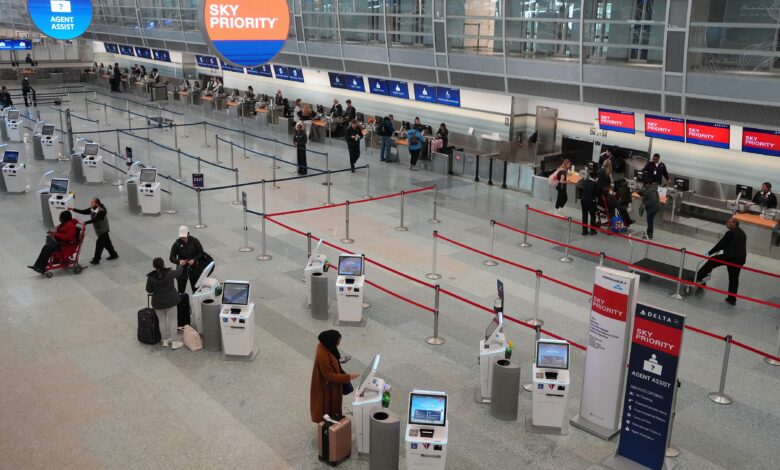
Minneapolis-Saint Paul International Airport has once again claimed the top position among North America’s largest aviation hubs, outperforming prominent coastal terminals in New York and Los Angeles according to the 2026 J.D. Power North America Airport Satisfaction Study.
The Midwestern facility captured first place in the mega airport category for the third consecutive year, posting a score of 684 out of 1,000. Detroit Metropolitan Wayne County Airport followed in second place with 663 points, while Phoenix Sky Harbor International Airport secured third with 642 points.

Travel industry experts point to efficient infrastructure and passenger amenities as key drivers behind the airport’s sustained success. Gary Leff, a travel industry analyst and author of the blog “View From the Wing,” noted that the facility balances extensive amenities for connecting travelers with convenient local access.
“Connecting passengers have plenty of amenities without having to leave security,” Leff said, adding that local travelers benefit from proximity to downtown areas and direct light rail transit, even if navigating between gates involves extended walks.

In other size classifications evaluated by the Troy, Michigan-based research firm, Tampa International Airport led the large airport category with 715 points, praised for its streamlined organization despite required inter-concourse transit. Portland International Airport ranked second with 708 points, and Dallas Love Field placed third with 698 points.
Among medium-sized facilities, Charleston International Airport took top honors with 712 points, benefiting from an appropriately scaled footprint that keeps transit times brief. Ontario International Airport followed with 705 points, and Indianapolis International Airport registered 695.

Overall passenger satisfaction rose across all three categories in this year’s assessment. Michael Taylor, managing director of travel, hospitality, and retail at J.D. Power, attributed the broader gains to multiyear capital improvement projects that have recently reached completion or near-completion at top-performing hubs.
However, analysts advise travelers against prioritizing aesthetic upgrades over functional efficiency. Leff cautioned that upscale renovations do not always translate to a smooth journey, pointing out that visually impressive terminals can still present transit and navigation hurdles.

The study found that clear signage, straightforward navigation, and upgraded dining and retail options—which climbed eight points year over year—heavily influence traveler satisfaction. Facilities near urban centers, such as San Francisco International Airport and Ronald Reagan Washington National Airport, also earned praise for accessibility.
Now in its 21st year, the satisfaction study evaluates the passenger experience across seven core metrics: terminal facilities, ease of travel, airport staff, trust, food and retail programs, and the departure and arrival journeys. The 2026 findings reflect responses from 24,710 U.S. and Canadian residents who traveled through domestic airports. J.D. Power categorizes mega airports as those handling at least 33 million passengers annually, large airports between 10 million and 32.9 million, and medium airports between 4.5 million and 9.9 million.