For generations, family lore tied one traveler directly to the historical figure behind the Dracula legend: Vlad Tepes, the 15th-century count who defended his lands against the Ottoman Empire. Growing up in a tight-knit Romanian-American community centered around St. Basil’s Romanian Catholic Church in Trenton, New Jersey, heritage was celebrated with traditional dishes like stuffed cabbage, shots of plum brandy known as țuică, and proudly displayed embroidery and wood carvings. Decades after family members embarked on a post-communist journey to Eastern Europe, a long-delayed return to the homeland revealed a landscape sharply contrasted against decades-old assumptions of gray Soviet-bloc austerity.
Arriving in Bucharest, expectations of Brutalist architecture and urban decay quickly gave way to manicured city parks, outdoor cafes, and Belle Époque structures that earned the capital its historical nickname of “Little Paris.” Guided by locals who noted that Bucharest has evolved into a remarkably safe modern capital, the itinerary included visits to the opulent Spring Palace, the former residence of executed communist dictator Nicolae Ceaușescu. The sprawling mansion, once a symbol of extreme poverty for ordinary citizens enduring rationing, now stands as an eerie historical museum managed with the characteristic resilience and dry humor of local residents.
Modernity sits alongside centuries-old traditions in other parts of the country as well. In the capital, Therme Bucharest operates as the largest indoor spa and botanical garden in Europe, blending contemporary leisure with traditional hospitality. Yet the emotional core of the journey led westward into the foothills of the Carpathian Mountains and the rolling countryside of Transylvania.
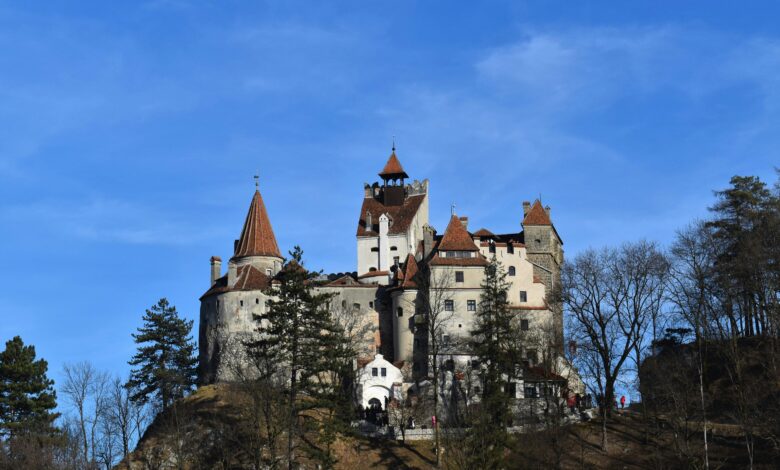
In Bran Village, the 14th-century Bran Castle looms over a community that embraces its association with vampire folklore and medieval history. Built into a 200-foot rock face by Saxons in 1377, the fortress draws visitors from around the world with exhibits exploring torture devices, royal history, and the legacy of Vlad the Impaler. Far from the forbidding, ghost-haunted forests of cinematic fiction, the region resembles the alpine scenery of Austria, punctuated by local culinary staples such as Bull’s Blood wine and double-distilled cherry liqueur known as pălincă.

Local customs persist alongside commercialized folklore, particularly during traditional observances like Saint Andrew’s Eve on November 29, when villagers historically practice protective rituals involving garlic and basil to ward off the restless spirits and strigoi of regional legend. Concluding the journey with traditional sarmale cabbage rolls and repeated toasts of țuică, the pilgrimage bridged a century-long separation between a New Jersey upbringing and the enduring cultural identity of the Transylvanian mountains.