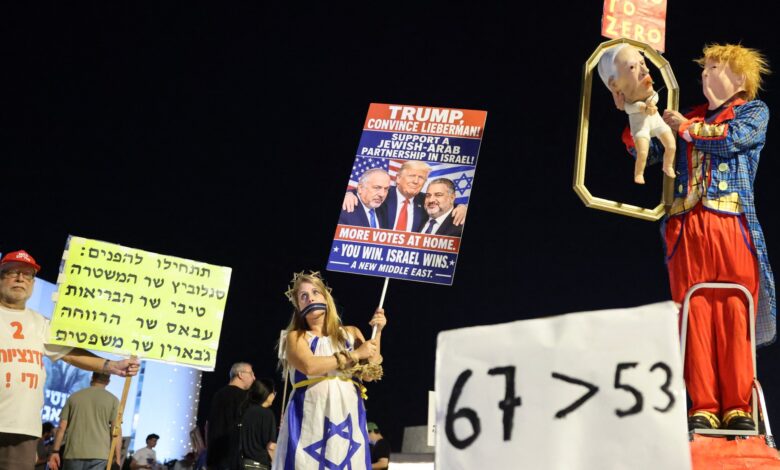
Thousands of demonstrators gathered at Habima Square in Tel Aviv on Saturday, calling on the Israeli opposition to forge a coalition with Arab parties to unseat Prime Minister Benjamin Netanyahu.
Participants at the rally described the moment as a potential turning point, telling reporters that this could represent the “last chance for real change” and characterizing Netanyahu, Israel’s longest-serving prime minister, as a “great manipulator.”
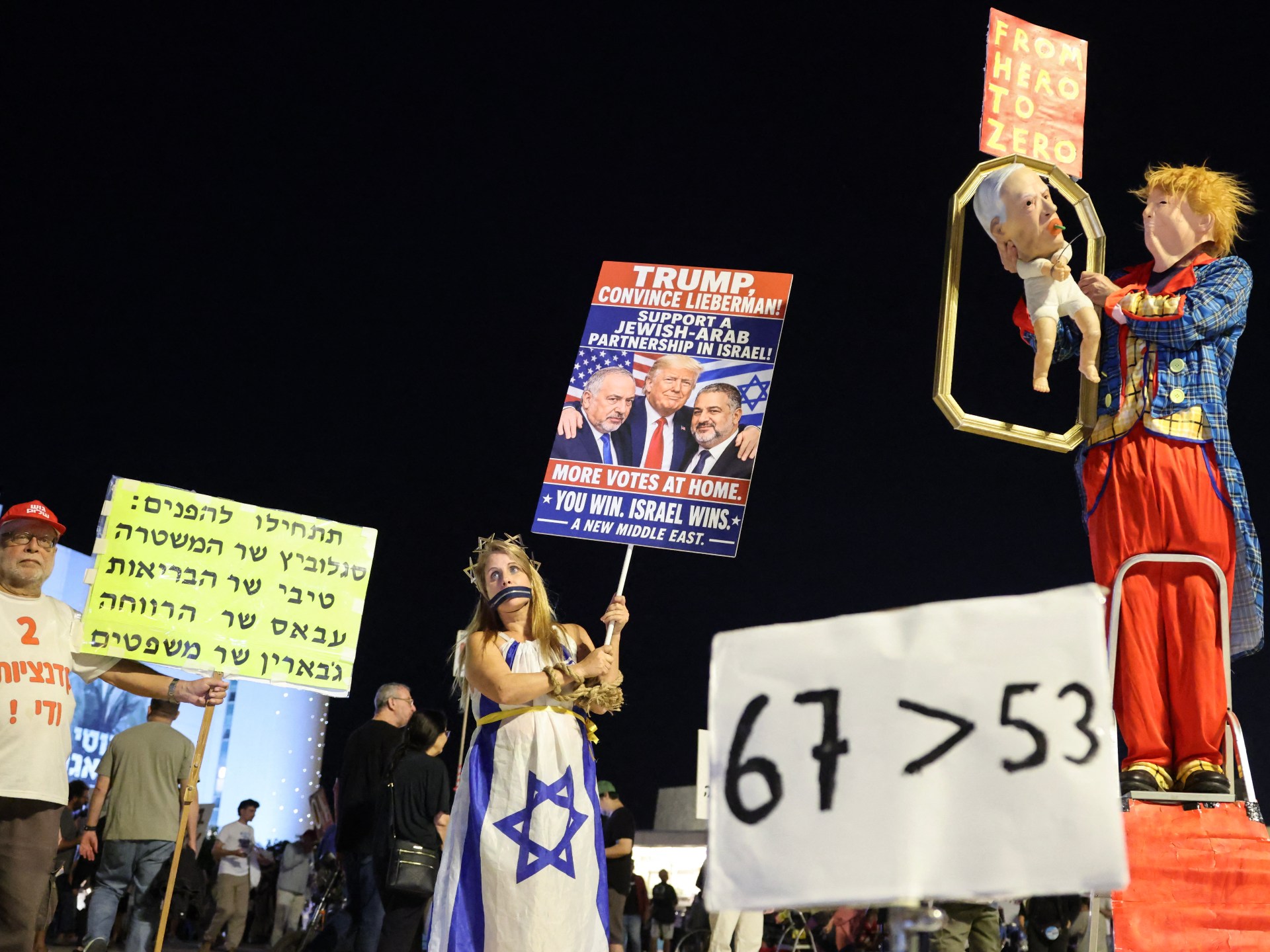
The demonstration follows a general election on Tuesday that resulted in a parliamentary deadlock. Netanyahu’s political bloc secured 53 seats, while the main opposition faction led by Gadi Eisenkot captured 48 seats in the 120-seat Knesset. Because neither bloc commands a majority on its own, opposition leaders face intense pressure from anti-government voters to bridge political divides.
“People really want this vote for change to work out, and they believe that… Gadi Eisenkot and other leaders of the Jewish-Israeli parties need to listen to their voice,” reporter Nour Odeh noted from Ramallah on Saturday.

Eisenkot has previously ruled out entering a government backed by Israel’s Arab factions. However, the electoral performance of Arab-led parties has positioned them as potential kingmakers. Three Arab-led parties secured a combined 19 seats in Tuesday’s vote, achieving significant gains.
According to data from the Central Election Committee, nearly 840,000 citizens cast ballots for Ra’am and the Joint List—a coalition of three Arab-led parties—representing a 64 percent increase compared to the previous elections held in 2022. A governing alliance between Eisenkot’s faction and the Arab-led parties would yield a comfortable parliamentary majority of 67 seats, though partnering with Arab factions remains politically controversial among many Jewish Israelis.

The large turnout also triggered pushback. Counter-protesters gathered near the demonstration to voice support for Netanyahu, shouting slogans demanding that Israel avoid forming a government alongside figures they labeled as terrorists.
Meanwhile, Netanyahu has publicly accused Palestinian-Israeli parties of manipulating the election and alleged they received Qatari funding to influence the outcome. Qatar has dismissed those accusations, characterizing them as a disinformation campaign.
Odeh reported that right-wing circles in Israel have condemned the historic turnout of Palestinian voters, with some critics attempting to equate the electoral participation to the October 7, 2023 attacks led by Hamas in southern Israel, which resulted in more than 1,200 deaths and the abduction of hundreds of captives. Palestinian-Israeli voters and politicians find themselves under intense attack precisely because their votes hold decisive weight in determining whether Eisenkot can assemble a viable governing coalition.