Tech Investors Pour Millions Into Los Angeles City Attorney Race to Defeat Progressive Contender

A high-stakes battle for the Los Angeles city attorney’s office has drawn an unprecedented influx of cash from prominent Silicon Valley investors and corporate entities, setting up a sharp clash over corporate accountability, labor protections, and the regulatory power of local government. At the center of the contest is Marissa Roy, a deputy attorney general at the California Department of Justice endorsed by the Los Angeles chapter of the Democratic Socialists of America. Roy faces county prosecutor John McKinney in the general election, with major technology investors pouring millions into committees designed to boost McKinney’s campaign and thwart Roy’s path to the office.
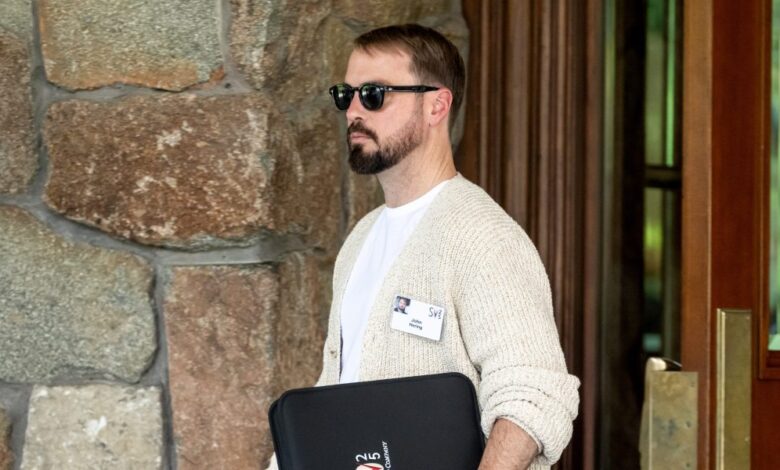
San Francisco resident John Hering has personally injected more than $1.25 million into the effort to defeat Roy and support McKinney. Hering, a co-founder of cybersecurity firm Lookout, maintains extensive financial ties to Elon Musk’s corporate ventures. In 2022, his investment firm, Vy Capital, contributed $700 million to Musk’s takeover of Twitter and $300 million to the Boring Company. Hering’s political giving has similarly shifted rightward, moving from contributions to Hillary Clinton and Beto O’Rourke in past cycles to donating $41,300 to the Republican National Committee and $500,000 to Musk’s America PAC in support of Donald Trump’s 2024 presidential run.
Hering is far from alone in his financial backing of McKinney. A coalition of tech founders and investors—including individuals associated with Ring, Tinder, Boingo, Anthropic, Anduril, and SpaceX—has collectively funneled more than $1.9 million into pro-McKinney committees. Additionally, property rental tech giant Airbnb backed a group called the Committee to Expand the Middle Class Candidate with a $4.2 million donation to support McKinney. Earlier in the election cycle, Hering and fellow tech investor Diego Berdakin poured over $1 million into a separate committee to help propel McKinney through the primary.
Over the past month, Hering’s general-election expenditure group, Neighbors for John McKinney, has financed television and online advertisements alongside mailers portraying McKinney as a lifelong Democrat and anti-MAGA candidate. However, the committee’s funding sources tell a different story. Beyond Hering’s heavy contributions, the group has drawn financial support from billionaires Rick Caruso and Ron Burkle, as well as a $250,000 donation in late September from Douglas Emmett Properties, a Santa Monica-based real estate firm that previously attempted to carry out one of the largest mass evictions in Los Angeles history before being blocked by a judge. Despite the committee’s promotional materials claiming McKinney would fight for tenants’ legal protections against illegal evictions, labor and housing advocates have pointed to the real estate backing with skepticism.
The heavy corporate and tech spending in Los Angeles arrives amid a broader statewide and national midterm push by artificial intelligence and technology executives seeking to influence elections and counter regulatory crackdowns. In California, tech executives have spent more than $29 million across state Assembly and Senate races. This legislative lobbying climate intensified after Governor Gavin Newsom signed a slate of bills designed to protect workers from artificial intelligence overreach, including restrictions on using AI to discipline or terminate employees, bans on digital surveillance in restrooms, and guarantees that human healthcare professionals retain final decision-making power.
While tech industry groups fought aggressively against the measures, labor organizers view the new statutes as a foundation for expanding local worker protections. Roy has campaigned on using the city attorney’s office to enforce labor standards and take on corporations that misclassify workers as independent contractors to evade minimum wage and benefits requirements. She has also vowed to challenge companies utilizing automation to circumvent regulations and eliminate jobs. Former Los Angeles City Councilmember Mike Bonin noted that Big Tech views a city attorney with an appetite for regulation as an existential challenge to traditional business models, adding that California policy developments frequently serve as a national blueprint.
McKinney has criticized Roy’s regulatory agenda, arguing that her ambition to transform the office into a public interest law firm is out of touch with the electorate. Running in the mold of a law-and-order candidate, McKinney has pledged to address public safety by prosecuting misdemeanors, rebuilding relationships with local police departments, and reviving neighborhood prosecutor programs. Meanwhile, Neighbors for John McKinney has funded attack ads painting Roy as inexperienced and soft on crime, citing a conservative publication’s claim that she supported freezing misdemeanor prosecutions—an allegation Roy has denied.
Critics of the outside spending have questioned whether voters will connect the big tech funding to the policy outcomes McKinney is expected to pursue. Roxana Tynan, executive director of the Los Angeles Alliance for a New Economy, condemned the spending level as outrageous, urging voters to scrutinize the influence that a select group of wealthy figures attempts to wield over municipal governance. As labor rights groups prepare to fight for expanded local AI protections—including safeguards for temporary and gig workers—the outcome of the city attorney race could determine whether Los Angeles becomes an aggressive regulatory check against corporate power.