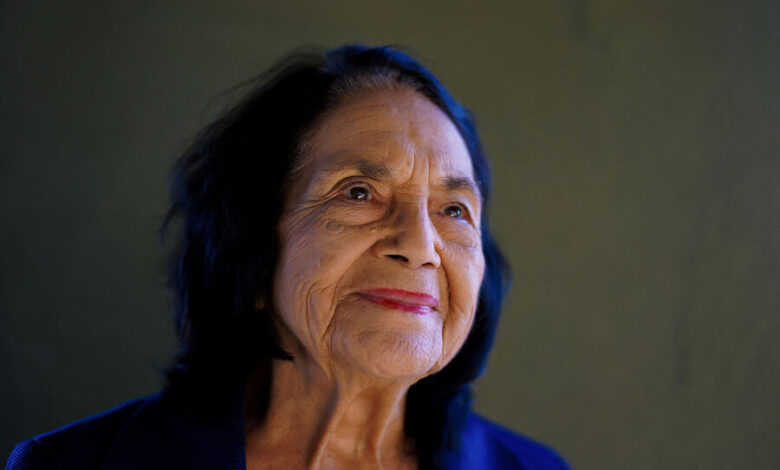
In Bakersfield and neighboring agricultural communities across California’s Central Valley, the death of pioneering labor leader and civil rights activist Dolores Huerta has drawn deep reflections from workers whose lives she touched. Mrs. Huerta, who co-founded the National Farm Workers Association in 1962 alongside César Chávez, passed away early Wednesday in Bakersfield surrounded by her family, according to a statement provided by family spokesperson Erik Olvera.
For retirees like Cecilia López Mora, who spent decades harvesting grapes in Wasco, news of Mrs. Huerta’s passing brought immediate recollections of better wages and labor protections earned during the 1990s. Having retired earlier this year after working in grape fields and packing houses, Mrs. López Mora noted that Mrs. Huerta’s memory offers strength during a period of considerable local tension. Recent days have seen Immigration and Customs Enforcement agents conducting arrests in her Wasco neighborhood, adding to anxiety surrounding immigration enforcement across the San Joaquin Valley.
Mrs. Huerta remained politically active until months before her death, organizing and protesting against ICE operations that have impacted communities throughout the region. Her passing coincides with heightened scrutiny over federal immigration enforcement leading up to the Nov. 3 election. Last week, a federal judge ruled that the Department_of_Homeland_Security should halt election-related field operations and interviews across nine states if officials suspect residents of being U.S. citizens.
By Wednesday evening, approximately 100 people gathered for a candlelight vigil in downtown Bakersfield. Lori de Leon, one of Mrs. Huerta’s daughters, urged the assembled crowd to remain steadfast and participate in upcoming elections. Florentina Olvera, another longtime agricultural worker who organized alongside Mrs. Huerta in Delano and Wasco, praised the activist’s dedication to empowering women and standing up for vulnerable laborers.
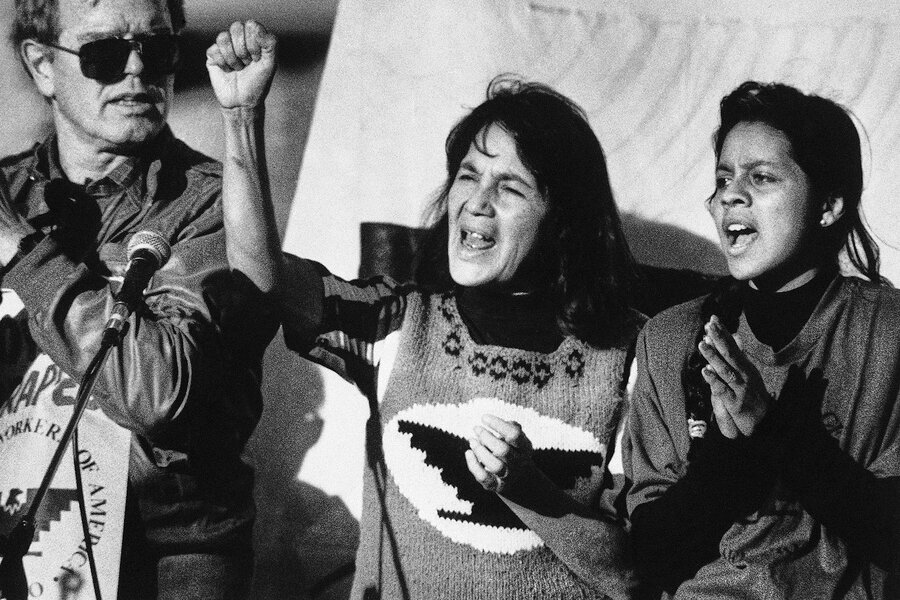
Throughout her decades of advocacy, Mrs. Huerta played a central role in the 1965-1970 Delano grape strike, championed collective bargaining, and coined the famous rallying cry “Sí, se puede.” Her organizing efforts were instrumental in the passage of California’s Agricultural Labor Relations Act of 1975, which established legal rights for farmworkers to form unions, secret-ballot elections, and collective bargaining. In March, following a public investigation into Mr. Chávez’s conduct, Mrs. Huerta publicly stated that she had experienced sexual abuse and rape by Mr. Chávez during the 1960s.
In downtown Bakersfield, local business owners and residents established makeshift memorials. Audrey Chavez, co-owner of Martin’s Meats and Deli and a friend of Mrs. Huerta, placed yellow flowers in front of a newly painted mural of the activist. Inside her shop, she displayed a signed bullhorn that Mrs. Huerta gave her last year, using it recently to protest against expanding ICE actions in the Central Valley. Meanwhile, as memorials were established in cities from Albuquerque to California, farmworkers continued their labor in Kern County fields as the annual grape harvest drew to a close.