As the campaign cycle enters its final week, political battles across the United States are underscoring the fierce competition for control of the U.S. Senate, where Democrats require a net gain of four seats to reclaim the majority. High-profile rallies and new polling data reveal shifting political fault lines in both traditional strongholds and crucial battleground states.
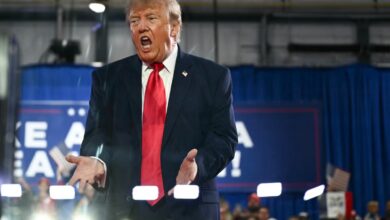
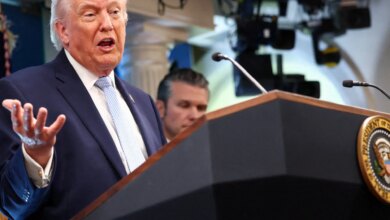
In Texas, a state that has not elected a Democrat to the U.S. Senate in more than thirty years, President Donald Trump traveled to Lubbock for a political rally alongside state Attorney General Ken Paxton. Just miles away from the president’s event, Democratic Senate candidate State Representative James Talarico held his own gathering, drawing an estimated 4,000 attendees. During the events, the candidates exchanged pointed critiques as they courted voters in the traditionally deep-red state.
Meanwhile, in Pennsylvania, economic anxieties and concerns over governance have complicated the political landscape just two years after the state played a pivotal role in national presidential politics. Voters in the region expressed sharply divided perspectives, with some citing frustration over congressional authority and others maintaining strong support for President Trump’s economic agenda.
Polling data from a recent survey by and Siena University suggests unexpected Democratic momentum in other historically Republican territory. In South Carolina, Republican Senator Darline Graham—who was appointed to fill the seat of her late brother, Lindsey Graham—is currently tied with Democratic challenger Annie Andrews. Senator Graham emphasized the work ethic of her constituents while campaigning across the state.
In North Carolina, where a Democrat has not won a Senate seat in nearly two decades, former Democratic Governor Roy Cooper holds a double-digit lead over Republican Michael Whatley, focusing his campaign message on affordability and criticizing federal tariffs. Vice President J.D. Vance also campaigned in North Carolina to rally support for the Republican ticket, urging voters to send a message to Washington by prioritizing domestic economic policies.
With less than seven days remaining before voters head to the polls, both political parties are intensifying their efforts to secure crucial legislative majorities.